
Salsa Vida presents
Salsa Dance:
Complete
Overview & Guide
Understand the music and movement, compare the major styles, learn your first steps, and find places to dance around the world.
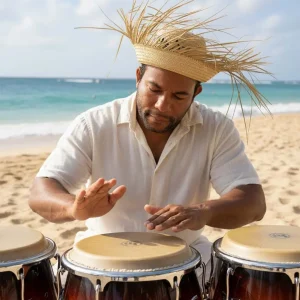
What Is Salsa Dance?
Salsa dance is a family of social partner dances performed to salsa music. It is usually improvised, with one person leading and the other following through turns and patterns. Partners may also separate for solo footwork known as shines.
Depending on the style, partners may move back and forth along a line or circle around one another. Salsa is known for its turns, rhythmic footwork, and fluid hip and body movement. Its music and playful partner interaction give salsa a fun, expressive, and often flirtatious character.
Salsa grew from Afro-Cuban and wider Caribbean music and dance traditions, especially Cuban son, mambo, cha-cha-cha, and rumba. During the mid-twentieth century, Cuban, Puerto Rican, and other Latin communities in New York City helped shape and popularize the modern dance.
As salsa spread, it developed into distinct styles, including LA, New York, Cuban casino, rueda de casino, and salsa caleña from Colombia. Today, salsa is one of the world’s most popular social dances and is also performed on stage and in competitions around the globe.
The Different Styles of Salsa Dancing
There is no single “right” way to salsa. Around the world, the dance evolved into several distinct styles as dancers in places like New York, Los Angeles, Cuba, and Colombia each developed their own approach to timing, partnerwork, and movement.
If you’re new to salsa, this can be confusing at first. Some styles are danced in a line, others in a circle, and some are done in groups or solo. The music is similar, but the movement can feel different enough that if you only know one style, dancing with someone from another style can be a challenge.
Salsa style guide
Compare the 6 main salsa styles
Many styles of salsa have developed around the world, each with their own distinctive movements and characteristics. Learn what sets them apart below.
History of Salsa Dance
How salsa took shape
Like its namesake, salsa is a blend of many ingredients that came together over centuries, creating a bold new flavor of music and dance.
Follow the timeline to trace its path from the Caribbean to the streets of New York City, to the global phenomenon that it is today.
1511
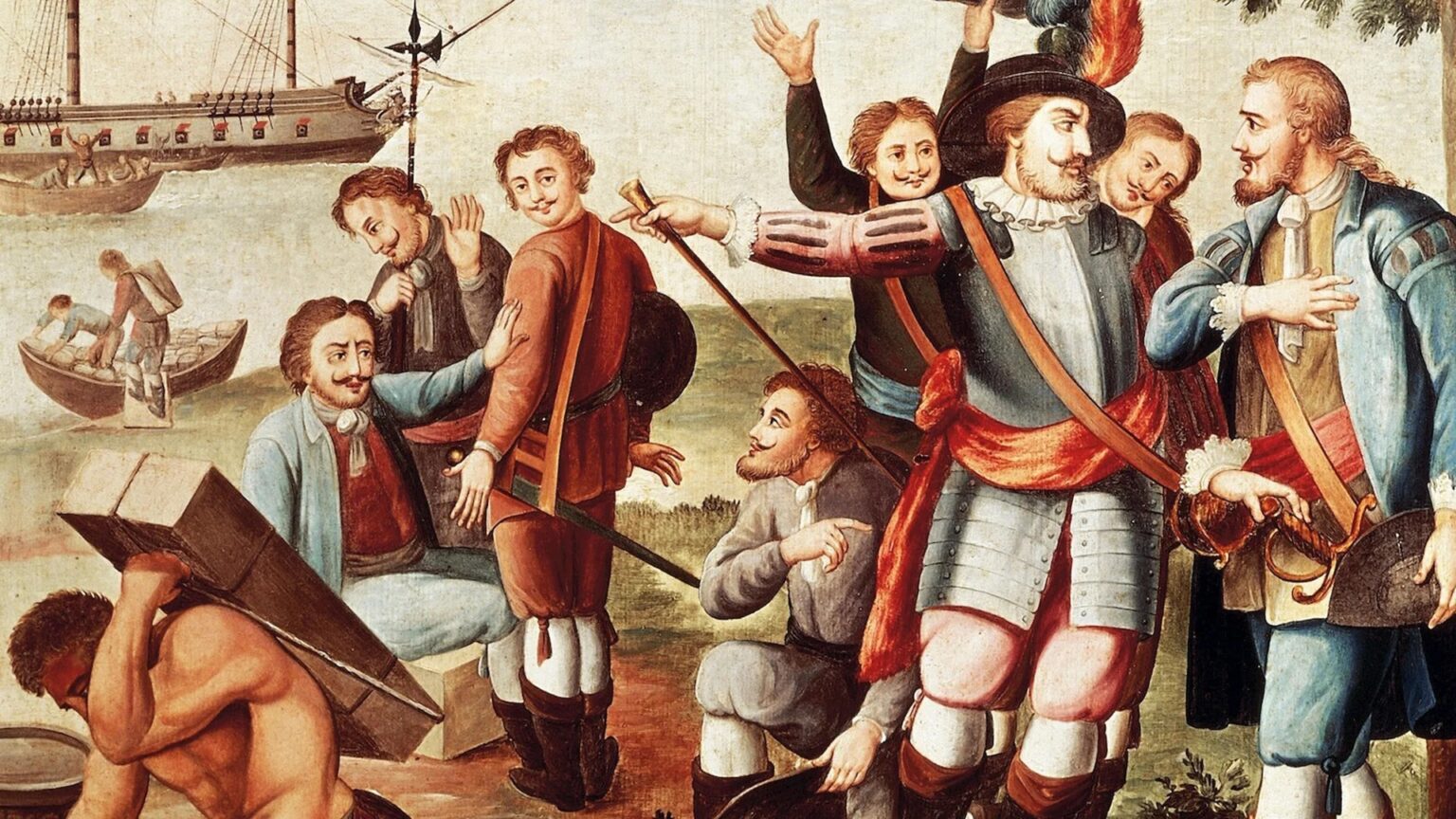
Spanish conquest of Cuba begins
Spanish arrival to Cuba devastates the Taíno population through war, forced labor, and disease. As the Indigenous population collapses, Spain turns to the transatlantic slave trade, bringing enslaved Africans to the island. From this traumatic beginning, cultures from three continents are forced into proximity, and over generations, a new Afro-Cuban cultural foundation begins to form.
1700s–1800s
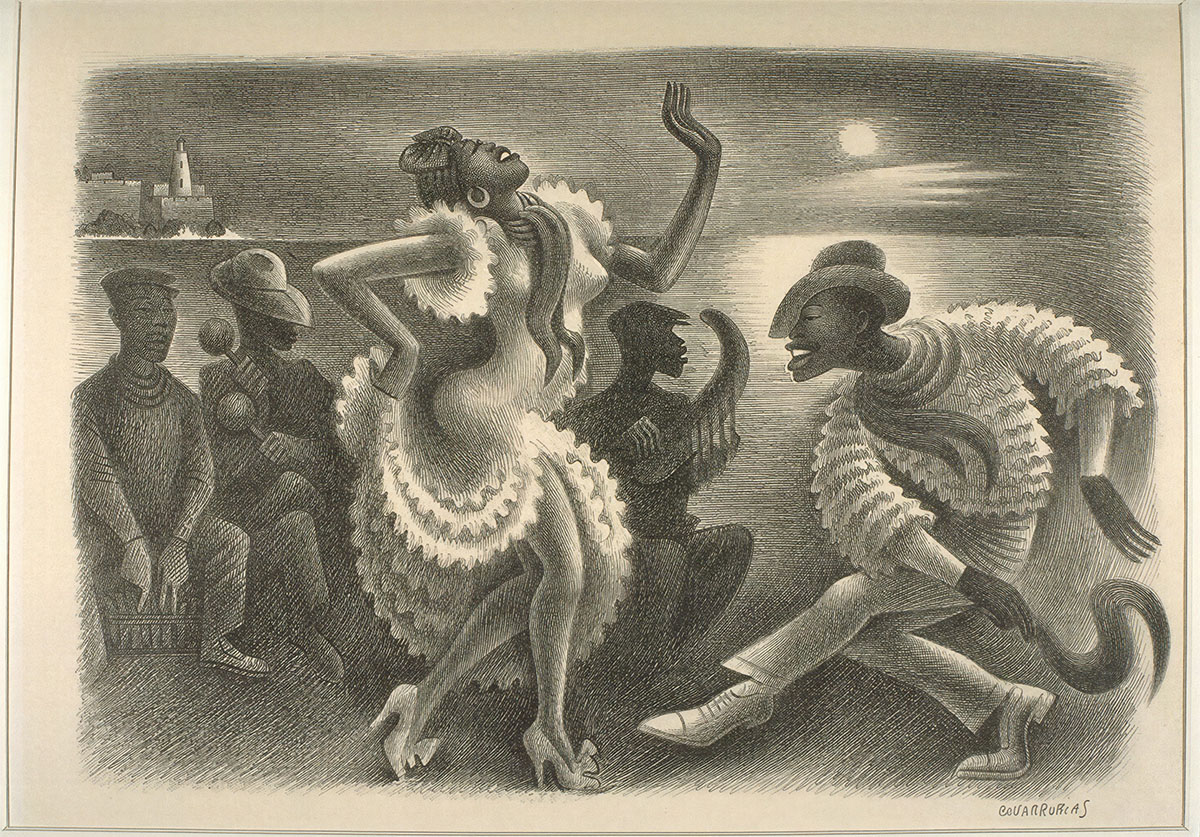
Afro-Cuban traditions take shape
Over generations, three worlds that began oceans apart start to fuse into something new. Indigenous traditions and instruments, Spanish guitars and partnered dance, and African drums, movement, and spiritual traditions become the roots of Afro-Cuban music and dance.
Rumba grows from Afro-Cuban communities, while danzón rises as a popular partner dance. Together, they help set the stage for future Cuban dance styles.
1892
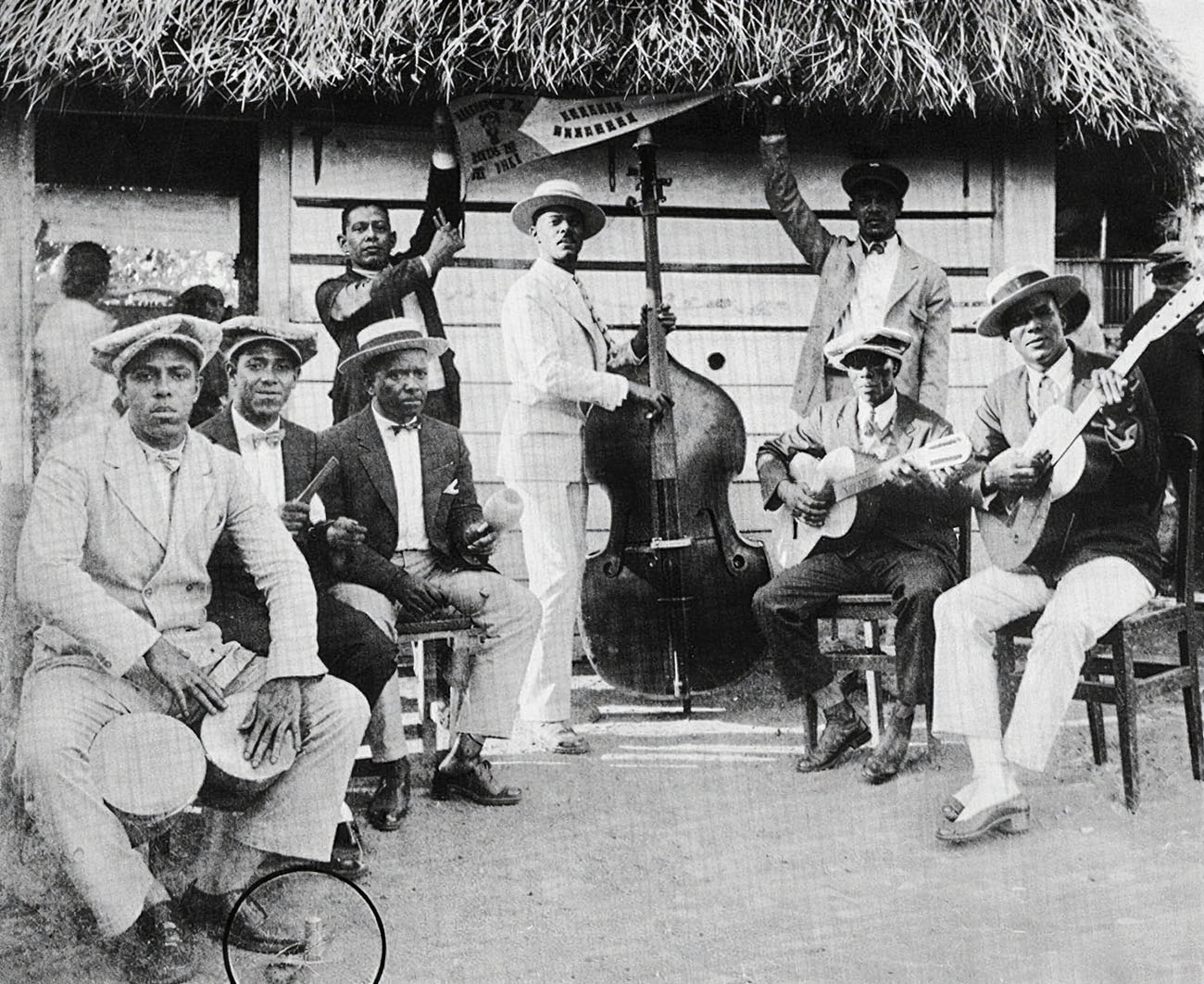
Son Cubano arrives in Santiago
Son Cubano, a blend of Spanish song forms and Afro-Cuban rhythm, is one of the most direct musical ancestors of salsa. It develops in the 1880s in rural Oriente, then reaches Santiago de Cuba in 1892. From Santiago, son travels outward, becoming a foundational sound across Cuba.
1930s-1947
Mambo emerges, then ignites in New York
Mambo takes shape in 1930s Cuba as musicians push danzón toward a more syncopated, Afro-Cuban driven sound.
By 1947 it lands in New York City and becomes a musical craze in the US, with the Palladium Ballroom becoming the proving ground where musicians and dancers accelerate the music and sharpen the partnerwork that helps set the stage for salsa.

1964
Fania is founded and Salsa is born
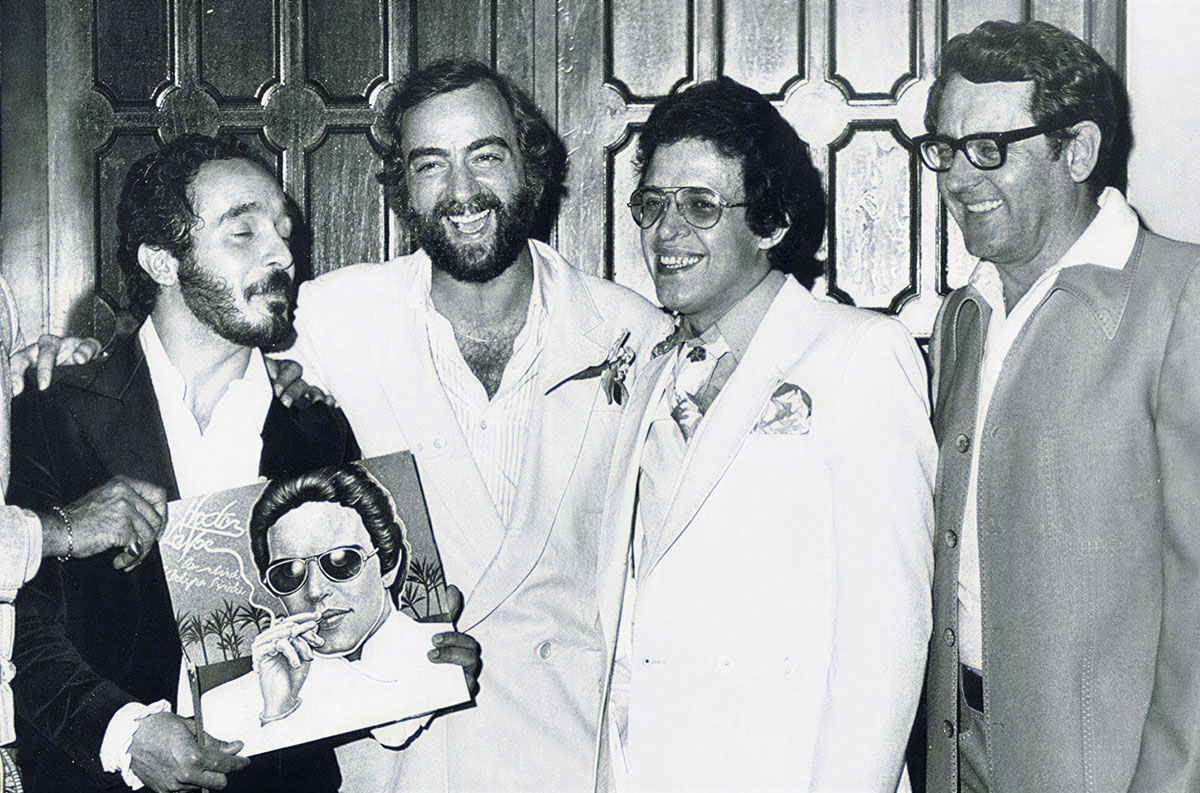
Fania Records forms in New York and popularizes “salsa” as an umbrella name for the Latin music coming out of the city, led largely by Cuban and Puerto Rican musicians. With one banner, the music spreads faster and starts taking shape as a more unified new sound.
Fania soon brings in major voices like Tito Puente from the mambo era and fuels all-star collaborations that accelerate experimentation and define salsa’s identity. The dance evolves alongside it, rooted in Palladium-era mambo partnerwork and shaped by other street and ballroom influences like hustle and tap.
1973
Fania All Stars reach the big stage
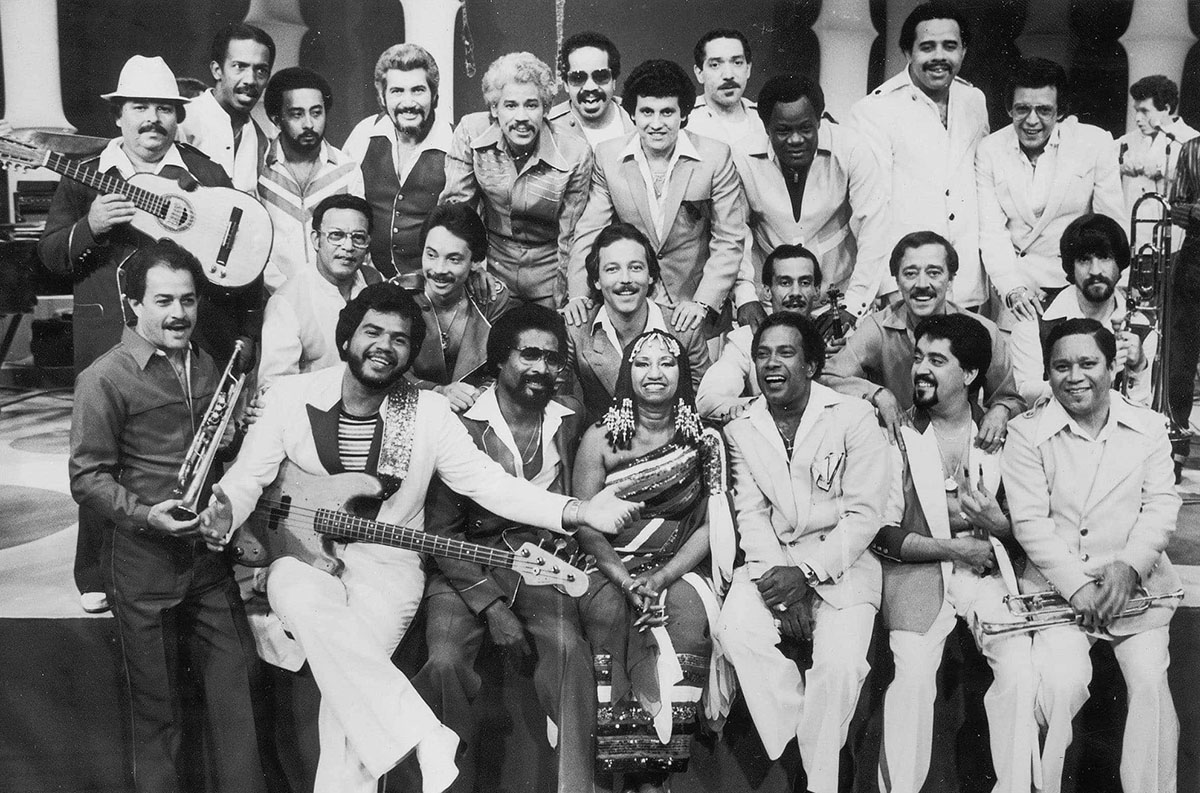
By the early 1970s, salsa has become the soundtrack for Latino life in New York, then later all across Latin America.
In 1973, the Fania All Stars play Yankee Stadium and salsa steps into the mainstream. Sold-out runs at Madison Square Garden and international shows, including stops in Japan and Zaire, signal that the music has become a global movement.
1980s
New York style gets codified
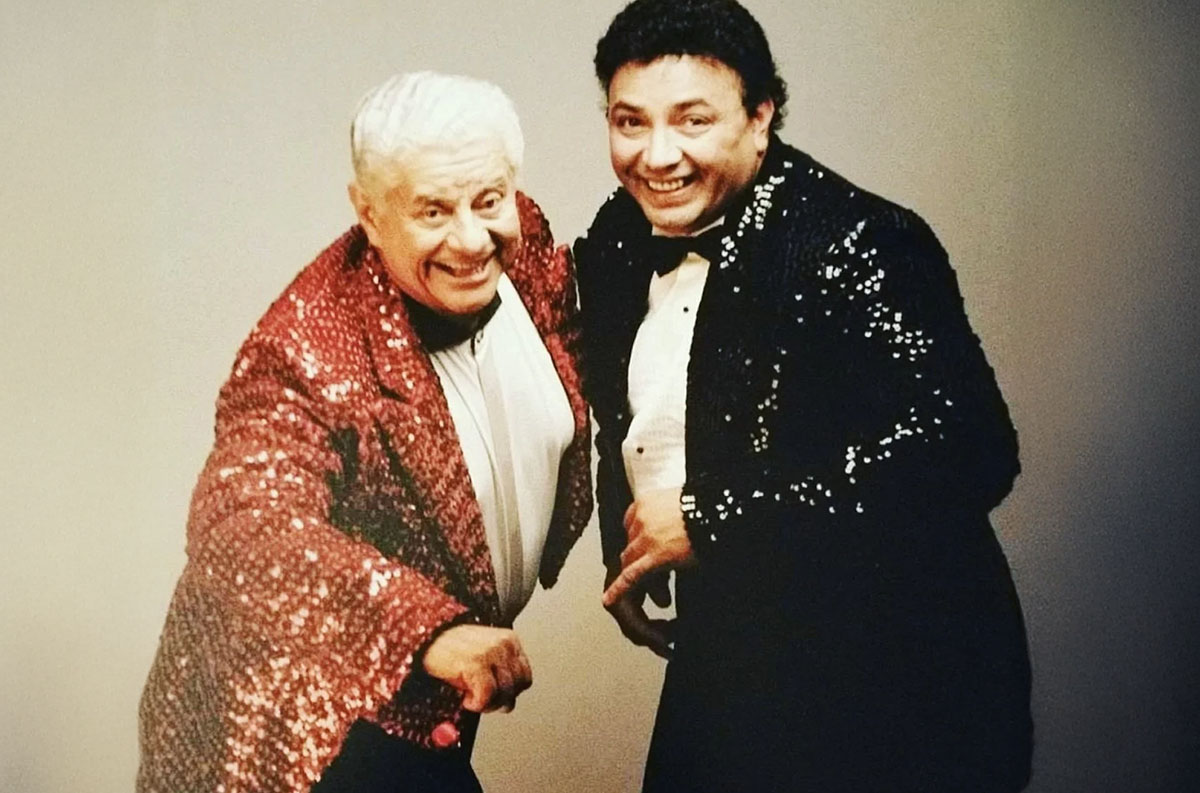
As salsa spreads, New York teachers begin standardizing timing and technique so fans of the music can learn to dance to it with confidence. Eddie Torres becomes one of the most influential, championing on 2 timing and releasing early instructional tapes that help popularize the approach far beyond NYC.
He also performs alongside artists like Tito Puente, and trains a generation of instructors and performers, helping move salsa from clubs into studios, performance teams, and major stages.
1990s
LA style salsa rises
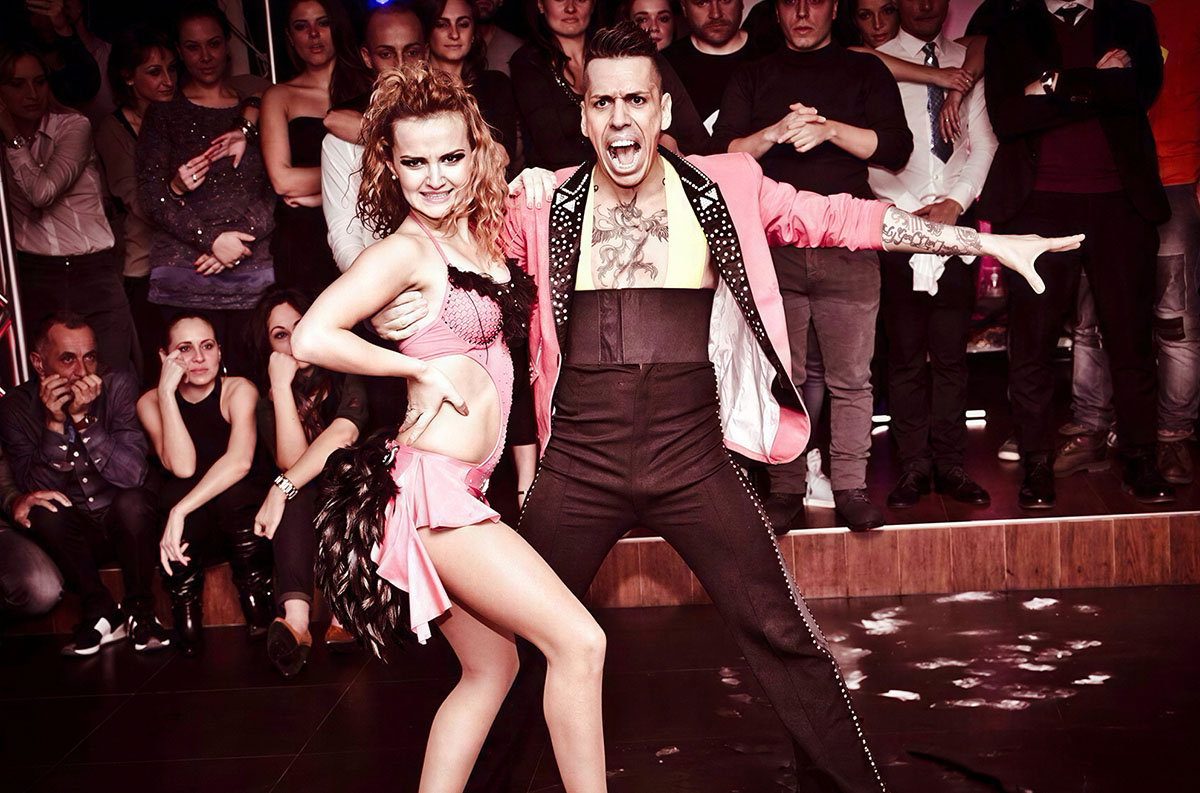
In Los Angeles, Johnny Vazquez and the Vazquez Brothers help define a flashy, performance-forward approach that becomes known as LA style (On1), with sharper lines, bigger spins, and crowd-pleasing shine work. Breaking on 1 also tends to feel more intuitive for beginners, which helps On1 spread fast worldwide.
The Hollywood spotlight helps too, salsa starts showing up more in TV shows and movies, bringing new dancers into the scene.
1997
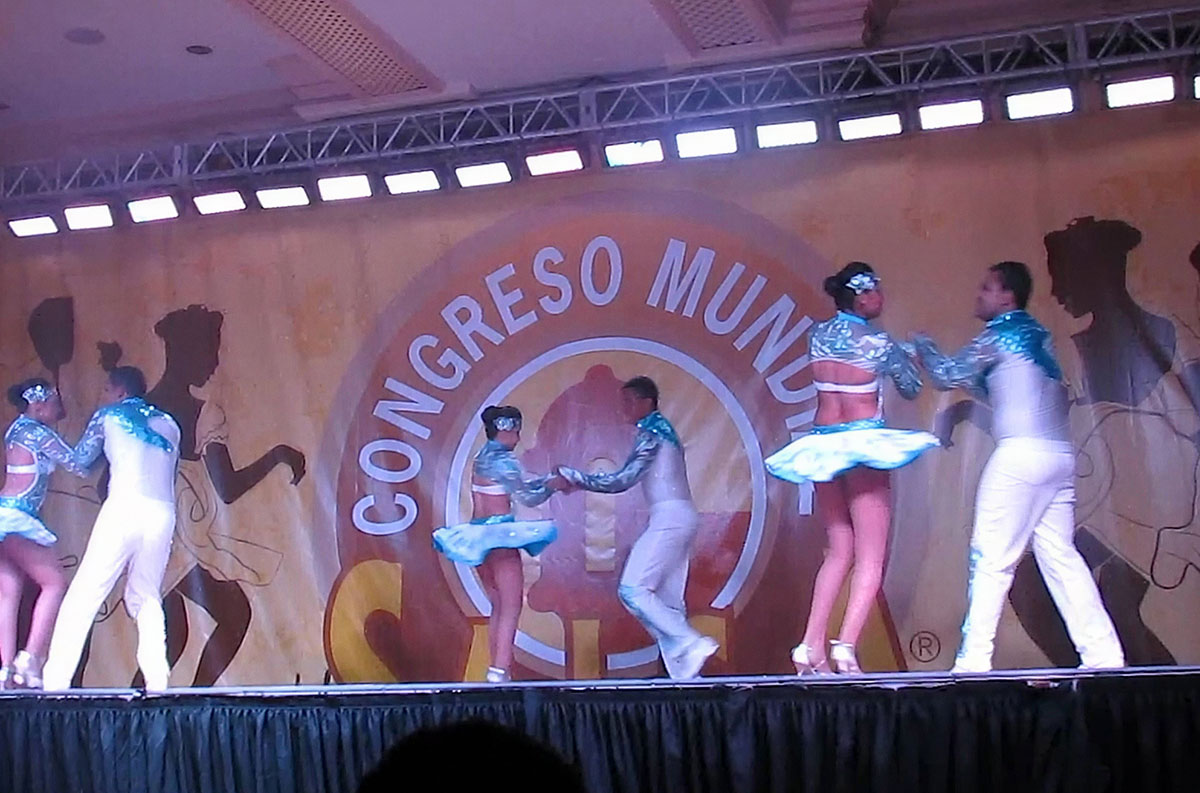
First salsa congress held in Puerto Rico
In 1997, Puerto Rico hosts the first salsa congress, a multi-day gathering that pairs daytime workshops with all-night socials. Dancers from different scenes share the same floor, which pushes timing, technique, and teaching toward a more common language.
The format catches on fast, reaching major U.S. hubs (including Los Angeles in 1999) and then spreading worldwide. Today, congresses and festivals run year-round across continents, turning salsa into a truly global dance community.
2005
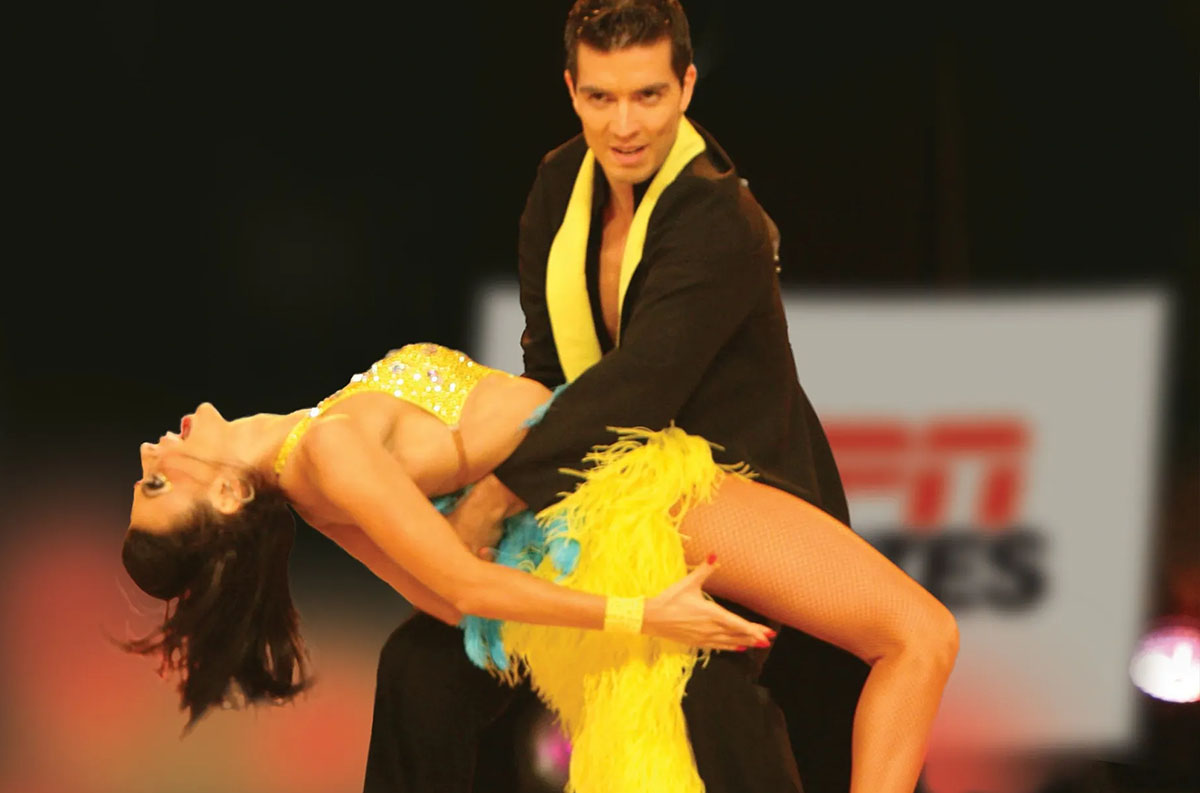
ESPN World Salsa Championships
In 2005, the ESPN World Salsa Championships help propel salsa competition into a new era, elevating it from nightclub floors to a world stage. With finals broadcast live on ESPN, salsa gets a rare spotlight as a serious performance sport, accelerating its global visibility and raising the bar for technique and athleticism. Today, that momentum has grown into multiple international competitions around the world.
2026
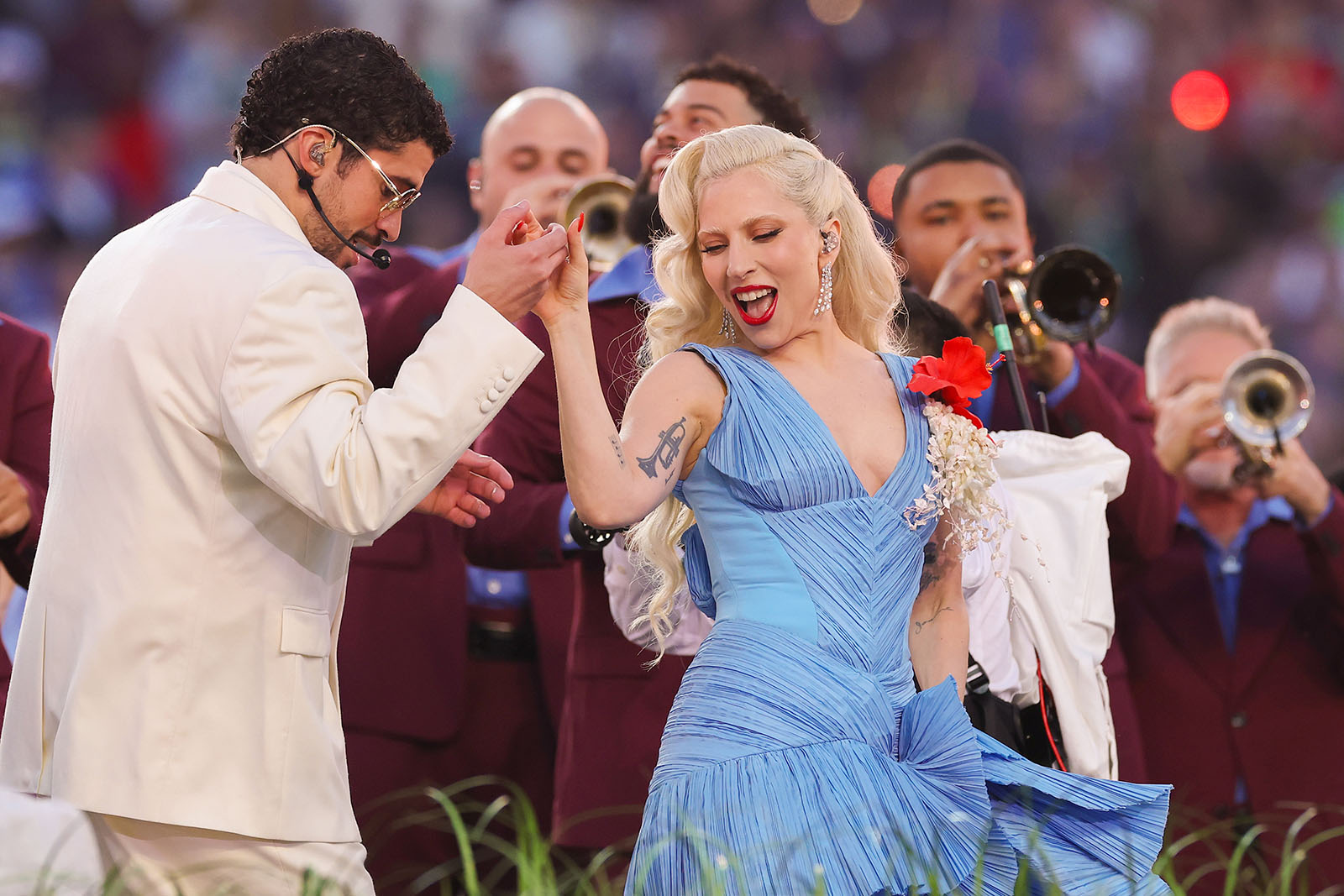
Bad Bunny brings Latin music to new peaks
Bad Bunny helps pull salsa into the mainstream for a new generation, with his hit song “Baile Inolvidable” and a Puerto Rico residency that spotlights salsa in its closing set.
In 2026, he makes history with the first Spanish-language Album of the Year Grammy, then headlines the Super Bowl LX halftime show with salsa dancing on one of the biggest stages in the world. It’s a baton pass moment that carries a Caribbean-born tradition forward, and pulls a new generation onto the dance floor.
Learn to dance salsa
Salsa is one of the most popular social dances in the world, and one of the most fun to learn. If you are just learning how to salsa dance, focus first on hearing the rhythm, stepping on time, and getting comfortable with a few core movements.
Salsa music & rhythm
How to count salsa music
Most salsa music is in 4/4 time, which means there are four beats in each measure. This is the same time signature used in much of Western popular music. Dancers usually group two measures together and count them as one eight-count: 1, 2, 3, 4, 5, 6, 7, 8.
In most styles of salsa dancing, the main steps fall on counts 1, 2, 3, 5, 6, and 7. Counts 4 and 8 are pauses in the stepping pattern, but the music continues underneath them. This creates the familiar salsa rhythm: 1, 2, 3 … 5, 6, 7.
If counting music is completely new to you, start by listening for a steady pulse and saying all eight numbers out loud.
Tip: Count it out loud. If you can keep the timing, everything else gets easier.
The video below counts through a salsa song so you can practice hearing where each eight-count begins.
Why salsa music can be hard to count
Knowing what to count is one thing. Finding those counts inside a salsa song can be more difficult. Salsa music is polyrhythmic, meaning several interlocking rhythms are happening at the same time.
Many popular songs make the pulse easy to hear through a prominent drumbeat. A salsa arrangement may layer congas, bongos, timbales, cowbell, piano, bass, horns, and vocals, with each part contributing a different pattern. These overlapping layers give salsa its energy, but they can also make the beat harder to isolate when you are beginning.
You do not need to follow every instrument at once. Choose one steady sound and practice counting with it. Depending on the arrangement, the cowbell may provide a clearer pulse during higher-energy sections, while repeating piano patterns can help you hear how the musical phrase moves.
This next video identifies the different instruments and counts through the music, making it easier to hear how the layers fit together.
Rhythms to listen for
You do not need to understand every rhythm before you start dancing, but two patterns are especially useful to recognize. The clave is a five-stroke pattern spread across two measures. It is commonly organized as 2-3 or 3-2 and helps shape how the other musical parts fit together.
The conga tumbao is a repeating percussion pattern that can give dancers another useful timing cue. Our complete guides explain both rhythms in greater detail.
Practice tip: Some salsa songs feel very fast when you are beginning. If you can hear the rhythm but cannot comfortably keep up yet, use our free TuneTempo app to slow the song down for practice, then gradually increase the tempo as your timing becomes more comfortable.
Once you can follow the eight-count, you are ready to connect that rhythm to the salsa basic step.
How to dance the salsa basic step (On2)
Let’s start by stepping through the basic step one count at a time. This guide will teach you the basics of New York-style salsa with On2 timing: you step on 1, 2, 3, 5, 6, and 7, with pauses on 4 and 8. The leader and follower mirror one another.
The break step is the point in the basic where you change direction. You transfer your weight onto one foot, then reverse the movement. In an On1 basic, the break steps fall on counts 1 and 5. In an On2 basic, they fall on counts 2 and 6. Both use the same six stepping counts; the timing of the direction change is different.
On1 vs On2: where the break step happens
This lesson uses On2 timing. The leader breaks back on 2 and forward on 6, while the follower mirrors those movements by breaking forward on 2 and back on 6. Watch the complete basic below, then use the diagrams to practice it one count at a time.
Beginner lesson · New York-style On2
The On2 salsa basic
Start with your feet together and turned out slightly, then choose the leader or follower instructions. When taking steps, make sure to transfer your full weight to each foot so the other foot becomes light enough to lift.
Leader
Start with most of your weight on the right foot
Your left foot should be free to take the first step.
-
1
Left foot: step in placeShift all your weight onto your left foot.On repeats: bring your left foot back to center from count 8.
-
2
Right foot: break backStep back on the count of 2.
-
3
Left foot: replace your weightStep in place while the right foot stays behind.
-
4
PauseNo step on count 4.
-
5
Right foot: return to centerBring your feet back together again.
-
6
Left foot: break forwardStep forward on the count of 6.
-
7
Right foot: replace your weightStep in place while the left foot stays forward.
-
8
PausePause before returning to step 1.
Follower
Start with most of your weight on the left foot
Your right foot should be free to take the first step.
-
1
Right foot: step in placeShift all your weight onto your right foot.On repeats: bring your right foot back to center from count 8.
-
2
Left foot: break forwardStep forward on the count of 2.
-
3
Right foot: replace your weightStep in place while the left foot stays forward.
-
4
PauseNo step on count 4.
-
5
Left foot: return to centerBring your feet back together again.
-
6
Right foot: break backStep back on the count of 6.
-
7
Left foot: replace your weightStep in place while the right foot stays behind.
-
8
PausePause before returning to step 1.
Beginner salsa technique tips
Build your basic from the ground up. Start with your feet and legs, then add relaxed arm and body movement as you feel comfortable.
Feet and legs
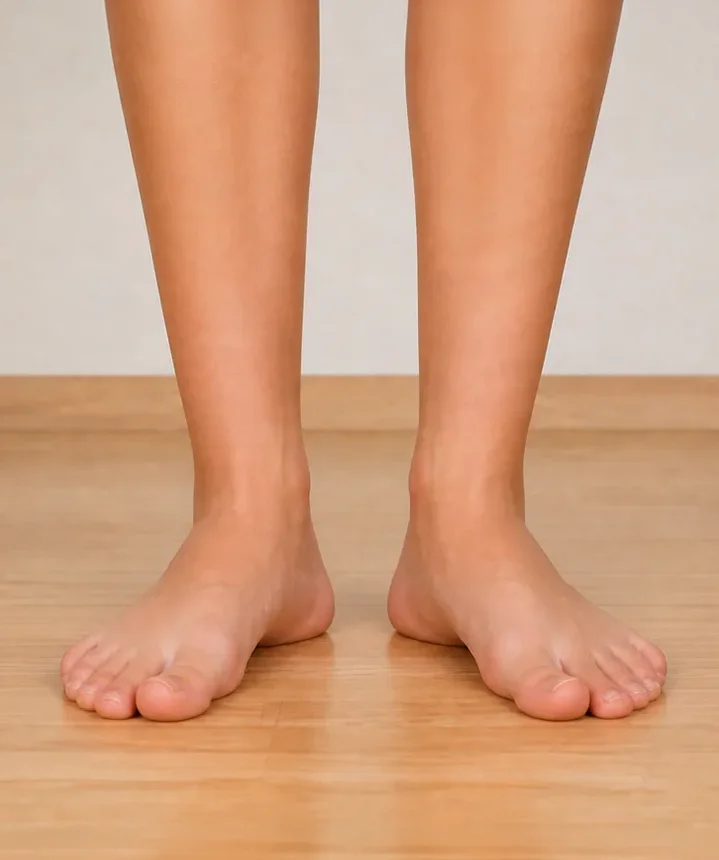
Turn your feet out slightly
Turn your feet out slightly, but not as far as a ballet turnout. This small, natural angle supports balance and helps your hips to move.
Keep your knees soft
Keep your knees slightly bent rather than locked.
Lean forward
Keep your back straight with a slight forward lean. This will help you keep your weight on the balls of your feet, which will allow you to move more quickly.
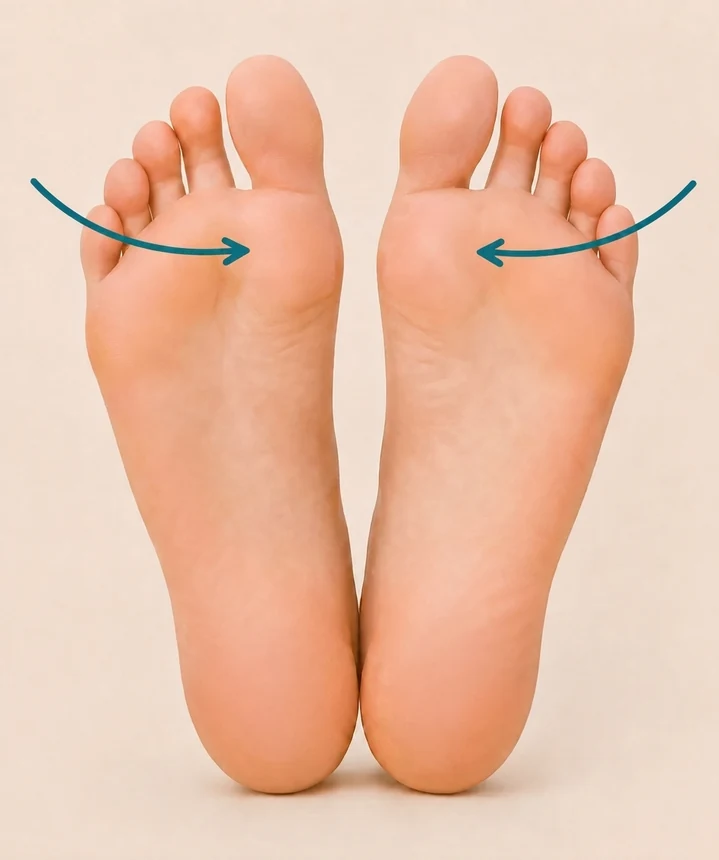
Use the inside balls of your feet
Focus the pressure through the inside ball of each foot, near the fleshy area beneath the big toe. Keep your ankles stable and avoid rolling outward toward the little toes.
What do I do with my arms?
Keep your arms natural
Keep your elbows softly bent, your shoulders relaxed, and your hands gently curled. Let your arms move opposite your feet, so the left arm responds when the right foot steps, and vice versa. This is similar to natural walking, so relax and avoid forcing the movement.
Connect your feet to your body movement
Step ball first, then lower the heel
As your timing becomes more comfortable, refine each step by placing the ball of your foot first, then lowering the heel gently as your weight settles. This helps your weight travel smoothly through each step and supports natural hip and body movement. It is different from ordinary walking, where the heel typically lands first and the foot rolls toward the toes.
Introduction to salsa partnerwork
Once you feel comfortable dancing the basic by yourself, the next step is partnerwork. In partner salsa, timing still comes first, but now you also start learning connection, frame, and lead-and-follow communication.
Most beginners start with two basic holds:
- Open hold: Partners face each other and hold both hands.
- Closed hold: Partners hold one hand, while the lead places the other hand on the follow’s shoulder blade and the follow places their free hand on the lead’s shoulder.
From there, many dancers learn the cross body lead, simple right and left turns, and other beginner combinations. These are the building blocks of social salsa, and more advanced patterns are usually just variations built from the same ideas.
If you are learning on your own, practice helps, but salsa usually gets much easier once you start taking classes and dancing with other people. Even a few beginner lessons can help you understand timing, technique, and partner connection much faster.
Beginner Salsa Playlist
Looking for salsa music, but not sure where to start? Here’s a beginner-friendly playlist that mixes counting resources, slow practice songs, and popular tracks you’re likely to hear at socials. Use the “Slow” picks to lock in your timing, then graduate to “Social tempo” when you feel steady. You can also use our free TuneTempo app to slow or speed up any song for practice.
Take your next step
Find salsa events near you
Now that you have learned the basic salsa step, it’s time to try it in person and keep learning. Find a local class or studio for more guidance, then take those steps onto the social dance floor.
Salsa is danced in nearly every country in the world, with active communities in cities across Latin America, North America, Europe, Asia, Africa, and beyond. Salsa Vida tracks more than 6,000 classes, socials, festivals, and other Latin dance events across 129+ countries. Search below, explore the map, and discover some of the world’s best countries for salsa dancing.
 6,000+
 129+
129+
 Human
Human

See where to dance salsa
Move around the map to find classes, weekly socials, and festivals. Filter by date and event type, then open any marker for local details.
Open the full map Listings are checked and updated by the Salsa Vida team. Listings are checked and updated by the Salsa Vida team.
Choose your next experience
There’s more than one way to start dancing
Start with the setting that feels right for you. Each one offers a different way to learn, practice, and become part of the local salsa community.
Practice with people
Take a salsa class
The best way to learn salsa is in person at a dance school or studio, where an instructor can give you real-time feedback and you can practice with other beginners. Most beginner classes welcome students without a partner.
Find salsa classes near youJoin the dance floor
Go social dancing
Socials are where you can really have fun trying out the steps you have learned and meeting new people. Many socials open with an introductory lesson, so you can arrive alone and ease onto the dance floor at your own pace.
Find a salsa social near youImmerse yourself
Experience a salsa festival
Festivals bring workshops, performances, and late-night social dancing into one weekend. They are a great way to see different salsa styles and connect with dancers from other cities.
Explore salsa festivalsFAQ
What country is salsa dance from?
Salsa developed in New York City in the United States, but it is deeply rooted in Caribbean music and dance traditions. Many of salsa’s closest ancestors come from Cuba, including son, mambo, and cha cha cha, which blended and evolved in NYC into what we now call salsa. Read the full history of salsa here.
Is salsa a Spanish or Mexican dance?
Salsa is neither a Spanish nor a Mexican dance; its foundations come primarily from Cuban music and dance traditions. Cuban, Puerto Rican and other Latin musicians later helped shape modern salsa in New York City, turning it into the international dance we know today.
What does salsa literally mean?
Salsa literally means “sauce” in Spanish. There is some debate as to the exact origin of the term, but it was Johnny Pacheco, co-founder of Fania Records, who popularized the term globally as a marketing term for Latin music.
What does salsero mean?
A salsero is a salsa dancer (female: salsera), especially someone who is passionate about salsa music, dance, and culture. For more commonly used salsa terminology, visit our Salsa Dance Terms glossary.
Who invented salsa dance?
There is no single person who invented salsa dance, it evolved organically over time from earlier dance styles such as mambo and son. For specific styles of salsa, Eddie Torres was an early teacher who popularized New York-style salsa On2, whereas Johnny Vazquez and the Vazquez Brothers are credited for developing LA-style salsa On1.
What are the different styles of salsa?
There are 6 recognized distinct styles of salsa: New York-style salsa, LA-style salsa, Cuban-style salsa (casino), Casino rueda, Salsa Caleña and Salsa Choke. Learn more in our guide to the different styles of salsa.
Which is sexier, bachata or salsa?
Salsa is usually considered more fun, flirty and energetic, while bachata is typically slower and sensual. There are exceptions however– salsa romantica can be quite slow and romantic, whereas Dominican bachata is fast paced and energetic. Learn more in our article on Salsa vs Bachata.
Is salsa the hardest dance to learn?
Salsa is often considered one of the most difficult Latin dances to learn because of its fast tempo, complex partnerwork, and the coordination required for spins, footwork, and body movement. That said, you can learn the basics in hours or days, although true mastery takes many years.
How long does it take to learn salsa?
You can learn the basic steps of salsa in a few hours, and be “social ready” in a few weeks if you practice regularly. Mastering the dance and its more complex turn patterns, quick spins and intricate body movement takes many years.
Do I need a partner to learn salsa?
No. Most salsa classes rotate partners, and you can learn solo fundamentals (timing, basic step, turns, shines) on your own. At socials, it’s normal to ask different people to dance, and most communities are welcoming to beginners.
What to wear for salsa dancing?
Wear something that lets you move comfortably. Salsa socials can get quite hot, so it can make sense to bring extra shirts and a hand towel. For bigger socials it is common for people to dress up, but avoid anything that restricts movement or that could lead to a wardrobe malfunction.
For salsa shoes, wear something you can easily pivot in (avoid anything with grip) and is secure (avoid heels with thin straps). There are dedicated shoes made from for dancers, ranging from affordable jazz shoes with suede bottoms to popular salsa shoe brands such as Jose Botta, GFranco and Fuego.
Final thoughts
Salsa is more than just a dance, it’s a culture, an expression, and for many, a way of life. Whether you’re drawn to it for the music, the movement, or the people, there’s always more to learn and experience. See you on the dance floor!
