
What is Tumbao?
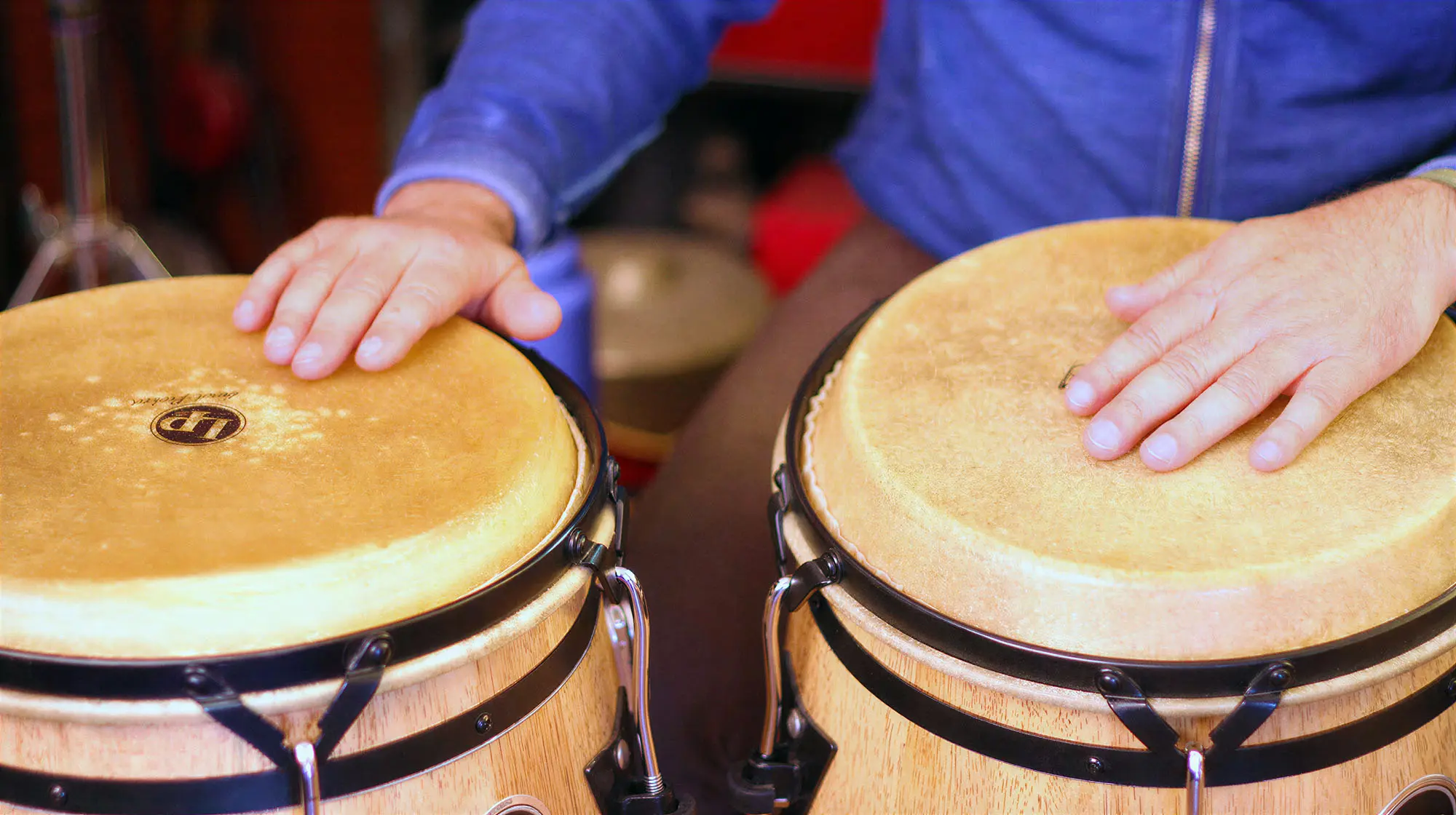
Tumbao is a distinctive drum pattern found in most salsa, cha cha, son and other Afro-Cuban music, typically played on conga drums. The tumbao is easily identifiable by its rolling open tones and slap, and many salsa dancers use it as an important cue for hearing the timing of the music.
Why Tumbao Matters in Salsa
Tumbao is a big part of what makes salsa feel like salsa. It helps create the push and pull of the music, supports the groove underneath the melody and horns, and gives dancers something physical to connect to. It is not usually the only rhythm happening, but it is one of the most important layers in the percussion section.
For dancers, tumbao can be especially useful because it gives the music a repeating rhythmic shape you can learn to recognize. Once you start hearing it more clearly, salsa timing often feels less abstract and easier to feel in your body.
Background
The word tumbao can mean different things depending on context. In everyday Spanish and in song lyrics, it can refer to swagger, flavor, attitude, or the sensual way someone moves and carries themselves. That broader meaning is part of why the word appears in titles like Celia Cruz’s famous song and album “La Negra Tiene Tumbao.”
In music, tumbao usually refers to a repeating groove pattern, especially in Afro-Cuban traditions and salsa. Dancers often connect with tumbao instinctively because it contributes to the rolling, earthy quality that makes salsa feel both grounded and alive.
While tumbao can take different forms depending on the instrument and style, the conga tumbao is the version many salsa dancers first learn to notice. The following video gives a useful breakdown of the basic pattern:
Basic Tumbao Pattern
Salsa dancers often teach or describe the basic tumbao as “kun kun pa”, a simple way to remember the two open tones followed by the slap. Because the pattern resolves over 4 counts, you hear it twice in a full salsa 8-count: the open tones (“kun kun”) land on 4 and 4-and, then again on 8 and 8-and, while the slap (“pa”) lands on the 2 and 6.
Depending on the arrangement, tempo, and player, you may also hear ghost notes, muted tones, extra slaps, and small variations that make the rhythm richer. That is part of why tumbao can seem simple at first, but reveals more detail the more closely you listen.
Basic Tumbao and Common Variations
- Basic tumbao: In salsa and related Afro-Cuban music, the basic conga tumbao is usually taught as a repeating groove rather than a single isolated hit pattern. Dancers often notice the open tones near the end of each 4-count phrase, while players fill out the groove with slaps, muted notes, and touch tones that give the pattern its flow.
- Clave-related phrasing: More advanced tumbao variations can be phrased in ways that interact more closely with the direction and feel of the clave. The important idea for dancers is not memorizing every variation, but understanding that tumbao is part of a larger rhythmic conversation inside the music.
- Performance variations: Skilled conga players rarely repeat the groove in a perfectly mechanical way. They may add slaps, muted tones, ghost notes, dynamic accents, and small phrasing changes that preserve the tumbao while making the rhythm feel richer and more alive.
How to Listen for Tumbao in Salsa Dancing
For salsa dancers, tumbao is one of the most useful percussion patterns to train your ear on. You do not need to hear every note perfectly, but learning to recognize the pattern can make your timing and musicality much stronger.
Rather than listening for the slap first, many dancers listen for the “kun kun”, the pair of open tones that repeats in the tumbao. Once you hear that, you can anticipate where the slap will land. In salsa timing, that slap falls on the 2 and 6, which is why tumbao can be especially helpful for dancers learning on2. For on2 dancers, that is also where the break step happens.
- For dancing on1: Tumbao still helps you feel the groove and phrase structure, even if you are not using it as your main timing cue.
- For dancing on2: Many dancers use the “kun kun” to anticipate the slap on 2 and 6, which lines up with the break step.
- For musicality in general: Hearing tumbao helps you connect your dancing to the percussion instead of relying only on the melody or vocal line.
Tips for Hearing Tumbao More Clearly
- Listen to a lot of salsa music and focus on the distinct 2-hit “kun kun” pattern. Once you think you hear it, see if you can clap along with it.
- From there, anticipate where the 2 and 6 will fall, then clap the slap as well. This helps you connect the full tumbao pattern to the dancer’s count.
- Practice doing the same thing with your basic step, so you are not just hearing the rhythm, but also connecting it to your timing.
- Once that starts to feel natural, practice hearing tumbao while doing basic footwork and simple partnerwork patterns.
- Consider learning how to play the full tumbao pattern yourself. Even tapping it on a table can help you understand the structure of the music and internalize the rhythm more deeply.
Why Dancers Should Care
Mastering the tumbao will not only help you to find the beat, it can completely change how your dance Once you can hear the tumbao clearly, you will be able to stay on time without having to constantly count numbers in your head.
That matters because it frees up mental space for everything else, connection, musicality, body movement, and partnerwork. Tumbao can also open the door to hearing other important structures in salsa, like the clave and the chord beats, and help you to build a direct and intuitive conneciton with the music.