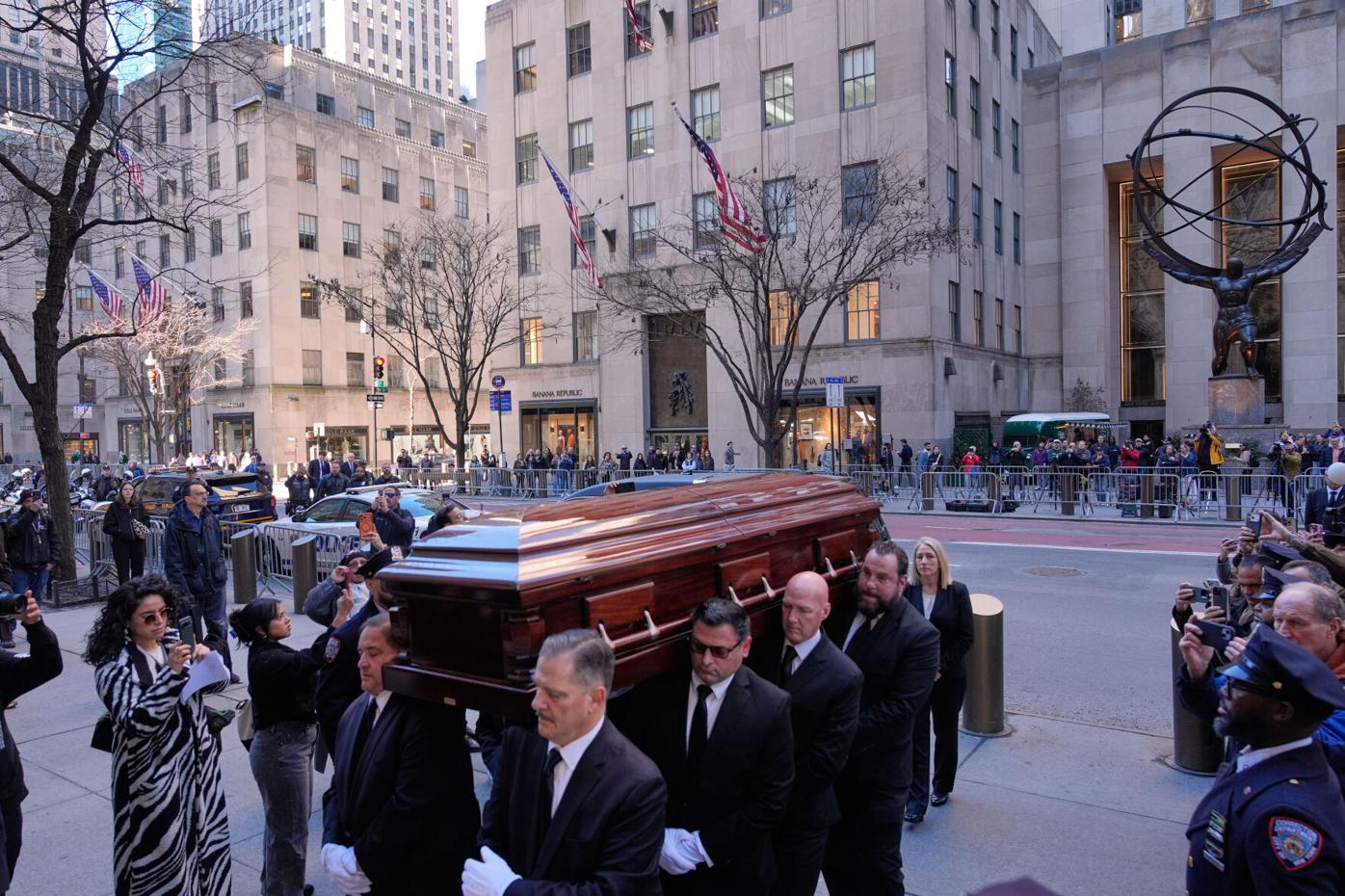
Family, friends, fellow musicians, and fans gathered Monday morning in Midtown Manhattan to say goodbye to salsa pioneer Willie Colón, during a public funeral Mass at St. Patrick’s Cathedral.
Colón, the Bronx-born trombonist, bandleader, composer, arranger, singer, and producer often credited with shaping the sound and swagger of “urban salsa,” died on February 21, 2026, at age 75. The cause of death was not publicly disclosed.
If you missed our earlier coverage of his passing, you can read our previous news post here: Willie Colón, Salsa Visionary and Trombone Icon, Dies at 75
A bilingual Mass, a global audience
The service reflected the community Colón built across generations and borders. The Mass, readings, and songs were conducted in both Spanish and English, and the funeral was livestreamed for fans around the world via St. Patrick’s Cathedral and YouTube.
According to the funeral program cited by the Associated Press, Colón is survived by his wife of 49 years, Julia Colón Craig, their four sons, extended family, six grandchildren, and three great-grandchildren.
In a family statement shared during the service: “While we grieve his absence, we also rejoice in the timeless gift of his music and the cherished memories that will live on forever.” Source
“He left a giant shadow”
The most moving moments came from Colón’s sons, who delivered eulogies that were equal parts personal and larger-than-life, mirroring their father’s reputation.
One of his sons, Diego Colón, spoke first, telling the crowd: “He left a giant shadow.” He added that Colón’s music changed the world, and those who truly knew him were changed by his love. AP report
Another son, Alejandro Miguel (Nell) Colón, shared that his father had always dreamed of having his funeral at St. Patrick’s Cathedral. “We got it done,” he said.
The service also nodded to Colón’s longtime civic identity, not just as an artist but as a figure who showed up in community and political life. In a moment of humor, Alejandro recalled telling people as a child that his dad was “half-singer and half-cop,” a playful reference to Colón’s outspoken politics and support for law enforcement.
Bishop Joseph A. Espaillat offered a sermon that met the room where it was: grieving, proud, and searching for meaning. He joked that he learned what a trombone was because of Colón, then emphasized the larger spiritual point of the day: Colón was “a son of the Bronx,” but most importantly “a son of God.”
The architect of an era
For many fans, Willie Colón’s story is salsa’s story, especially the Nuyorican surge that turned barrio reality into global sound. Colón helped define the era through Fania Records and the Fania All Stars, building a gritty, street-literate salsa that pulled from jazz and Caribbean tradition while speaking in the language of New York.
The Associated Press notes he produced more than 40 albums, sold more than 30 million copies worldwide, and collaborated widely, from salsa royalty like Celia Cruz to unexpected cross-genre names like David Byrne.
He was also recognized by the recording industry, including multiple Grammy nominations across his body of work.
Tributes from across the Latin music world
In the days since his passing, tributes have come from every corner of Latin music, underscoring how deeply Colón’s work shaped what came after (see: Billboard reactions roundup).
Bad Bunny, one of the defining voices of this generation of Latin music and a recent Grammy Award winner, also paid an emotional tribute to Colón during his concert in São Paulo. It was a clear reminder that Willie Colón’s influence is not frozen in the Fania era, it is still shaping the sound, identity, and ambition of the artists leading Latin music today.