

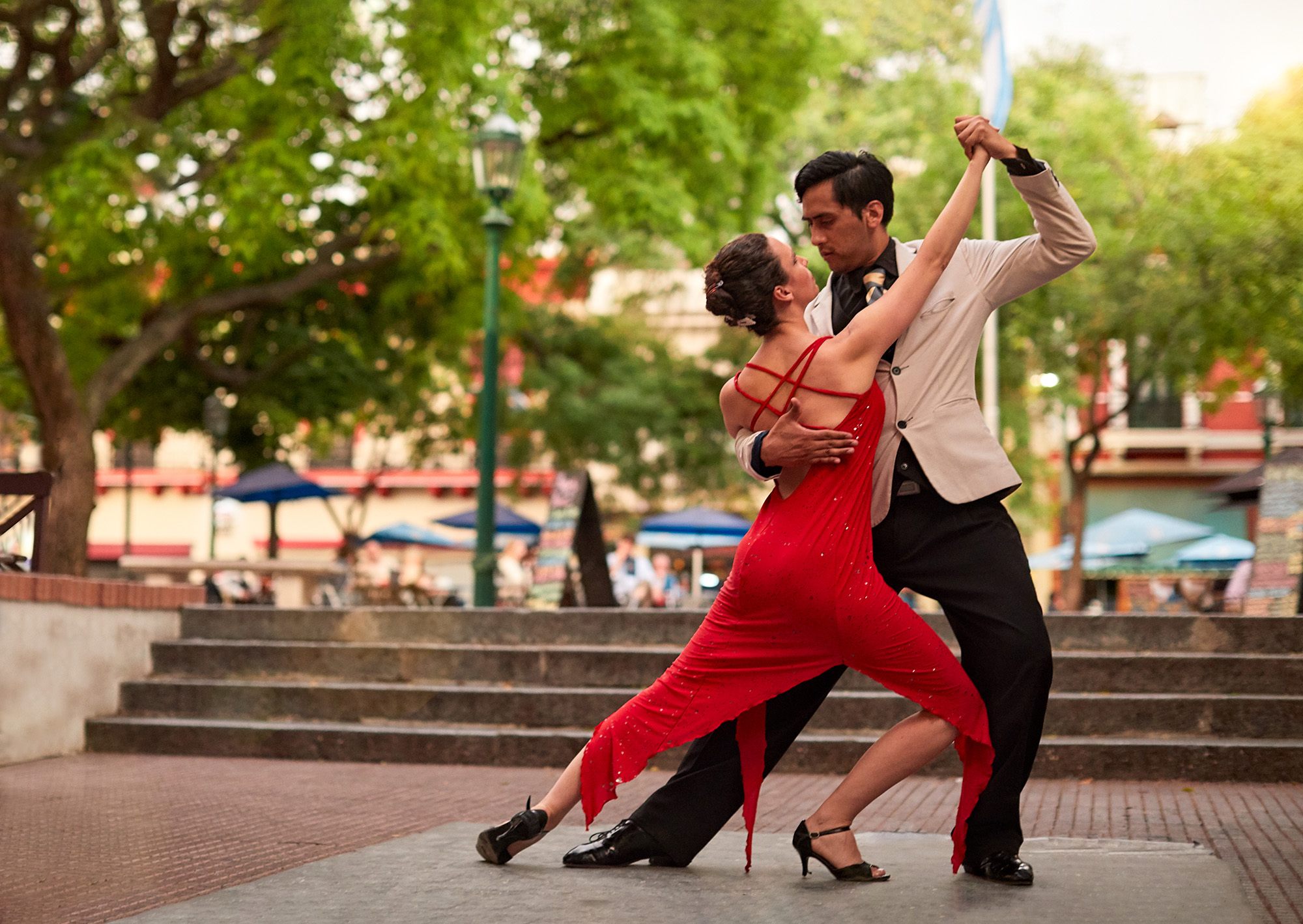
Latin dance has exploded in popularity in recent years. Originating mainly from South America and the Caribbean, Latin American dancing has spread around the world, surpassing American and European partnered dances such as Swing and Waltz in popularity.
There are more than a dozen Latin dance styles out there and if you’re new to dance the wide array of dances can be overwhelming. That’s why we’ve put together this complete list of Latin dance styles, with helpful descriptions and videos of each Latin dance.
Once you finish this article you’ll have a complete overview of what’s out there so you can find the dance style that’s right for you!
Salsa
Salsa is by far the most popular Latin dance style and is also the most popular partnered dance in the world, with dance schools and clubs found in almost every major city on nearly every continent.
Salsa was born in the United States in the 1960s, developed mainly by Puerto Ricans and Cubans living in New York City. The dance style and music borrows heavily from other Latin dances that came before it such as the mambo, cha cha, son and Latin hustle.
Salsa is known for its fun, flirtatious and energetic movements, although there are slower and more romantic salsa songs as well. There are also many different styles of salsa dancing, so even within salsa dance there is quite a bit of variation.
The different styles of salsa dancing are:
- New York Style Salsa (Salsa On 2)
- LA Style Salsa (Salsa On 1)
- Cuban Style Salsa (Salsa Cubana)
- Salsa Rueda (Rueda de Casino)
- Colombian Salsa (Salsa Caleña)
- Salsa Choke
Salsa is primarily a social dance, with many clubs and dance studios hosting salsa nights. Performance is a big aspect of salsa as well, with many festivals around the world where dancers go to perform choreographed routines. There are also international salsa competitions where dancers compete to see who is the best dancer.
Bachata
Bachata is another incredibly popular form of Latin-style dance, that has grown in popularity in the last few years, especially among the younger crowd.
Bachata originated in the Dominican Republic, and is known for typically being slower and more sensual than salsa dancing (see our article on the differences between salsa and bachata).
Like salsa, there are a few different styles of bachata, the main ones being Dominican or Traditional bachata which has simple turns and focuses more on footwork, Sensual bachata, which incorporates more body movement and sensual moves, and Urban Bachata or Bachata Fusion which incorporates other styles such as hip hop.
Bachata dancing can usually be found in many of the same venues that offer salsa, and bachata has grown in popularity to the point that there are now entire festivals and events dedicated just to bachata.
Argentine Tango
Argentine tango is a popular hispanic dance that originated in Buenos Aires, Argentina, with roots in Spain and Cuba.
Tango is strongly influenced by traditional European ballroom dances, and is danced upright with a close connection, with litle in the way of hip movement. Tango has a reputation for being intense and passionate, and many dramatic poses and holds (including the one at the top of this article) come from tango.
Tango is typically danced more slowly than salsa, but Argentine tango incorporates flicks and kicks which can be quite rapid.
Tango is danced socially at events called “milongas” and is also performed on stage as well.
Merengue
Merengue, like bachata, is a social dance that originated in the Dominican Republic– in fact, it is the national dance of the country!
Merengue is very similar to bachata in that it is danced with a side-to-side movement with a lot of hip movement. However, merengue music tends to be a lot faster than bachata and merengue is known for being fun and energetic rather than sensual like bachata.
Merengue is a popular dance among the Latin American community, particularly amongst Mexicans and Dominicans, and is often found in Latin dance clubs although it is rare to see it danced in salsa socials or festivals.
Merengue is easier to learn than most Latin American dances, and most merengue dancers don’t have formal training and just pick it up by watching and dancing it.
Cumbia
Cumbia is a South American dance style that originated in Colombia, and has grown in popularity in Latin American, particularly in Mexico and Peru.
Cumbia is danced in a circular motion, with the basic step being characterized by a short kick followed by a rock step, similar to East Coast Swing.
Cumbia bears some similarities to Colombian style salsa, which was strongly influenced by cumbia, although cumbia is danced much slower.
Like merengue, cumbia is a dance that is rarely formally taught in dance schools. It is occasionally taught in night clubs, and most dancers pick it up just by watching.
Quebradita
Quebradita is a high energy partner dance that originated in Mexico. It is known for being an incredibly energetic dance, with the dancers performing many acrobatic lifts and tricks.
The style of dance was popular in Los Angeles in the 1990s, but is a niche dance that is mostly limited to the Mexican community.
Because the dance requires incredible athleticism from both the lead and follow, it is rarely danced socially. There are quebradita competitions where couples compete to outdo each other with their tricks and lifts, and quebradita is occasionally incorporated into dance performances.
Mambo
Mambo confusingly is a word that can refer to a few different dance styles (see our article on mambo vs salsa).
Mambo was originally developed in the 1940s in Cuba and popularized in New York in the famed Palladium Ballroom. The style borrowed from earlier dance styles such as son and danzon and evolved in the active dance scene of NYC.
Traditional mambo is rarely danced anymore, although mambo led directly to the creation of salsa, which borrows many of its moves and elements. In fact, New York-style salsa is occasionally referred to as “mambo” because the break step happens on the second beat of the music, as was common in mambo.
It has increasingly become popular to incorporate traditional mambo styling into salsa dancing as an homage to salsa’s origins, with popular dancers such as Eddie Torres, Adolfo Indacochea and Benny & Brandon Ayala reviving the mambo style.
The term “mambo” has also been adopted in the world of Ballroom Dance, where it confusingly refers to Salsa On1.
Zouk
Brazilian Zouk is a dance style which originated in Brazil in the 1990s. It evolved from an earlier style of dance called Lambada.
Zouk is known for its focus on connection, dynamism, and off-axis turns. Zouk is danced to Zouk music, as well as contemporary music such as hip hop and pop.
Zouk has grown in popularity in recent years, with many salsa and bachata festivals including zouk into their programs. There are also many festivals and events dedicated just to Brazilian Zouk dancing.
Zouk is danced socially as well as in performances and competition. Jack & Jill competitions, where dancers are paired with a random partner to compete with, are especially popular within the Zouk community.
Lambada
Lambada is a Brazilian partner dance that had a massive global boom in the late 1980s and early 1990s, helped along by the popularity of lambada music.
Lambada is known for its flowing, circular turns and close partner connection, and it strongly influenced Brazilian Zouk. In many places today, Brazilian Zouk is essentially taught as the modern evolution of lambada, so in a “zouk” class you will often hear teachers point out which movements and techniques come directly from lambada.
While lambada isn’t as common these days as zouk, it still pops up at Latin festivals and in the zouk community.
Kizomba
Kizomba is not technically a Latin dance, since it originated in Angola in Africa rather than in Latin America. However kizomba has become ubquitous in many Latin dance scenes in recent years and is danced at many Latin dance socials and festivals.
Kizomba is a slow and sensual dance with some similarities to tango, and originated from an earlier form of dance from Angola called semba.
Because of its slow nature, kizomba is danced almost exclusively in a social setting, with performances of kizomba being very rare.
There is a variation of kizomba called urban kiz, which has gained popularity in recent years, which shares many of the same characteristics but incorporates elements found in hip hop and other dances.
Pachanga
Pachanga is a hispanic dance style and music genre that originated in Cuba in the 1950s.
Pachanga is characterized by a bouncing movement which comes from the bending and straightening of the knees, and also incorporates gliding and sliding movements.
The dance style was most popular in the 1950s when it spread to New York along with the mambo and was danced at the Palladium ballroom. It was revived in popularity in recent years by Eddie Torres, and pachanga has become a staple move in salsa dance shines.
Latin Hustle
The Latin hustle (also known as New York hustle) is a dance that originated in New York and shares similarities with dance styles such as West Coast Swing and salsa.
It was created by Puerto Rican teenagers in the 1970s and has influenced and been influenced by salsa dancing.
Hustle has fallen out of popularity in most Latin dance scenes, but it is still taught and danced in some ballroom studios. Latin dance competitions such as the World Salsa Summit have also incorporated Latin hustle as a category in their recent competitions.
Son Cubano
Son Cubano, also referred to as “Cuban son” or simply “Son”, is a dance and musical genre that originated in Cuba in the early 1900s. It influenced many Afro Cuban dances that originated after it, including Cuban salsa.
The son basic step involves the dancers breaking back on the second beat of the music, similar to Salsa On2.
Son Cubano is rarely danced these days outside of cultural performances in Cuba, but many salsa dancers incorporate the steps and styling from son into their dancing.
Danzón
Danzón is another musical genre and Latin style dance that developed in Cuba.
Danzón is a slow partnered dance similar to the foxtrot. It is rarely danced these days outside of Cuba but had an early influences on other partner dances that originated in Cuba such as the cha cha cha and mambo.
Bolero
Bolero is a romantic partner dance and music style that developed in Cuba which influenced several Latin dances that came after it, including son cubano, bolero-son (a hybrid of bolero and son), cha cha cha and mambo.
You won’t see bolero danced very often at modern salsa socials, but the music and movement are a part of the “family tree” of Cuban music and dance, and it shows up in more traditional settings and performances.
In the ballroom world, the term “bolero” can also refer to a different dance style, so it helps to clarify whether someone means Cuban bolero or ballroom bolero.
Forró
Forró is a Brazilian partner dance and music style that is especially popular in Brazil, with a strong social dance culture centered around forró nights.
The dance is typically danced in a close embrace with lots of rhythm changes and playful footwork, and it can range from very simple to very technical depending on the style.
Samba de Gafieira
Samba de gafieira is a Brazilian partner dance that combines samba rhythm with the feel of a smooth social partner dance.
It has elegant movement, strong musicality, and lots of turns and changes of direction. Compared to the solo samba many people imagine, samba de gafieira is a partnered dance, and it has its own distinct technique and style.
Outside of Brazil it is more niche than salsa and bachata, but it has dedicated communities around the world, especially in larger cities.
Traditional and folkloric Latin dances
These dances are rooted in local culture and history, and they are often learned through community tradition and performed at festivals, celebrations, and cultural events. Some are also danced socially, but many are most commonly seen on stage or in cultural settings.
Baile Folklorico
Baile folklórico is an umbrella term for folkloric dances originating from Latin America. Many folkloric dances are rarely danced outside of their country, region or even city of origin.
Some folkloric dances predate the arrival the Spanish to South America, and are based on the traditional dances of the native peoples that lived there. Others are a mixture of native American and Spanish cultures.
Perhaps the most well known forms of baile Folklorico originate from Mexico, with many forms performed in both Mexico and the United States.
Mexican folkloric dance is known for the flamboyant colors and flowy dresses worn by the women and large sombreros worn by the men. The dances often tell a story of courtship, with elements of solo and partnered dancing. The dance steps also frequently incorporate elements of tap dancing.
There are many styles of baile folklórico which originate in Mexico, including:
- Jarabe Tapatío the “Mexican hat dance” from Jalisco
- Danza de los Viejitos from Michoacán
- Danza del Venado from Sonora
- La Bamba from Veracruz
- Danza de los concheros
See this article on traditional Mexican folk dances to learn more about each of these dance styles.
Many other South American countries have their own unique folkloric dances as well, including Brazil, Panama, Argentina, Honduras and Colombia.
Colombia especially has a number of traditional dances that have spread outside of their place of origin, including the Champeta, Cumbia, Joropo, Mapale and Vallenato.
Bomba
Bomba is a Latin American dance and musical genre that originated in Puerto Rico, developed primarily by Africans who were brought over as slaves.
Bomba, like many other Latin American dance styles, combines traditional African dances with Spanish and indigenous influences. Bomba is similar in many ways to Cuban dances such as the guaguanco in both style and outfits.
Although bomba is rarely danced outside of Puerto Rico, there are elements of bomba which can be found in salsa dancing since salsa music was originally developed by Puerto Ricans living in New York.
Plena
Plena is another Latin American dance style that originated in Puerto Rico.
Plena was strongly influenced by bomba, and bears many similarity to it and Afro Cuban dances. Plena is also a folkloric dance with some resemblance to other folkloric traditions, such as baile folklorico.
Like most folkloric dances, Plena is mostly danced in performances these days rather than on the social dance floor. It is rare to see plena danced outside of Puerto Rico.
Flamenco
Flamenco is a powerful dance and music tradition from Spain, known for its intense emotion, dramatic posture, and rhythmic footwork.
Flamenco isn’t technically a Latin American dance (since it comes from Spain rather than Latin America), but it is often discussed in the same broader “Latin dance” context because of its Spanish roots and major influence across the Spanish-speaking world.
While flamenco isn’t a social partner dance like salsa, it is one of the most recognizable Latin-rooted dance traditions globally.
Flamenco is often performed with live music (guitar, vocals, and clapping), and it is commonly learned through dedicated flamenco schools and performance groups.
Marinera
Marinera is a traditional partner dance from Peru, often danced with handkerchiefs and known for its playful, flirtatious feel.
The dance is sometimes described as a courtship dance, and performances often highlight elegant footwork, proud posture, and lots of character from both dancers.
Outside of Peru, marinera is most commonly seen at cultural festivals and folkloric performances.
Read our complete Marinera dance guide.
Cueca
Cueca is a traditional dance found in several South American countries, especially Chile, and it is often danced in a way that represents a courtship chase.
Like marinera, cueca is commonly danced with handkerchiefs, and it is usually performed at cultural celebrations and national holidays.
You will see regional variations depending on the country and even the specific region.
Joropo
Joropo is a fast, rhythmic dance tradition from Venezuela and Colombia, danced to lively music featuring instruments like the harp, cuatro, and maracas.
The footwork can get very quick, and many versions emphasize a strong bounce and driving rhythm that feels completely different from salsa timing.
Joropo is a major cultural dance, and it is most often learned and performed within folkloric groups, though some communities also dance it socially.
Read our complete guide to Joropo.
Huayno
Huayno is a traditional Andean dance and music style found in countries like Peru and Bolivia, with deep indigenous roots.
The dance is often upbeat and celebratory, and you will see different styles depending on the region and local traditions.
Huayno is commonly danced at community events, festivals, and cultural celebrations rather than in the typical Latin social dance club setting.
Mapalé
Mapalé is an Afro-Colombian dance known for its high energy, strong percussion, and athletic movements.
It is often performed as a folkloric dance, with sharp, and powerful body movements.
Mapalé is not something you’ll typically see outside of Colombia, but it is occasionally performed at cultural festivals and events.
Latin Ballroom Dances
In the ballroom dance world, there is a category called International Latin American Dance. In International Latin, dancers compete by dancing five dances: the cha cha cha, samba, rumba, paso doble and jive.
Cha Cha Cha
The cha-cha-cha or simply cha cha is a musical style and dance developed in the 1950s in Havana, Cuba and popularized in the US and the world around 1955 in what is known as the “cha cha cha craze”.
The name of the dance comes from the sound dancers’ shoes make while shuffling three consecutive quick steps.
The cha cha is one of the five dances that are danced in ballroom dance competitions as part of the International Latin American Dance competition.
Cha cha is also danced socially at Latin dance socials. Many salsa socials will mix in the occasional cha cha song amongst the salsa. Many of the steps and turn patterns in cha cha are identical to salsa but danced at a slower rate, with the cha-cha-cha step added in between measures.
Samba
Samba is a musical genre and dance that originated in Brazil in the early 20th century. It is known for its incredibly fast footwork and hip movement, and is a staple dance in the festival of Carnaval in Brazil. Some Colombian salsa dancers also incorporate elements of samba into their dancing.
Samba is also the name of a ballroom dance that was inspired by the Brazilian dance. Ballroom samba has some elements of Brazilian samba but is highly stylized in the typical ballroom dance style. Ballroom samba is also a partnered dance, whereas Brazilian samba is usually danced solo.
Both styles of samba are mostly performed in shows or competitions, and are not danced socially.
Rumba
Rumba (also spelled “rhumba”) is a term that can refer to a number of Latin American dances.
The term rumba means “party”, and is an umbrella term used to refer to a number of Afro Caribbean dances developed in Cuba such as the guaguanco, yambú and columbia. These dances are often referred to as “Afro Cuban rumba”, and have strong African influences in terms of music and dance style.
Rumba is also a category of dance in International Latin ballroom dance competitions. Ballroom rumba bears little resemblance to Afro Cuban rumba, and could be described as a kind of slow-motion salsa (it evolved from an earlier Cuban dance style called “bolero-son”). There are also two types of ballroom rumba: American style, which is danced on1, and International style which is dance on2.
Paso Doble
Paso doble or pasodoble means “double step” in Spanish and is a quick tempoed dance that is one of the dances in the International Latin category of ballroom dance. The exact origins of the dance are unknown, but it is commonly believed to have originated in France and inspired by Spanish bullfights.
Paso doble is danced almost exclusively in ballroom dancesport competitions and not socially. Paso doble is known for its fast tempo and dramatic flair, similar to flamenco.
Jive
The jive is not really a Latin American dance, although it is included in the International Latin category in ballroom dance. It originated in the US with influences from swing dance and other American folk dances.
Jive is characterized by its quick tempo and bouncy step, similar to the lindy hop.
The jive is almost exclusively danced these days in the ballroom dance world as a competitive dance.
Latin Dance FAQ
What are the top 5 Latin dances?
The top 5 Latin dances in order of popularity are: salsa, bachata, cha cha, merengue and cumbia.
What are the five Latin dances in dance sport?
The five dances that make up the Latin dance category in ballroom dancesport are cha cha cha, samba, rumba, paso doble and jive.
What are the hardest Latin dances?
The Latin dances that are considered most difficult are fastest ones: salsa (especialy Colombian salsa), Brazillian samba, and the Jive. Slower Latin dances that are difficult in terms of their technicality and intricacies are Argentian tango and Latin hustle.
What are the modern Latin dances?
Some of the more modern salsa dances include salsa, bachata (especially sensual bachata), kizomba, zouk and reggaeton.
What is the most sensual Latin dance?
The Latin dances that are generally considered the most sensual are sensual bachata, kizomba, zouk and Argentinian tango.
And that’s our list of the most popular Latin-style dances! From salsa and bachata to paso doble and plena, we hope you’ve gotten a good overview of the different styles of Latin dance that are out there so you can find the ones that are best for you! Let us know in the comments if we missed any of your favorites or if you have any questions!




Leave a comment