If you’re new to salsa, you may not realize just how many different styles of salsa music there are. From slow, romantic songs to fast-paced tracks with blaring horns, salsa spans a wide range of sounds and moods.
With Cuban roots and a history shaped by New York’s Latin music scene, salsa has grown into one of the world’s most popular and diverse forms of Latin music. Whether you love a heartfelt love song or a beat that gets you out of your seat, there’s plenty to discover.
This guide breaks down the different styles of salsa music, what makes each one special, and which songs to listen to first. Use the table below to jump to any style that catches your interest.
Salsa music styles at a glance
| Style | What to listen for | Start with |
|---|---|---|
| Salsa dura | Punchy horns, layered percussion, a driving band | “Quimbara” |
| Salsa romántica | Melodic vocals, love stories, polished arrangements | “Lluvia” |
| Contemporary salsa | Catchy choruses, polished production, a fresh salsa sound | “Vivir Mi Vida” |
| Salsa consciente | Stories and songs with a message | “Plástico” |
| Colombian salsa | Big band sounds and Colombian stories | “Cali Pachanguero” |
| Timba | Changing bass and percussion patterns, sharp breaks | “La Expresiva” |
| Latin jazz | Creative solos and a jazz feel | “Soul Sauce” |
| Salsa fusion | Reggae, rap, reggaeton, or other added influences | “Salsaton” |
| Salsa covers | A familiar tune rebuilt around a salsa arrangement | “La Pantera Mambo” |
| Salsa choke | Catchy hooks and electronic beats | “Swagga” |
1. Salsa dura
Salsa dura is a style of salsa music known for powerful horns, lively percussion, and extended instrumental solos. Its name means “hard salsa,” and it became a defining sound of the classic salsa era in the 1960s and 1970s. Also called salsa brava, it gives the whole band a chance to shine, from the singer to the piano player and percussionists.
The excitement comes from how the musicians play off each other. A singer calls out a line, the chorus answers, and the horns jump in with a punchy phrase. Then a piano or percussion solo might take over. Listen to Celia Cruz or Ray Barretto and you’ll hear how these layers build into music that practically pulls you onto the dance floor.
Listen for: How the horns, drums, and singer build excitement together.
Start with these songs
- “Quimbara” · Celia Cruz & Johnny Pacheco. A lively entry point into the conversation between singer, chorus, and percussion. Listen on YouTube
- “Indestructible” · Ray Barretto. A classic example of the muscular sound associated with salsa dura. Listen on YouTube
- “Aguanile” · Willie Colón & Héctor Lavoe. A powerful chorus and driving percussion make this a salsa dura favorite. Listen on YouTube
2. Salsa romántica
Salsa romántica is a style of salsa music that emphasizes romantic lyrics, memorable melodies, and smooth vocals. It became hugely popular in the 1980s, with singers such as Frankie Ruiz and Eddie Santiago leading the way. Love, longing, and heartbreak are favorite subjects, making these songs as satisfying to sing along with as they are to dance to.
The singer usually takes center stage, backed by piano, horns, and a steady salsa groove. A song may start gently before building to a big, emotional chorus. You may also hear the name salsa erótica for songs with more openly sexual lyrics. It’s the steamy side of this musical family.
Listen for: A love-song melody with a beat that makes you want to dance.
Start with these songs
- “Lluvia” · Eddie Santiago. Eddie Santiago’s smooth vocals turn a story of longing into a salsa favorite. Listen on YouTube
- “Tú con Él” · Frankie Ruiz. A clear example of a vocal-led love song that keeps its dance-floor momentum. Listen on YouTube
- “Lobo Domesticado” · Tommy Olivencia. A catchy love song with smooth vocals and plenty of dance-floor energy. Listen on YouTube
3. Contemporary salsa
Contemporary salsa brings salsa’s familiar rhythms together with modern production, catchy songwriting, and influences from popular music. Also called modern salsa, it’s a broad description of how the music keeps evolving. Some songs lean romantic, while others are made for parties, sing-alongs, or the dance floor.
Marc Anthony’s “Vivir Mi Vida” pairs an uplifting chorus with a lively salsa band, while “Valió la Pena” combines a love song with plenty of rhythmic punch. More recently, Bad Bunny’s “Baile Inolvidable” brought a classic salsa sound to a new pop audience. These songs show how salsa can build on its roots while finding fresh ways to connect with listeners.
Listen for: Catchy choruses, polished production, and a familiar salsa groove.
Start with these songs
- “Vivir Mi Vida” · Marc Anthony. An uplifting salsa anthem with a chorus made for singing along. Listen on YouTube
- “Valió la Pena” · Marc Anthony. A passionate love song with a driving salsa arrangement. Listen on YouTube
- “Baile Inolvidable” · Bad Bunny. A modern hit that celebrates the sound and feeling of salsa. Listen on YouTube
4. Salsa consciente
Salsa consciente is salsa music with lyrics about social issues, politics, and everyday struggles. The name means “conscious salsa,” and its songs often tell vivid stories while giving listeners something to think about. Rubén Blades is a great place to start, especially the music he recorded with Willie Colón.
“Pedro Navaja” plays out like a short crime story, while “Plástico” takes aim at people who care more about appearances than each other. The band helps bring those stories to life, building tension and excitement as the lyrics unfold. Don’t speak Spanish? Try reading a translation as you listen. A song you’ve danced to for years might have a story you never knew.
Listen for: The story in the lyrics and how the music helps tell it.
Start with these songs
- “Pedro Navaja” · Willie Colón & Rubén Blades. A street story with a twist, from Siembra. Listen on YouTube
- “Plástico” · Willie Colón & Rubén Blades. Notice the disco-flavored opening before the salsa arrangement takes over. Listen on YouTube
- “Tiburón” · Willie Colón & Rubén Blades. A song with a political message hidden inside the image of a shark. Listen on YouTube
5. Colombian salsa
Colombian salsa is salsa music shaped by Colombia’s bands, dance culture, and local musical influences. It includes romantic songs, big party anthems, and music that celebrates Colombian life. Grupo Niche, Guayacán Orquesta, Fruko y Sus Tesos, and Joe Arroyo are some of its best-known names, each with a sound worth exploring.
Cali is one of the great centers of Colombian salsa, famous for its music and fast-footwork dance style, salsa caleña. “Cali Pachanguero” captures that love of the city in a song that has become one of its musical calling cards. For a different side of Colombian salsa, try Joe Arroyo’s “Rebelión,” a powerful story about an enslaved couple standing up to their owner.
Listen for: How each band puts its own spin on the salsa sound.
Start with these songs
- “Cali Pachanguero” · Grupo Niche. A musical love letter to Cali. Listen on YouTube
- “Rebelión” · Joe Arroyo y La Verdad. A powerful story with a groove that keeps you dancing. Listen on YouTube
- “El Preso” · Fruko y Sus Tesos. A dramatic prison story carried by a big, unforgettable chorus. Listen on YouTube
6. Timba
Timba is a Cuban dance music genre that combines son, rumba, jazz, and funk with powerful percussion and frequent changes of groove. It took shape in the late 1980s and 1990s with groups such as NG La Banda. Earlier bands such as Los Van Van helped pave the way with songo, their own blend of Cuban rhythms and other influences.
One of timba’s trademarks is “changing gears.” The bass and drums switch what they’re playing, making the music feel completely different even when the speed stays the same. The band might drop to a few instruments, hit a sudden break, then come roaring back. Those surprises give dancers lots to play with and make timba exciting to follow from beginning to end.
Listen for: The bass and drums switching things up under the singer.
Start with these songs
- “La Expresiva” · NG La Banda. An early timba favorite that gives shout-outs to Havana’s neighborhoods. Listen on YouTube
- “Y San Toma Qué” · Paulito FG y Su Élite. Listen for how the band drops instruments out and brings them back as the groove changes. Listen on YouTube
- “Me Mantengo” · Juan Formell y Los Van Van. A lively introduction to Los Van Van’s mix of songo and timba. Listen on YouTube
7. Latin jazz
Latin jazz combines jazz harmony and improvised solos with rhythms from Cuba, Brazil, and other parts of Latin America. Its Cuban-influenced sound is especially familiar to salsa fans, with lively percussion, repeating piano patterns, and bright horns. Musicians such as Machito, Dizzy Gillespie, and Chano Pozo helped bring jazz and Cuban music together.
The musicians often get plenty of room to solo, making up new musical phrases as they go. You might hear a trumpet take the lead, followed by a piano or percussion solo. That sense of freedom is part of the appeal. Some tracks fit beautifully into a salsa night; others invite you to sit back and enjoy the musicians at work.
Listen for: An instrument taking the lead while the band plays behind it.
Start with these songs
- “Soul Sauce (Guachi Guaro)” · Cal Tjader. A compact, approachable example with a distinctive vibraphone sound. Listen on YouTube
- “Manteca” · Dizzy Gillespie and His Orchestra with Chano Pozo. A classic meeting of jazz horns and Cuban percussion. Listen on Spotify
- “Take Five” · Tito Puente. A Latin jazz take on the familiar jazz classic. Listen on YouTube
8. Salsa fusion
Salsa fusion blends salsa with other musical styles, such as reggae, hip-hop, reggaeton, rock, or funk. DLG helped popularize a mix of salsa, reggae, rap, and pop, while salsatón brings salsa and reggaeton together. These combinations open up all kinds of possibilities for singers, bands, and producers.
Try listening for what each sound brings to the song. You might hear a reggae-style vocal over a salsa band, or a track that switches from salsa into a reggaeton beat. Electronic sounds, rap verses, and unexpected instruments can all add something fresh. For dancers, those changes are a chance to play with the music and try a different mood or movement.
Listen for: The reggae, rap, or reggaeton touches mixed into the salsa.
Start with these songs
- “La Quiero a Morir” · DLG. A useful example of the group’s salsa, reggae, and pop crossover sound. Listen on YouTube
- “Se Le Ve” · Andy Montañez featuring Daddy Yankee. A direct introduction to salsatón from Salsa con Reggaetón. Listen on YouTube
- “Salsaton” · El Rubio Loco. A playful salsa and reggaeton crossover. Listen on YouTube
9. Salsa covers
A salsa cover is a new version of an existing song performed with a salsa arrangement. Musicians give familiar melodies a fresh feel through salsa rhythms, piano, and horns. Pop hits, love ballads, rock songs, and even movie themes have all had the salsa treatment.
Try La-33’s take on the Pink Panther theme, Son Boricua’s “Volare,” or Willy Chirino’s version of the Beatles’ “Blackbird.” Following a melody you already know makes it easier to hear what the band adds around it. These songs can be a fun way into salsa, especially if you’re still getting used to the rhythms.
Listen for: What changes around the melody: the bass, percussion, piano, horn figures, and phrasing.
Start with these songs
- “La Pantera Mambo” · La-33. The band’s instrumental adaptation of Henry Mancini’s Pink Panther theme. Listen on YouTube
- “Volare” · Son Boricua. The familiar Italian melody gets a fresh salsa arrangement. Listen on YouTube
- “Blackbird” · Willy Chirino. A salsa take on the Beatles classic. Listen on YouTube
For more familiar songs with a seasonal twist, explore our Halloween salsa playlist.
10. Salsa choke
Salsa choke is a Colombian dance music style that blends salsa with hip-hop, reggae, electronic beats, and local Pacific coast rhythms. It grew out of the music scene on Colombia’s Pacific coast, especially among Black musicians in Tumaco, and took off in Cali. Catchy hooks and repeating beats give it a sound that’s easy to get into.
The dancing is part of the fun: people often dance on their own or follow steps together in a group. You may have seen Colombia’s soccer players celebrating goals to “Ras Tas Tas” during the 2014 World Cup. That helped introduce salsa choke to the world, but the music had already been getting people moving back home for years.
Listen for: The catchy repeating beat, then watch how the dancers follow it.
Start with these songs
- “Ras Tas Tas” · Cali Flow Latino. Try following the dancers as you listen. Listen on YouTube
- “Chichoky” · CJ Castro. One of the songs that helped salsa choke take off. This upload brings back an older video. Listen on YouTube
- “Swagga” · Cali Flow Latino. A catchy party track with group dance moves to follow. Listen on YouTube
Common questions
What defines salsa music?
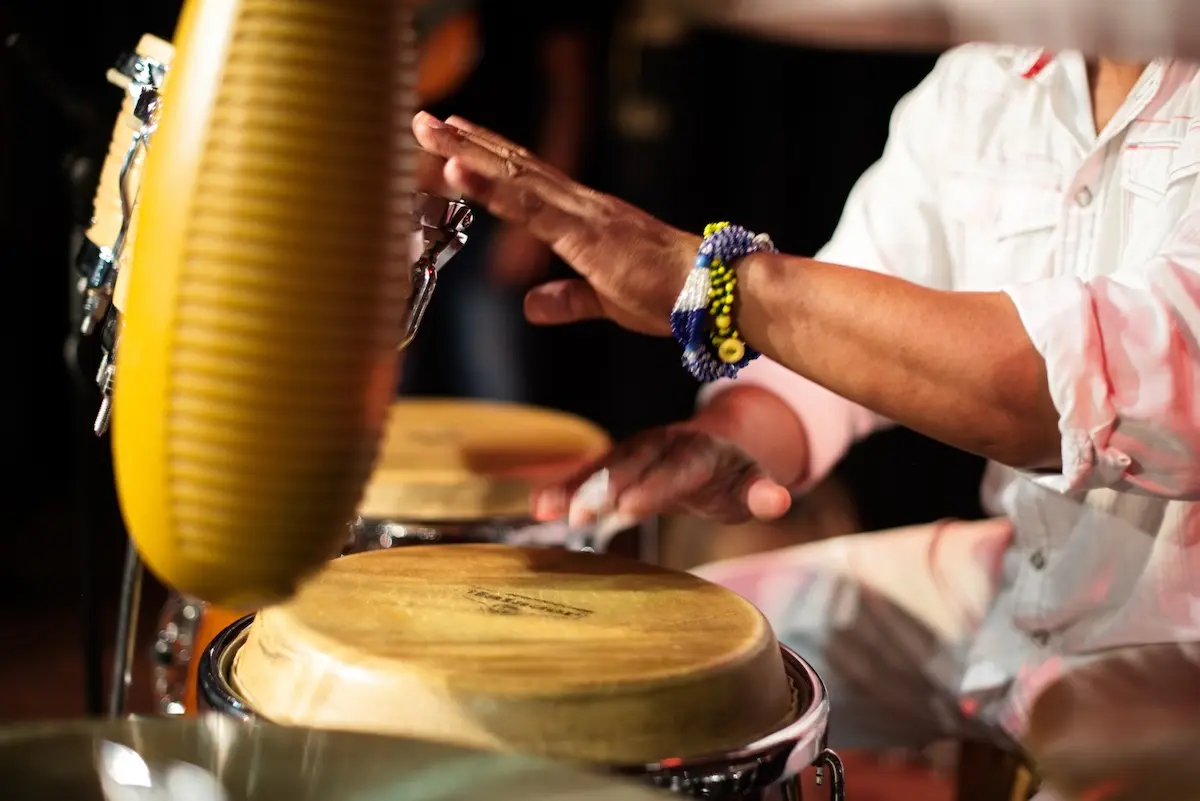
Salsa is dance music built around layers of rhythm. You’ll often hear congas, bongos, and timbales working together with bass, repeating piano patterns, and bright horns. A rhythm called clave, a five-hit pattern, helps hold the music together even when you can’t hear it played out loud. Many songs also feature a lead singer trading lines with a chorus.
Salsa is itself a fusion. It grew from Cuban styles such as son and mambo, with Puerto Rican rhythms, jazz, and other influences joining the mix. The word “salsa” became popular as an umbrella label for several related kinds of Latin dance music, especially through New York’s record industry in the 1960s and 1970s. That’s one reason salsa has so many different flavors.
Is salsa Puerto Rican or Cuban?
Both are central to its story, but modern salsa was born in New York. Its musical roots are largely Cuban, especially son and mambo. Puerto Rican musicians, including those growing up in New York, played a huge role in shaping its sound and making it their own. Cuban and other Latin musicians were part of that mix, too. Think Cuban roots, strong Puerto Rican influence, and a New York birthplace.
What is the number one salsa song?
Ask ten salsa fans and you might get ten different answers! There’s no single all-time winner, but these classics are great places to start:
- “Quimbara” · Celia Cruz & Johnny Pacheco: full of energy, with a chorus that sticks with you.
- “Pedro Navaja” · Willie Colón & Rubén Blades: a classic story song that builds as it goes.
- “Cali Pachanguero” · Grupo Niche: a Colombian favorite that celebrates the city of Cali.
For a newer hit, add “Baile Inolvidable” by Bad Bunny. Released in 2025, it brought salsa to a huge pop audience and put a fresh spotlight on the genre. It’s a fun place to begin if you’re coming to salsa from his other music.
How many styles of salsa music are there?
There’s no official count. Some names describe the sound, others tell you where the music comes from or what the lyrics are about. One song can fit several labels. Use them to find music you enjoy, without worrying about putting every song in the perfect box.
Are On1 and On2 different types of music?
On1 and On2 describe when dancers take certain steps, not different music genres. You can dance either timing to the same song. For more on the dancing, see our guide to the different styles of salsa dancing.