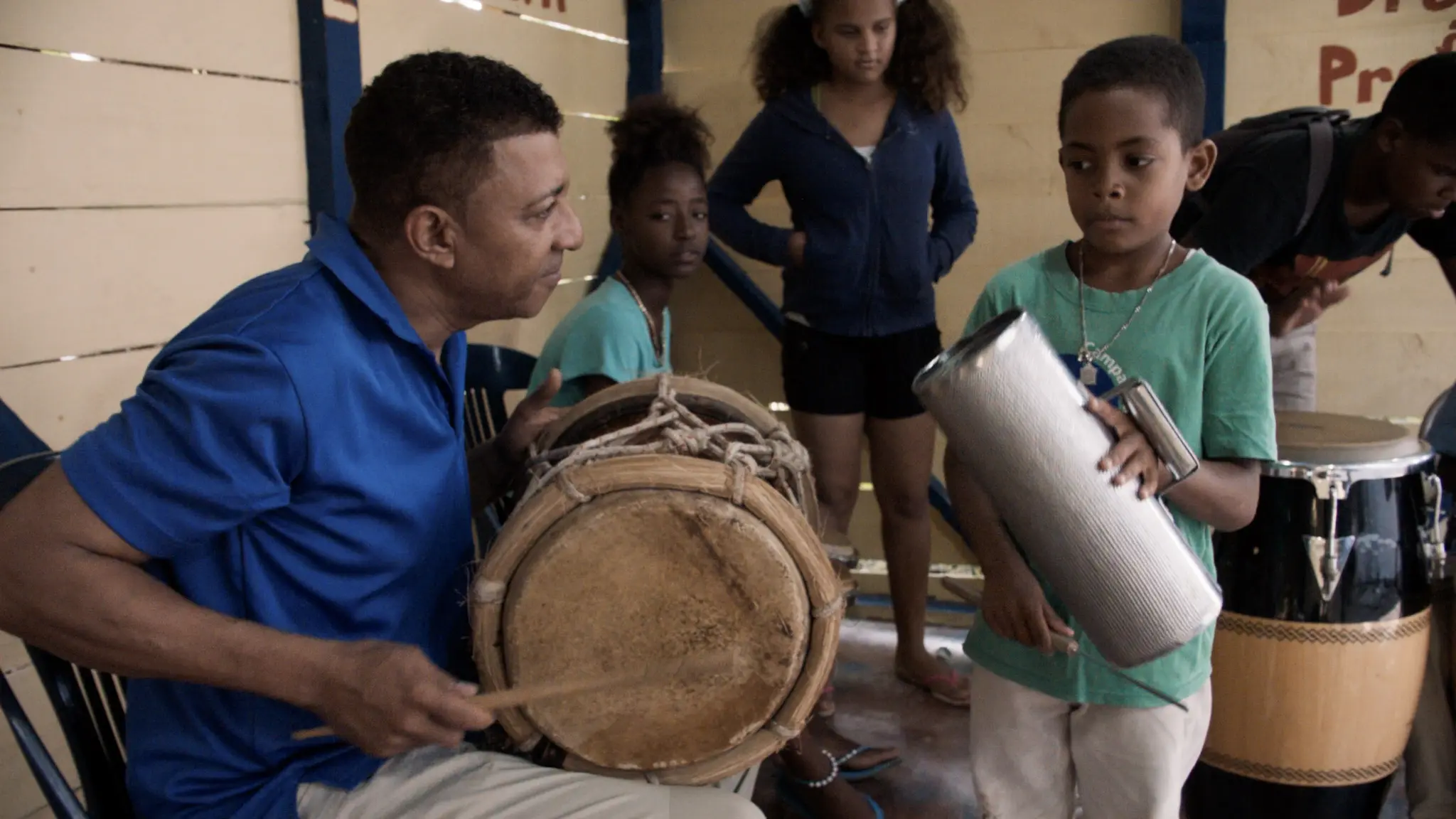
For many dancers, bachata first arrives through a song at a social, a class at a studio or a late-night festival floor. Agridulce (Bittersweet) asks us to follow that music back to Cabarete in the Dominican Republic, and meet young musicians growing up inside the culture that created it.
In Cabarete, bachata is not simply a soundtrack for dancing. It is a language for love, heartbreak, family, identity and the future. Filmed over five years, Agridulce follows four young bachateros as music helps them make sense of their lives and the paths they want to build.
Why Agridulce matters to bachata dancers
The history of bachata begins with guitar-based music and social dancing in working-class Dominican communities. It was stigmatized and excluded from prestigious media for decades before artists such as Juan Luis Guerra, Aventura and Romeo Santos helped carry it to international audiences. Today, dancers encounter bachata in clubs, studios and festivals from Tokyo to Berlin, often far removed from the communities where the music began.
Director Frank Pavich saw that distance as the reason to make the film. “Bachata has conquered the world,” he writes in his director’s statement, “and yet almost no one has turned to look at the place that gave birth to it.”
Agridulce is not a dance tutorial or a conventional history lesson. Its value for dancers comes from showing bachata as a living culture. The lyrics, guitars and rhythms are inseparable from the young musicians’ experiences of adolescence, family, belonging, love and disappointment. Understanding that relationship can deepen how dancers hear the music, interpret its emotion and connect their movement to what a song is expressing.
Growing up at Academia de Bachata
The 98-minute Spanish-language documentary follows Edickson Garcia Disla, Frandy Direze, Orianny Bonilla and Yerian Castillo as they study at the tuition-free Academia de Bachata. Founded in Cabarete in 2013 by producer Benjamin de Menil, the school provides young people with training in bachata and other Latin and Caribbean musical traditions.
The students are mentored by Mártires de León, a bachata guitarist who has worked with Romeo Santos and helped shape collaborations with artists including Bad Bunny, Justin Timberlake, Julio Iglesias and Rosalía. In the film, his role extends beyond technique. He helps the students navigate the responsibility of carrying a musical tradition forward while deciding what they want their own lives to become.

Pavich, whose previous documentary Jodorowsky’s Dune premiered at Cannes Directors’ Fortnight, uses an observational approach without traditional sit-down interviews. In an interview with The Moveable Fest, the filmmakers explained that the students’ songs often express what is happening in their lives. The music therefore carries parts of the story that another documentary might explain through interviews or narration.
From Cabarete to film festivals around the world
After premiering at SXSW in March 2026, Agridulce screened in Mexico, the United States, Brazil and Australia. Early coverage has repeatedly focused on its authenticity and cultural context. The Los Angeles Times described the film as both an ethnomusicological documentary and a coming-of-age story. Latina Media praised it for presenting the academy as an outlet rather than a simple savior story, while Austin Vida emphasized bachata’s role as a bridge between generations and communities.
A review from Loud And Clear Reviews praised the documentary’s emotionally authentic moments and observational filmmaking, although it found the narrative repetitive in places. During SXSW, Pavich, de Menil and Edickson also visited Austin radio station KUTX for a program about bachata’s history that included a live acoustic performance from Edickson.
Upcoming Agridulce screenings
- Kumasi, Ghana: Black Star International Film Festival, September 24–27, 2026. The individual screening time has not yet been announced publicly.
- Montréal, Canada: Film POP at Cinéma Moderne, September 27 at 7:00 p.m.
- Vancouver, Canada: Vancouver International Film Festival, October 7 at 6:00 p.m. and October 9 at 10:45 a.m.
Additional screenings are expected as the festival run continues.
Agridulce (Bittersweet) is presented in Spanish with English subtitles. Visit the official film website or follow @agridulcefilm for future screening announcements.