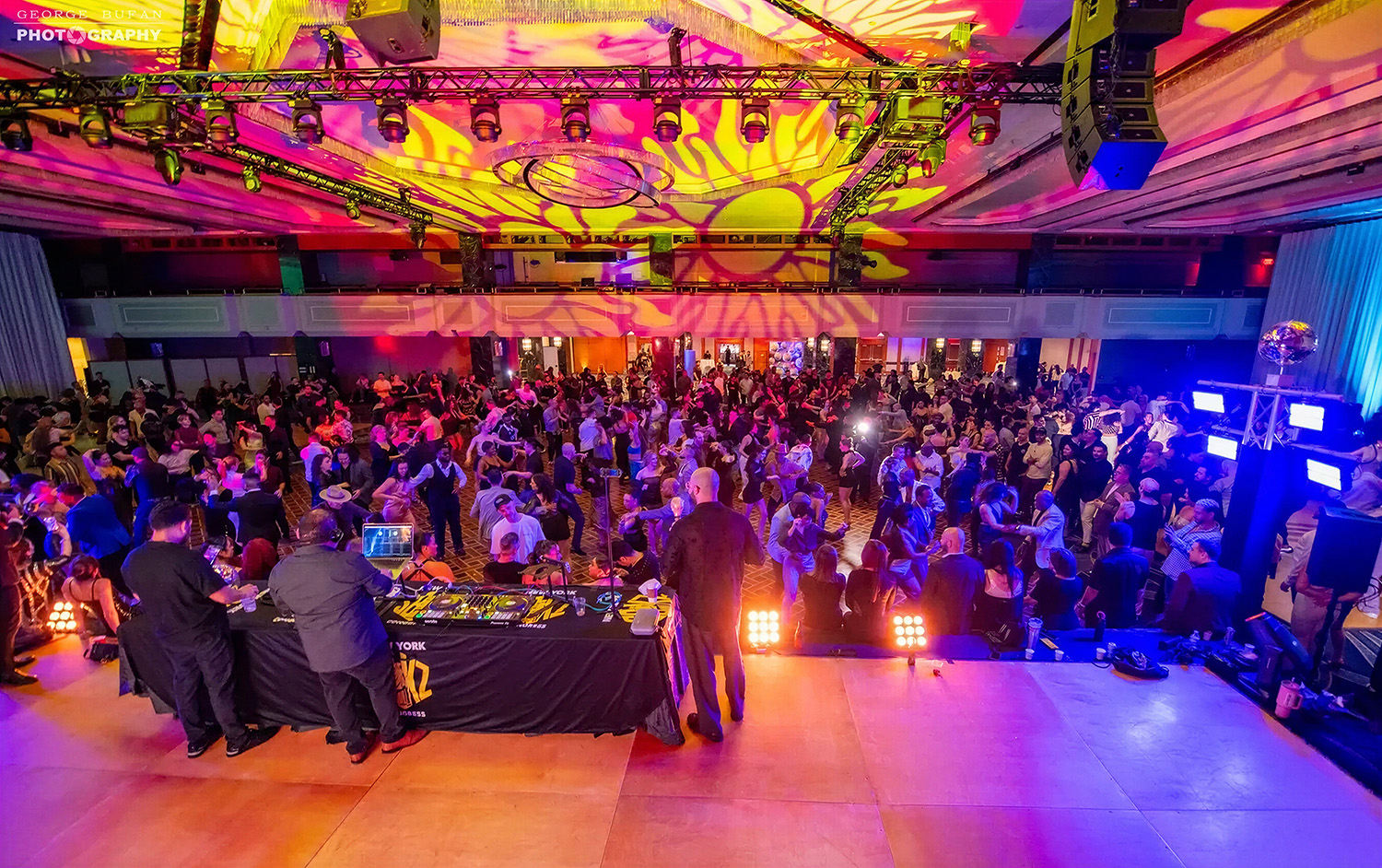
Your first dance congress can feel overwhelming in the best possible way.
There may be several workshops happening at once, world-class dancers walking through the hotel, teams rehearsing in the hallways, vendors selling dance shoes, and hundreds—or even thousands—of people arriving from different cities and countries. At night, the event may shift into hours of performances, competitions, live music, parties, and social dancing until sunrise.
You may immediately want to do everything: take every workshop, watch every show, dance all night, attend the afterparty, and somehow wake up early enough to do it again the next morning.
You can certainly try. But unless you plan to give up sleep almost completely, it helps to go in with a plan.
I attended my first salsa congress back in 2009, and the scale of the event was beyond anything I had imagined. Taking workshops from some of the best dancers in the world, watching world-class performances, and dancing until 4:00 a.m. every night made it a weekend I will never forget.
Since then, I have attended dozens of festivals around the world as a social dancer, performer, competitor, team director, and organizer. I have also learned that there is no single correct way to experience a Latin dance festival.
The best approach is to understand what the weekend offers, decide what matters most to you, and leave enough flexibility for the unexpected.
In this guide
What is a Latin dance congress?
A Latin dance congress is a multi-day gathering built around dancing, learning, performances, and the wider dance community. Most festivals include some combination of:
- Dance workshops
- Social dancing
- Performances
- Competitions
- DJs and live music
- Dance shoe and clothing vendors
- Bootcamps and special training sessions
These events go by many names. You may see them called salsa congresses, bachata festivals, SBK festivals, dance marathons, or weekenders.
Some focus almost entirely on one dance style. Many mixed events bring salsa, bachata, kizomba, zouk, and other partner-dance communities under one roof.
The exact experience can vary considerably. One festival might be known for its international instructors and professional shows. Another may be centered around social dancing. Others are competition-heavy, party-focused, or designed around a smaller regional community.
For more background on the history and format, read our guide to what a salsa congress is.
Are Latin dance festivals beginner-friendly?
Many festivals offer beginner workshops, but that does not necessarily mean every festival is ideal for a complete beginner.
Some events have clearly marked beginner tracks and attract dancers of all experience levels. Others are marketed toward intermediate, advanced, or professional dancers. A class labeled “open level” may still move quickly and assume that students understand basic timing, turns, and partnerwork.
You generally do not need a partner. Most partnerwork workshops rotate partners, although instructors will often allow friends or couples to remain together if they prefer.
You also do not need to attend the entire event. Many festivals offer:
- Full weekend passes
- Single-day passes
- Workshop-only passes
- Evening or party passes
- Tickets for individual shows or competitions
A one-day or evening pass can be a good way to sample the experience without committing to an entire weekend.
However, I would not usually recommend a festival as someone’s first exposure to Latin dancing. Someone who has never taken a class may enjoy watching the shows, listening to live music, or experiencing the atmosphere, but they may struggle to participate in the workshops and social dancing.
I had been dancing on and off for almost three years before attending my first congress. You do not necessarily need to wait that long, but most people will get more from the experience after taking regular classes for at least a few months.
Knowing the basic step, timing, common turns, and simple partnerwork in your preferred dance style makes it much easier to follow workshops and feel comfortable on the social floor.
How to choose your first dance congress
For most first-time attendees, location and atmosphere matter more than finding the most impressive instructor lineup in the world.
Start close to home
A nearby festival is often the easiest place to begin.
The travel costs are lower, you may already know people attending, and you might even be able to commute from home. A local event also makes it easier to purchase a one-day or evening pass if you are not ready for the entire weekend.
Large international destination festivals can be incredible, but they require more money, travel planning, and time away from work. There is nothing wrong with beginning locally and saving the major destination festivals for later.
You can use Salsa Vida’s worldwide festival calendar to compare upcoming events by country and region.
Consider the overall atmosphere
Festivals can feel very different from one another. Some are:
- Workshop-focused
- Social-dance-focused
- Performance-heavy
- Competition-heavy
- Party-oriented
- Small and community-driven
- Large and internationally focused
The best way to learn what a festival is really like is to talk to people who have attended before. Ask about the quality of the workshops, the social dancing, the organization, the venue, and the overall crowd.
Experienced dancers can also tell you whether the event is genuinely beginner-friendly or mainly attracts advanced dancers.
Check your preferred dance style
Do not assume that every mixed Latin dance festival will give equal attention to every style.
Look at:
- The instructor lineup
- The workshop schedule
- The number and size of the social rooms
- Whether the event focuses on salsa, bachata, kizomba, zouk, or a mixture
- Whether your preferred style has enough workshops and social dancing
At some mixed festivals, one style clearly dominates. Someone looking for a salsa-heavy weekend could be disappointed at an event where most attendees and instructors focus on bachata—or vice versa.
Look for a real beginner track
A dedicated beginner track is a good sign for newer dancers.
It also provides something especially valuable for introverts: structured socializing.
After rotating with the same people in two or three beginner workshops, they begin to feel familiar. By the evening social, you may already know several people you feel comfortable asking to dance.
Passes, accommodations, and the real cost
The festival pass is only one part of the total expense.
Beyond your admission, common costs include:
- Hotel accommodations
- Flights, transportation, and parking
- Meals and drinks
- Shopping, including shoes, clothing, and vendor purchases
- Optional bootcamps, private lessons, or special events
Read the ticket details carefully. A full pass may not include every bootcamp, concert, competition, pre-party, or afterparty.
Should you stay at the host hotel?
When the price is manageable, staying at the host hotel usually creates a much better experience.
The main benefits are practical:
- No commute between your room and the festival
- Easy access to naps
- Quick showers and clothing changes
- Somewhere secure to store your belongings
- No need to drive after dancing or drinking
- More time around other attendees
- Easier access to informal gatherings and afterparties
Being able to take a break at 2:00 a.m., change after a performance, or rest between workshops can completely change how the weekend feels.
An offsite hotel can work, especially if the host hotel is sold out or unusually expensive. But think carefully about transportation. A short drive may not sound difficult when booking the room. It feels different when social dancing ends at 5:00 a.m.
Sharing a room
Sharing a hotel room is one of the most common ways to lower festival costs. Depending on the event, that can mean two people sharing normally—or five people negotiating beds, couches, and floor space.
Discuss the important details before arriving:
- Who gets a bed
- Whether anyone is sleeping on the floor
- How many room keys are available
- How costs are divided
- Whether outside guests are allowed
- Noise and sleeping expectations
- Checkout plans
- Cleanliness
Crowded room sharing stops being worth the savings when it stops being fun.
What a Latin dance festival weekend actually looks like
The exact schedule varies, but most festivals follow a similar rhythm.
During the day
You may find:
- Registration
- Dance workshops
- Bootcamps
- Competitions
- Vendors
- Daytime socials
- Pool parties
- Meals and coffee breaks
- Tech rehearsals
- Naps and recovery
During the evening
The evening often includes:
- Dinner
- Getting dressed
- Performances
- Competitions
- Live bands
- Awards
- Pre-party gatherings
Late at night
After the shows, the event usually shifts toward:
- Multiple social-dance rooms
- DJs and live music
- Parties
- Afterparties
- Social dancing until early morning
A typical festival day might include workshops from late morning through the afternoon, a quick meal and nap, performances from 9:00 p.m. until midnight, and social dancing until 4:00 a.m.
The next day’s first workshop may begin only a few hours later.
Choose your festival experience
A festival offers several different experiences at the same time. Deciding what you want most from the weekend makes it easier to plan your schedule—and easier to skip something without feeling like you wasted your pass.
You do not need to place yourself permanently into one category. You might be a Workshop Warrior on Saturday afternoon, a Partygoer on Saturday night, and a Social Dancer on Sunday.
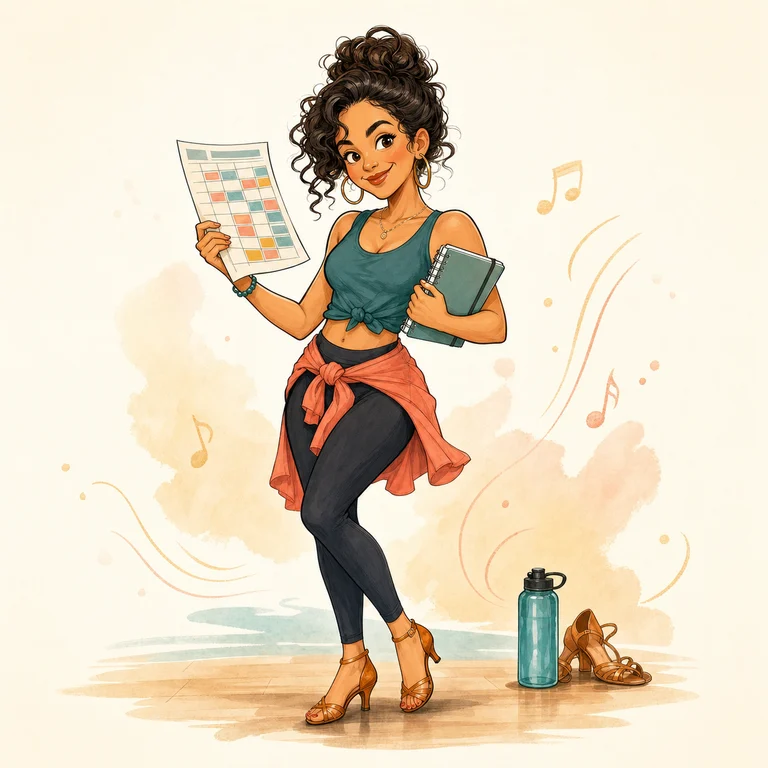
Workshop Warrior
Plans the day around classes and makes time to review what they learn.
- Choose three to five workshops
- Take notes or recap videos
- Leave time to practice
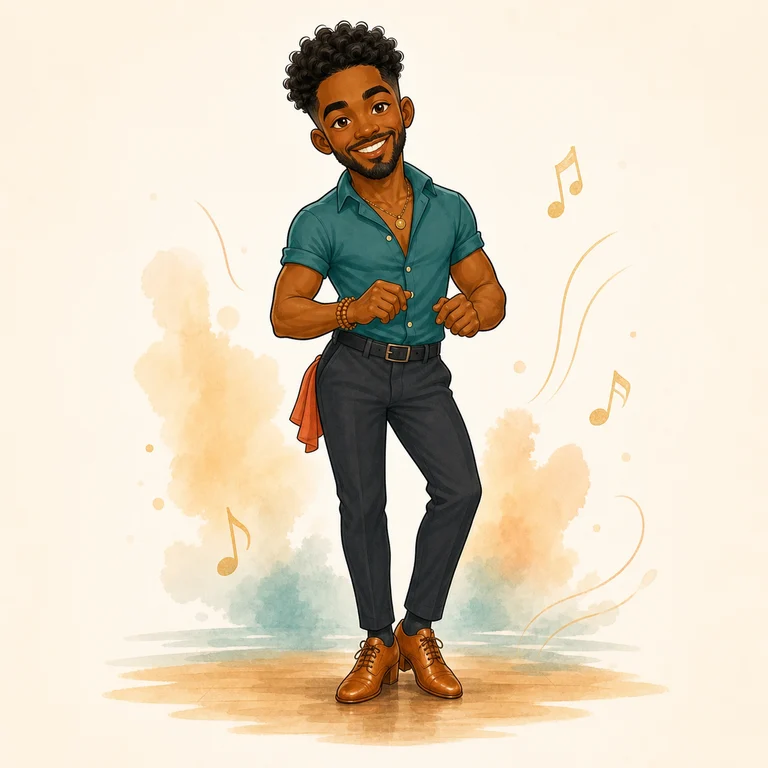
Social Dancer
Protects their energy for hours of dancing with new partners.
- Take one or two workshops
- Eat a real meal and take a nap
- Arrive early for more floor space

Partygoer
Treats the festival as a reunion, with shows, drinks, dancing, and afterparties.
- Keep the daytime flexible
- Meet friends before the shows
- Save energy for the late night

First-Timer
Samples the whole weekend without trying to do everything.
- Pick two or three accessible workshops
- Watch part of the performances
- Leave room to rest and explore
Choose two or three must-attend activities, keep a few nice-to-have options, and treat everything else as optional. The goal is to leave inspired—not relieved that the weekend is over.
Which day should you attend?
The character of a festival can change from day to day.
Friday
Friday afternoon workshops may be less crowded because many local attendees are still working or traveling.
Taking Friday off can give you more space and more direct interaction with excellent instructors. If you wait until Friday night, you may miss a meaningful part of the workshop schedule.
Saturday
Saturday is usually the largest night.
It often has the biggest performances, most crowded parties, and strongest social dancing. Someone buying a one-day pass will often get the most complete festival experience on Saturday.
Sunday
Sunday depends heavily on the size of the festival.
At a large event, Sunday night can be excellent. Many professional dancers have finished performing and are finally able to relax, socialize, and dance.
At a smaller festival, Sunday may be quiet because attendees need to travel home or work the next morning.
How to get more from festival workshops
Festival workshops are different from regular weekly classes.
They are short, often crowded, and designed to give attendees a useful experience in approximately 50 minutes. The instructor cannot always slow down enough to make sure every student has mastered the material.
Choose the right level
It is fine to challenge yourself occasionally.
At my first congress, I took my first-ever On2 workshop even though I had previously danced On1. The class was above my level, but I managed to follow enough of it to have a positive experience.
That will not always happen.
When a workshop is far beyond your ability, you may become lost early, struggle during partner rotations, and retain almost nothing. It can be frustrating and embarrassing, especially when another person is depending on you to complete the pattern.
Learning something useful from an intermediate workshop is better than learning nothing from an advanced one.
There is also enormous value in reviewing fundamentals. Even as an experienced dancer and teacher, I still take beginner workshops to hear how other instructors explain familiar ideas. A different explanation can make a concept click—or give me a better way to explain it to my own students.
When you want to try a class above your normal level, consider bringing a friend and staying together.
Find a clear view
Crowded workshops can make it difficult to see.
One useful trick is to stand beside the instructors rather than directly behind them. Even if you are dancing on carpet just outside the main floor, you may have a clearer view than someone standing ten rows back.
Also:
- Avoid standing behind much taller dancers.
- Look for an open window between people.
- Move when the room changes between classes.
- Ask the instructors to rotate the lines if one side has been in the back for too long.
- Move toward the edge when you need more space.
Instructors sometimes become focused on teaching and forget to rotate the room. A polite reminder can help everyone get a better view.
Be patient with your partner
Everyone gets lost sometimes.
A good workshop partner remains patient, communicates calmly, and focuses on helping both people continue. Becoming visibly irritated rarely improves the dancing.
When you are completely lost, it is acceptable to step to the side and watch. You may learn more by observing than by repeatedly attempting something you no longer understand.
You do not need to remember the whole pattern
A workshop can be worthwhile even when you only take away:
- One timing correction
- One connection concept
- One styling idea
- One body-movement exercise
- One musicality insight
- One clearer explanation of a fundamental
Do not judge the value of a class only by whether you memorized the entire combination.
Record and practice
Only record when the instructor and festival permit it. Many instructors allow a short recap video at the end of class.
The video will not help if you never watch it again.
To make the material stick:
- Review the recap during the weekend.
- Practice pieces on your own.
- Try appropriate portions during social dancing.
- Share the video with friends who took the class.
- Add useful concepts to future practice sessions.
One of the most common mistakes experienced festival attendees make is recording dozens of videos and never practicing any of them.
Social dancing and meeting people
A festival social can be intimidating.
The room may be filled with advanced dancers, instructors, performers, and competitors. Even after dancing for close to 20 years, I can still occasionally feel intimidated asking someone to dance.
The answer is not to wait until you feel completely fearless. Keep improving, dance regularly, ask people anyway, and do not take every decline personally.
Meet people before the social begins
Workshops are one of the easiest places to meet people, especially for introverts.
After rotating with someone during several classes, you already have natural conversation starters:
- Where are you from?
- What team are you on?
- How long have you been dancing?
- What styles do you enjoy?
- Which other workshops are you taking?
- Have you attended this festival before?
After two or three workshops, you may have several familiar faces to look for during the evening.
Waiting until a loud, packed midnight social to begin introducing yourself makes the process harder than it needs to be.
Start early when you are newer
The social floor is often less crowded early in the evening.
This can make it easier to:
- Find space
- Recognize workshop partners
- Ask people to dance
- Adjust to the room
- Dance without worrying as much about nearby couples
The floor may become more exciting an hour or two after the performances end, once performers have changed, freshened up, had a drink, and arrived at the social.
Connection matters more than complexity
An enjoyable festival dance does not need to be technically spectacular.
Having fun, smiling, paying attention to your partner, and creating a comfortable connection matter more than forcing complicated patterns into every song.
It is okay to try something and have it fail. Just do not keep forcing the move or stop the dance to explain how your partner was supposed to respond.
On a crowded floor:
- Keep movements compact.
- Avoid large arm styling.
- Look for open space.
- Pay attention to the couples around you.
- Protect your partner from nearby collisions.
It is fine to practice a new move and make mistakes. It is not okay to attempt lifts, unsupported dips, tricks, or other movements that could injure your partner—especially on a crowded social floor.
Asking advanced dancers and instructors to dance
Go for it.
Most instructors and performers do social dance, although availability varies. Some are exhausted, surrounded by friends, or preparing for another responsibility.
Ask politely. If the person declines, move on without taking it personally.
A decline may have nothing to do with your dancing. They may be resting, leaving, waiting for someone, injured, or simply not in the mood.
Attending alone and joining a dance team
You can absolutely attend a Latin dance festival alone. I did at my first one.
Going alone can push you to meet people outside your normal group. At the same time, having friends or teammates at the event makes the weekend easier.
Joining a dance team can provide:
- A natural group to travel with
- Roommates and carpools
- Familiar social-dance partners
- A group chat
- People to eat and party with
- Friends who can attend different workshops and share what they learned
- Opportunities to perform
- Information about informal gatherings and afterparties
For many dance teams, performing at festivals is one of the main goals of the season.
The performances
Some Latin dance festivals bring together extraordinary international artists. Others have shows that feel closer to community dance recitals. Some may schedule nearly 100 performances in a single night.
The quality and length can vary considerably.
At my first congress, the shows were what made me understand the scale of the event. Seeing international performers—and especially high-level Colombian salsa dancers—expanded my idea of what salsa dancing could look like.
Professional performances can also intimidate newer dancers. Remember that performance and social dancing are different skills.
A performer may train for months to present a polished two-minute routine. You are watching the final result of rehearsals, coaching, costumes, staging, and repeated practice.
Use the performances as inspiration rather than a standard you are expected to match.
Sleep, stretching, food, and hydration
A Latin dance festival is a physical marathon.
Dancing for three hours at your local social does not fully prepare you for:
- Multiple daytime workshops
- Walking around a large hotel
- Standing through performances
- Dancing late at night
- Sleeping less than usual
- Repeating everything for three days
Stretch and warm up
Try to include:
- A light warm-up before workshops
- Dynamic movement before intense dancing
- Stretching after long workshop blocks
- Light stretching after social dancing
- Morning mobility
- Extra attention to calves, ankles, hips, and feet
My ankles are usually one of the first places where I feel the weekend.
Do not wait until pain becomes severe. Stop or modify your activity when pain becomes sharp or changes the way you move.
Hydrate throughout the day
Do not wait until the evening party to begin drinking water.
Carry a refillable bottle and drink consistently during workshops, meals, and social dancing. Electrolytes can also be useful when you are sweating heavily.
Hydration becomes even more important when drinking alcohol. Alternate alcoholic drinks with water and continue replacing fluids throughout the night.
Electrolytes may support hydration, but they are not a guarantee against cramps. Fatigue, muscle overload, conditioning, and other factors can also contribute.
Eat enough
Festival days can make it surprisingly easy to skip meals.
Snacks are useful when moving between workshops, but they should not replace every meal. Try to eat food that is familiar, easy to digest, and substantial enough to support several hours of dancing.
Carbohydrates and salty foods can be helpful during an active weekend. Very sugary foods may provide a quick boost followed by a crash.
I usually prefer a light lunch or snacks during the day and a larger dinner before the evening activities. Your needs may be different, especially if you are not accustomed to long periods without food.
Plan your sleep
You do not need to be asleep by 10:00 p.m. at a dance festival. Late nights are part of the experience.
But there is a difference between deliberately choosing a late night and expecting your body to perform at full capacity after barely sleeping.
Consider:
- Which night matters most
- Which morning workshops you truly want
- When you can nap
- Whether you need to skip one social
- Whether you can keep Monday free for recovery
By Sunday, many attendees are running on low battery.
Festival safety and protecting your belongings
Latin dance festivals generally feel safe. The dance community is relatively small, and many attendees know one another through teams, classes, competitions, and mutual friends.
Still, large festivals combine crowded public spaces, late nights, alcohol, private hotel rooms, and people meeting for the first time. Reasonable precautions still apply.
Personal safety
- Use a buddy system when practical.
- Tell friends when you leave the main event area.
- Be cautious about entering private rooms belonging to people you just met.
- Check the atmosphere before settling into a room party.
- Keep control of your drink.
- Trust your instincts.
- Leave when something feels uncomfortable.
If you experience harassment, a threatening situation, or another serious problem, contact festival staff or hotel security rather than trying to handle a dangerous situation alone.
Valuables
Theft is uncommon, but it has happened at some larger festivals—especially during crowded evening socials.
Phones, purses, cameras, wallets, and dance bags are often left unattended beside the floor.
Consider:
- Carrying your phone and wallet securely
- Leaving your laptop, passport, excess cash, and expensive camera gear in the room
- Using the hotel safe
- Keeping valuables out of unattended shoe bags
- Labeling your belongings
- Checking that you have the correct bag before leaving
A distinctive dance bag is genuinely helpful. Try identifying a generic black shoe bag in the dark among dozens of nearly identical bags beside a crowded dance floor.
Choose something easy to recognize—there are several options in the Salsa Vida shop—or add a colorful luggage tag, patch, or ribbon.
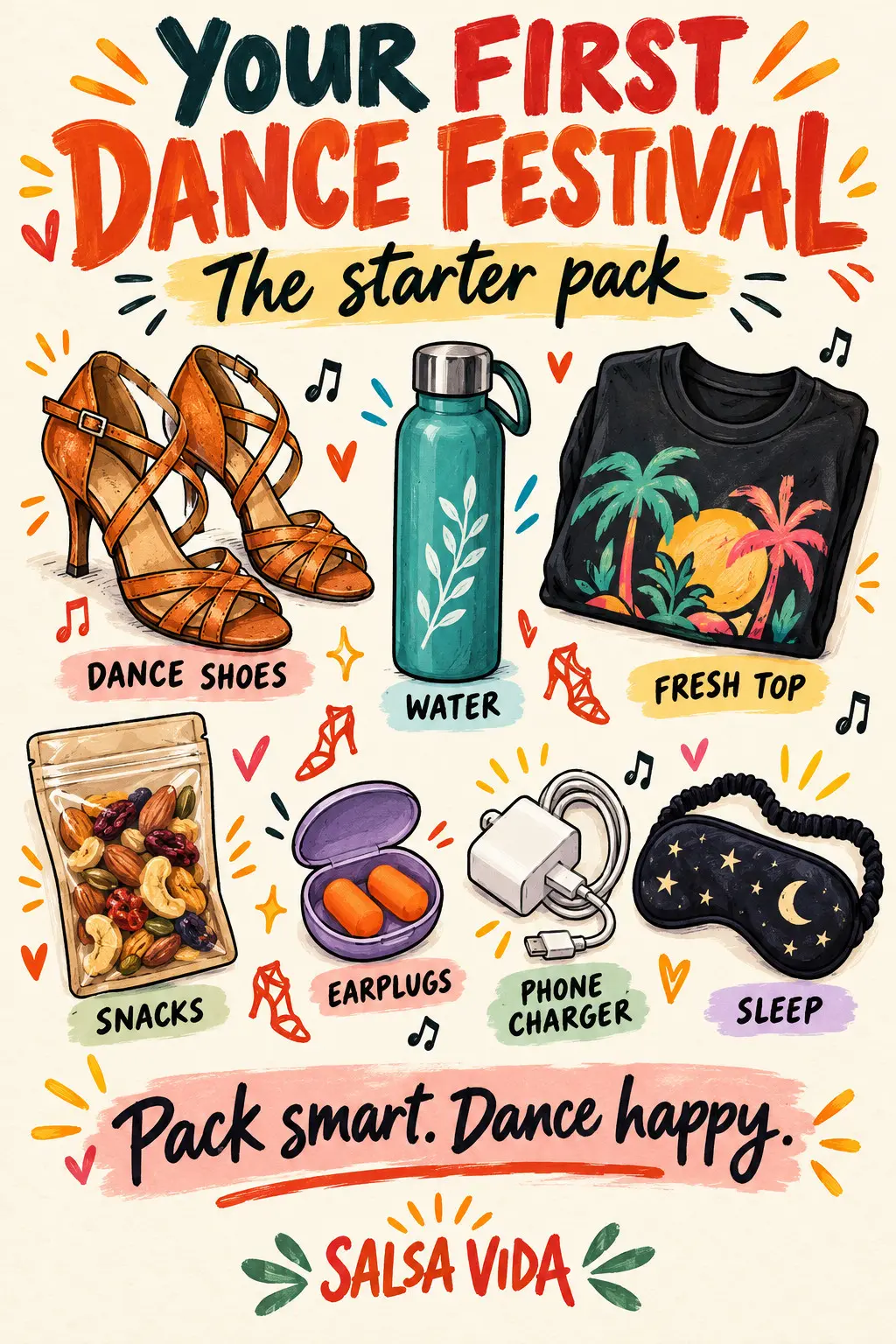
What to bring: Latin dance festival packing list
You can usually buy forgotten basics near the hotel, but replacing things during the event costs time and money.
Tickets and travel
- Photo ID or passport
- Festival ticket or confirmation
- Wallet and payment cards
- Some cash
- Prescription medications
Dance shoes and supplies
- Primary dance shoes
- Comfortable walking shoes
- Backup dance shoes, if desired
- Shoe brush for suede soles
- Small massage ball
- Distinctive or labeled shoe bag
Workshop clothing
- Comfortable dance clothing
- Extra shirts or tops
- Extra socks
- Extra underwear
- Light sweater or layer for cold ballrooms
- Sweat towel
Dancers who sweat heavily should bring multiple changes for both workshops and evening dancing. A fresh shirt and towel make the experience better for you and your partners.
Evening clothing
- Social-dance outfits
- Clothing for gala nights or other special dress codes
- Accessories
- Comfortable clothing for meals and travel
- Portable steamer or wrinkle-release spray
Special dress codes can be fun, but you do not need to rebuild your wardrobe around an unusually complicated idea. Participate when the effort feels worthwhile.
Hygiene
- Toothbrush and toothpaste
- Deodorant
- Mints or gum
- Body wipes
- Hair products
- Makeup and remover
- Hand sanitizer
- Small towel
- Personal toiletries
Hydration and food
- Refillable water bottle
- Electrolyte packets
- Protein bars
- Fruit
- Salty snacks
- Reusable utensils
- Small cooler when practical
Recovery and first aid
- Bandaids
- First-aid kit
- Pain medication
Electronics
- Phone
- Charging cables
- Portable battery
- Headphones
- Watch charger
- International travel adapter, when needed
Emergency clothing and costume repairs
- Safety pins
- Small sewing kit
- Seam ripper
- Stain-removal pen
- Super glue
- Vaseline for patent leather shoes
Costume malfunctions happen. Performers should bring more repair supplies than regular attendees.
Personal and nightlife items
- Secure small wallet or bag
- Personal medications
- Condoms or other protection
- Earplugs
- Sleep mask
Common first-festival mistakes
Trying to do everything
A festival offers more than most people can physically enjoy in one weekend.
Make a plan, but leave enough flexibility to rest.
Taking workshops that are far too difficult
Challenge yourself occasionally, but do not spend the entire weekend confused.
Learning something in an appropriate-level class is more valuable than surviving an advanced workshop without understanding it.
Waiting until the social to meet people
Workshops, meals, and early parties are easier places to begin conversations.
Not staying at the host hote
Offsite accommodations can work, but naps, clothing changes, and late-night transportation become harder. Stay at the host hotel if you can reasonably afford it.
Forgetting to eat
A protein bar is useful. It is not always dinner.
Not drinking enough water
Hydration begins during the daytime workshops, not after midnight.
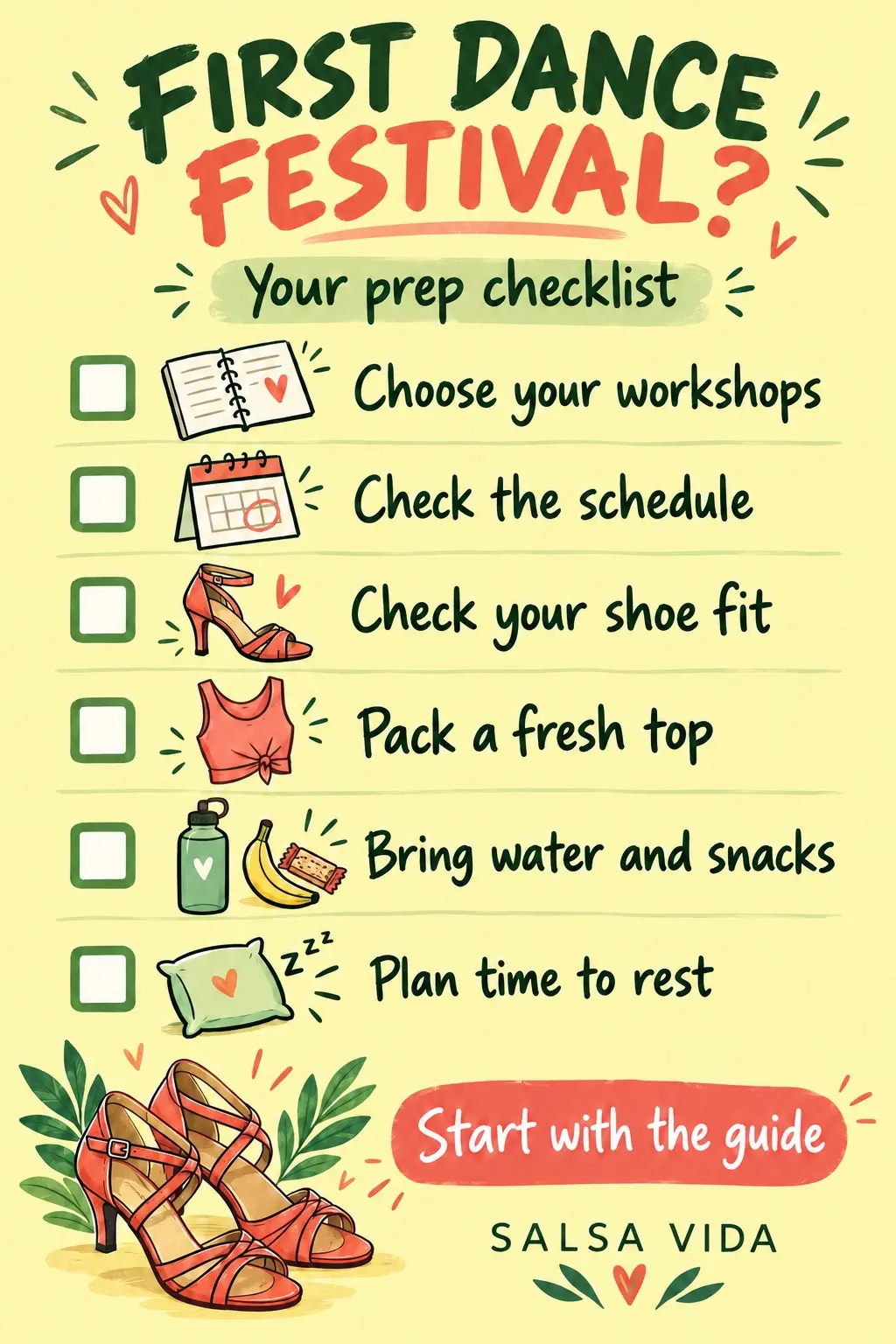
Wearing shoes that do not fit
New shoes are not automatically a problem. Poorly fitting shoes are.
Make sure any pair you bring will remain comfortable after hours of use.
Forgetting the wristband rules
Many festivals use one wristband for the entire weekend. Do not intentionally remove it.
If the wristband begins to fall off, ask the organizers to replace it before it disappears.
Leaving valuables beside the dance floor
Do not assume that every unattended phone, purse, or camera will remain untouched during a large event.
Bringing an indistinguishable dance bag
Label it or make it easy to recognize.
Becoming discouraged by professional performers
They have usually trained for years and rehearsed the routine for months.
Use their dancing as inspiration. All good things take time.
Trying dangerous moves on the social floor
It is normal to practice new material and make mistakes.
It is not acceptable to attempt lifts, unsupported dips, tricks, or other movements that could injure your partner. The more crowded the floor becomes, the more compact and controlled your dancing should be.
Recording workshops without practicing anything
Review the videos, share them with your practice partners, and choose a few ideas to keep.
First Latin dance festival FAQ
Do I need a partner?
Usually not. Most partnerwork classes rotate partners.
Can complete beginners attend?
Yes, but someone with no dance experience may struggle to participate fully. A few months of regular classes will usually make the festival more rewarding.
Can I attend alone?
Absolutely. Workshops are one of the easiest places to begin meeting people.
Do I need a full weekend pass?
No. Many festivals offer single-day, evening, or workshop-only passes.
How many workshops should I take?
Two to four per day is realistic for many attendees. The right number depends on your fitness, sleep, workshop intensity, and other priorities.
Do I need to stay for the entire weekend?
No. Attending one day or one evening can be a good introduction.
Should I stay at the host hotel?
Usually, when the price is manageable. It makes resting, changing, socializing, and late-night transportation much easier.
Do I need to follow the special dress code?
Usually not. Gala nights and other dress ideas can add to the fun, but check the event’s rules and decide how much effort you want to invest.
Can I record the workshops?
Only when the instructor and festival allow it. Many instructors provide a short recap at the end.
What time does social dancing begin?
It varies. The main social often begins after the performances and becomes busier an hour or two later.
Is it okay to decline a dance?
Yes. No one is required to accept every dance invitation.
Can I ask an instructor to dance?
Yes. Ask politely, accept the answer, and do not take a decline personally.
Are festivals safe?
Generally, yes. Use the same reasonable precautions you would use at any large nightlife or travel event.
What should I do with my valuables?
Keep your phone, wallet, ID, and room key secure. Leave laptops, passports, expensive cameras, and excess cash in the room whenever possible.
After the festival
Give yourself time to recover.
When possible, keep Monday free. Catch up on sleep, stretch, hydrate, and eat well.
Within the next few days:
- Review workshop videos.
- Choose one or two ideas to practice.
- Share useful videos with friends.
- Post your favorite photos and memories.
- Connect with people you met.
- Follow instructors whose teaching resonated with you.
Adding someone on Instagram may seem small, but many lasting festival friendships begin that way.
Go in with a plan—and an open mind
A Latin dance festival can be exhausting, expensive, overwhelming, and occasionally chaotic.
It can also be life-changing.
You may discover a new dance style, find an instructor who makes something click, see a performance that changes your idea of what is possible, meet lifelong friends, connect with dancers from around the world, or become inspired to perform yourself.
That is what happened after my first congress. I arrived somewhat intimidated. I left feeling more connected to the larger dance community and more motivated to grow as a dancer.
Go with friends or make friends once you arrive. Take the workshops that serve you. Rest when you need to. Drink water. Take plenty of photos.
Most importantly, go in with a plan, but remain open to the experience.
Your first Latin dance festival probably won’t go exactly as expected.
And that’s often how the best memories are made.
Pin to Pinterest
Choose an image to enlarge and save for later.