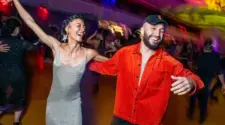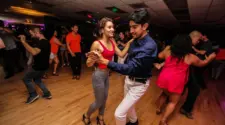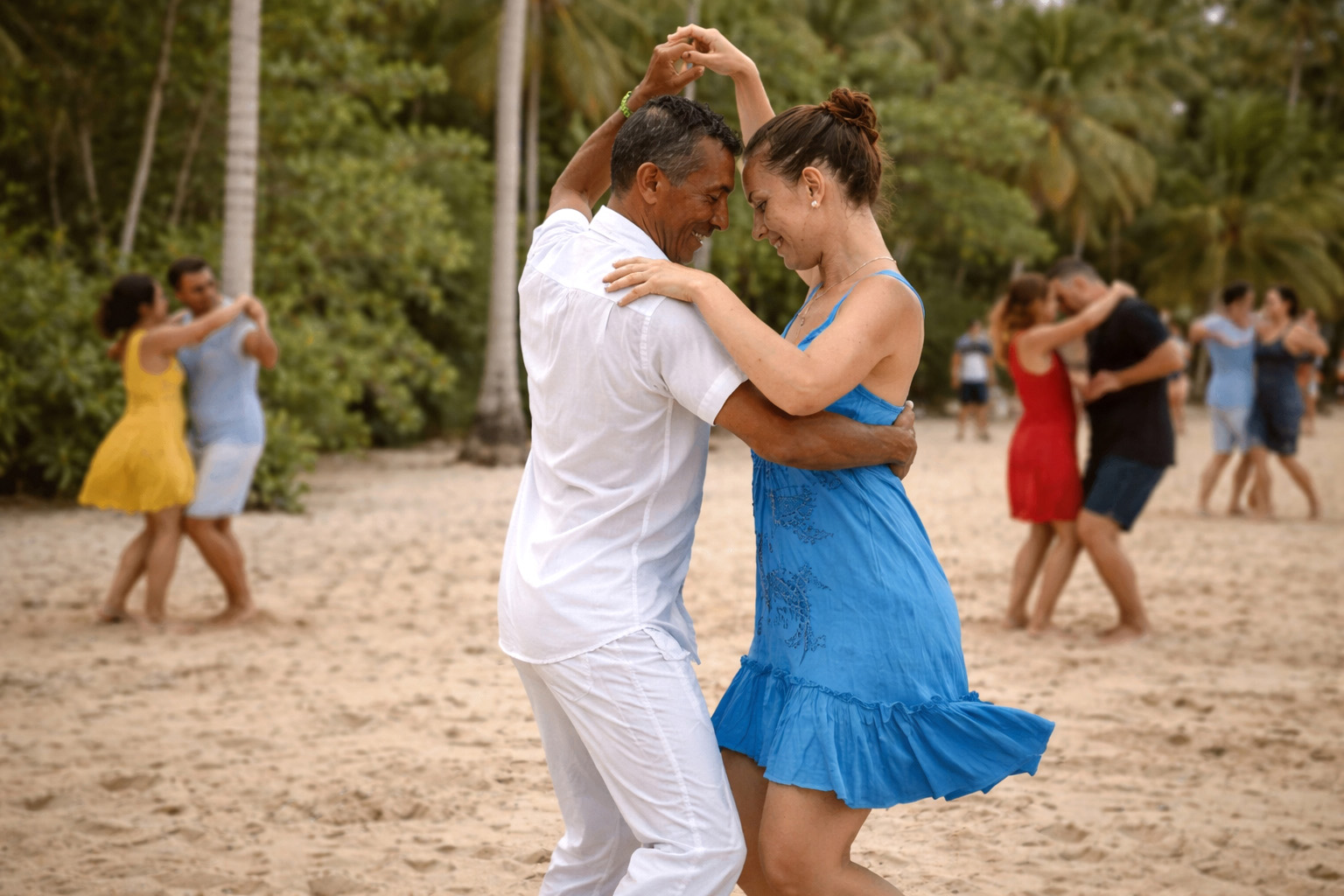
Bachata is a Dominican music and dance tradition that grew out of guitar-based popular music, social dancing, and everyday life in working-class communities. Today it is one of the world’s most popular Latin partner dances, but many dancers still do not know much about its roots. In this article you will learn where bachata came from, how the music and dance developed together, why the genre was stigmatized for years, and how bachata became a worldwide dance scene with many different styles. [1][4][6][8]
Where did bachata come from?
Bachata comes from the Dominican Republic. It grew out of guitar-based popular music and social dancing, with roots in rhythmic bolero and influences from genres such as son, cha-cha-cha, and merengue. Bachata started as a community dance shaped in everyday life, not as something built in dance studios, and only much later became a major part of the global festival and workshop scene.[1][6][7][8][10]
What did the word “bachata” originally mean?
Before bachata became the name of a music and dance genre, the word usually meant a party or informal get-together. It referred more to the social setting than to one specific style of music. Over time, the meaning shifted and became attached to the guitar-based music and partner dance that grew around those gatherings. [1][3]
Another older label you will see in bachata history is música de amargue, often translated as “music of bitterness.” It referred to the heartbreak-heavy mood of many songs. Bachata was also heavily stigmatized in its early years, largely because of class prejudice and ideas about respectability.[1][3][4][5]
The early history of bachata music
The early history of bachata music starts with guitar-based Dominican popular music shaped by bolero and other Caribbean influences. UNESCO traces bachata to rhythmic bolero, with contributions from son, cha-cha-cha, and merengue. Those influences helped shape bachata’s intimate singing style, strong dance pulse, and guitar-centered sound.[1]
Classic bachata was built around guitars, along with bongos, maracas, scraper percussion, and bass. You can still hear that balance in the music today. The guitars carry much of the emotion, while the percussion and bass keep the song moving and make it danceable. Early lyrics often focused on longing, betrayal, distance, and disappointment, which helps explain why the label música de amargue stuck for so long. [1][3]
A major recording milestone came in 1962, when José Manuel Calderón recorded songs that later scholars widely described as the first bachata recordings, or at least the first songs later recognized as bachata. That date marks the earliest point where bachata becomes clearly visible in the historical record.[6][9]
By the 1960s, and especially through Radio Guarachita, this guitar-led music found a wider audience, even as elite cultural circles continued to look down on it. After the disruption of the 1965 civil war, Radio Guarachita became one of the main channels helping spread the genre. Bachata was heard in homes, neighborhood gatherings, bars, cabarets, and everyday community spaces long before it became fashionable or internationally marketable.[6][9]
Why bachata was stigmatized
Bachata was looked down on for many years because it became associated with poor and marginalized sectors of Dominican society. Scholars and institutional sources describe a genre seen as low status by middle- and upper-class tastemakers. That rejection was tied to class prejudice, urban poverty, and racialized ideas about respectability. In the Dominican cultural hierarchy, merengue had much more official prestige, which made guitar-led bachata easier for elites to dismiss as crude or embarrassing.[3][7][9][10]
That stigma showed up in how bachata was treated. It got less support from prestigious media, less cultural approval, and less status than genres seen as more respectable. Even the label música de amargue, or “music of bitterness,” reflects part of that story. It described the sadness in many songs, but the judgments around bachata were also about class, taste, and the communities linked to the music.[3][6][7][9][10]
How bachata evolved over time
Bachata changed a lot over the years. By the 1970s, it had become more clearly recognizable as its own style, even though its roots went back further. From the late 1970s through the 1980s, it reached more listeners, showed up more on recordings, and slowly became more commercially visible.[3][7]
One of the biggest turning points came with Juan Luis Guerra’s Bachata Rosa in 1990. He did not invent bachata, but he helped bring it to new audiences. For many listeners who had seen the genre as low status or rough around the edges, Bachata Rosa made bachata sound more romantic, polished, and mainstream.[7]
Another big shift came in the early 2000s with Aventura, a Dominican-American bachata group from the Bronx. They mixed bachata with R&B, hip-hop, and bilingual lyrics, giving the genre a newer urban sound without losing its roots. Their 2002 album We Broke the Rules, especially the hit “Obsesión,” helped bachata break through to a much wider international audience.[1][7][11]
How bachata dance developed
Bachata dance grew socially in the Dominican Republic, taking shape in parties, bars, and family gatherings rather than in dance studios. Its movement seems to have developed most directly out of close-hold partner dancing shaped by bolero, while also emerging in a Dominican social dance world where merengue, son, and other Caribbean genres were also being danced.[1][8]
In its earlier form, bachata was a small, close social dance. Dancers stayed compact, played more with rhythm, and responded closely to the guitars and percussion with footwork and body movement. That is still one of the clearest traits of traditional Dominican bachata today.[1][8]
For many years, bachata was mostly seen as a casual social dance rather than something people traveled to study, perform, or compete in. Even as salsa festivals and congresses grew in the late 1990s and 2000s, bachata was still often treated more like merengue or cumbia at Latin nights, something people danced socially, but not always as a main event.[13]
That started to change in the 2000s. As bachata music grew globally, dancers and teachers outside the Dominican Republic began teaching it more formally, adding turn patterns, cleaner class structure, and more crossover vocabulary from salsa and other partner dances. This is the period when bachata began shifting from a casual side dance into something people specifically trained, performed, and traveled for.[8][11]
One of the main styles of bachata to emerge was bachata moderna. Broadly speaking, moderna kept the basic bachata timing but added more turn patterns and more influence from salsa-based partnerwork. That helped bachata fit more easily into the same workshop-and-congress world that salsa had already built.[8]
Bachata Sensual came later and became even more influential internationally. Its official academy traces the style to Cádiz, Spain, in 2004, crediting Korke and Judith with developing a method centered on body movement and partner connection.[12] Compared with traditional Dominican bachata and even moderna, sensual bachata put much more emphasis on body waves, isolations, guided upper-body movement, and a smoother, more dramatic look influenced in part by other partner dances such as zouk. That helped reshape the global bachata scene and became one of the biggest reasons bachata festivals and workshops grew so quickly in Europe and beyond.[12]
By the late 2000s, dedicated bachata events were becoming easier to spot. The San Francisco International Bachata Festival, founded in 2008, claims to be the first bachata festival in the United States. By the early 2010s, major specialist competitions were also in place, with bachata divisions appearing in major competitions such as the World Latin Dance Cup. Bachata was no longer just a side room at salsa events.[14][15][16]
A quick timeline of bachata’s growth
- Before it was a genre name: Bachata referred to a party or informal social gathering, not yet a specific music style. [4][5]
- 1962: José Manuel Calderón records songs later widely treated as the first bachata recordings. [6]
- 1960s: RRadio Guarachita helps guitar-led bachata reach wider audiences, even as elite cultural circles continue to look down on it.[6][9]
- 1970s: Bachata becomes more clearly recognizable as a distinct Dominican popular style. [7]
- 1980s: The genre keeps growing through recordings and broader public visibility, even before full mainstream acceptance. [3]
- 1990: Juan Luis Guerra’s Bachata Rosa helps reframe bachata for wider middle-class and international audiences. [7]
- Late 1990s to 2000s: International dance schools begin pushing more codified non-Dominican teaching approaches, including moderna and later fusion-heavy styles. [8][14]
- 2000s: Urban bachata, Aventura, and “Obsesión” help push bachata into a truly global music and dance phenomenon. [7][11]
- Mid-to-late 2000s: Bachatango and other fusion experiments gain traction in international workshop and festival scenes. [14]
- Late 2000s to 2010s: Bachata Sensual, officially credited to Korke and Judith in Spain, becomes one of the most influential international bachata styles. [12]
- 2010s: Dedicated bachata festivals, specialist events, and major competitions become much more established, showing that bachata is no longer just a side room at salsa events. World Bachata Masters, for example, has documented editions in Madrid going back to 2013. [13]
- 2019: UNESCO inscribes the music and dance of Dominican bachata as Intangible Cultural Heritage. [2]
Bachata today
Bachata today is both a Dominican social tradition and a global dance scene. It lives in family gatherings, neighborhood parties, clubs, festivals, and studios. The style labels and newer trends are real, but so are the Dominican roots they grew from.[1][2]
So when people talk about bachata, it helps to be specific. They might mean Dominican social bachata, urban bachata music, sensual bachata, or the wider international scene. Those are all part of bachata today, but they are not all the same thing (see our guide to bachata styles).[2][7][8]
Frequently asked questions about bachata history
Was bachata always considered romantic?
Not exactly. Love was always a big theme in bachata, but early songs often leaned more toward heartbreak, jealousy, longing, and disappointment than smooth romance. That is one reason older labels like música de amargue, or “music of bitterness,” stuck around for so long. Later artists helped make bachata sound more polished and openly romantic to wider audiences.[3][7]
Did bachata start as a dance or as music?
Bachata started as Dominican music first, while the dance grew naturally around that music in social settings. The music gradually evolved from older Dominican and Caribbean forms until it began to crystallize into a distinct genre. As people listened and danced to this emerging sound, it organincally led to the creation of a new dance style, which borrowed movement vocabulary from other Dominican and Caribbean social dances.
Was bachata created in Puerto Rico?
No. Bachata comes from the Dominican Republic, where it developed as both a music and dance tradition. Puerto Rico played an important role in the wider history of Latin music and dance, but bachata itself is Dominican in origin.[1][7][10]
Is modern bachata the same as traditional Dominican bachata?
No. Traditional Dominican bachata is the source tradition rooted in Dominican social life. Modern global bachata includes later studio styles such as moderna and sensual. They share some music and partnerwork ideas, but they do not have the same history, emphasis, or feel. If you want a fuller breakdown, see our guide to bachata styles.[1][2][8]
Is bachata easier than salsa?
Most beginners find bachata easier to start with than salsa. The music is usually slower, the basic step is simpler, and the dance often feels easier to follow at first. Salsa is usually faster and more athletic, with more turns, quicker timing, and more footwork to manage.
That said, good bachata is not easy. Once you get past the beginner stage, you still have to develop timing, connection, body movement, and a feel for the music. Learning either dance can also help with the other, and since most Latin dance events include both, knowing both means you get to dance more. For a fuller comparison, see our bachata vs salsa guide.
References
- UNESCO. Music and dance of Dominican Bachata (Nomination file No. 01514). 2019.
- UNESCO Intergovernmental Committee for the Safeguarding of the Intangible Cultural Heritage. Decision 14.COM 10.b.10, Inscription of “Music and dance of Dominican Bachata”. 2019.
- UNESCO document repository. Nomination-related PDF on Dominican bachata.
- Real Academia Española and ASALE. bachata, Tesoro de los diccionarios históricos de la lengua española. 2021.
- ASALE. bachata, Diccionario de americanismos. 2010.
- From Radio Guarachita to El Tieto eShow: Bachata’s Imagined Communities. Latin American Research Review. 2022.
- Deborah Pacini Hernandez. Urban Bachata and Dominican Racial Identity in New York. Cahiers d’études africaines. 2014.
- Bachata Dance: Sexuality, Authenticity, and Community. Texas A&M University, OakTrust repository.
- Deborah Pacini Hernandez. Bachata: A Social History of a Dominican Popular Music. Temple University Press. 1995.
- Bachata and Dominican Identity / La bachata y la identidad dominicana. McFarland. 2014.
- CUNY Dominican Studies Institute. 2000s: Bachata Overtakes the World, from A History of Dominican Music in the United States.
- Bachata Sensual Academy. History of Bachata Sensual. Credits Korke and Judith and dates the style to Cádiz, Spain, in 2004.
- University of Washington College of Arts & Sciences. Salsa Dance. Notes the first salsa congress in Puerto Rico in 1997 and the growth of the congress format.
- San Francisco International Bachata Festival. Festival history / about page. States that the festival was founded in 2008 and describes itself as the first bachata-dedicated festival in the United States.
- World Latin Dance Cup / World Bachata Masters. Official competition history or event page. Documents major international bachata competitions in the 2010s.
- Euronews. Article on bachata’s growth in Europe. 2015.