
What Is a Descarga?
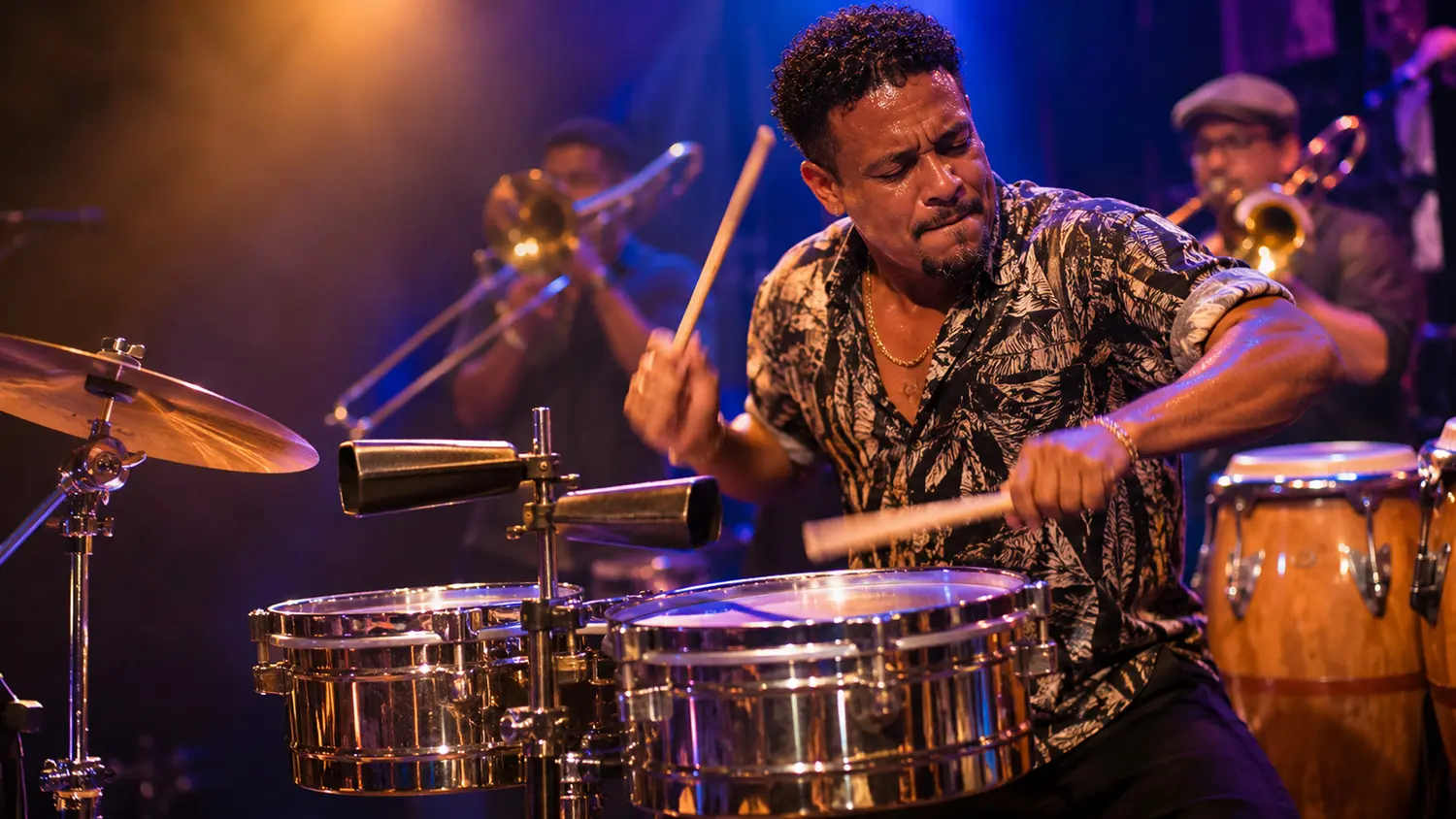
A descarga is a musical jam session where musicians let loose, improvising over a shared rhythm. The Spanish word means “discharge” or “unloading,” which captures the feeling of musicians pouring their energy and ideas into the music.
The term comes from Cuban music, where players would gather to experiment, trade solos, and build on one another’s ideas. It can also describe music recorded or performed in that freewheeling style.
In salsa music, dancers also use descarga to describe a high-energy instrumental section of a song, especially when the percussion takes over. The singer may drop out as the congas, timbales, and bongos trade solos, fire off rapid rhythms, and throw in sharp, unexpected hits. It’s the moment when the band seems to unload everything it’s got, and dancers match that energy with explosive footwork, body movement, and musical accents of their own.
A Brief History of the Descarga
Descargas grew out of Cuban musicians’ improvisational jam sessions. Bassist Israel “Cachao” López helped bring the tradition to a wider audience with his influential 1957 recordings, Descargas: Cuban Jam Session in Miniature. He gathered leading musicians in Havana to record short pieces that gave different instruments room to shine, including congas, bongos, timbales, flute, and trumpet.
The Library of Congress recognizes the album’s lasting influence on salsa and added it to the National Recording Registry in 2012. It’s a great starting point if you want to hear the descarga tradition for yourself.
Not every descarga is all drums, and not every instrumental break is technically a descarga. The bigger idea is improvisation and musicians responding to one another. As Smithsonian Folkways explains, the Cuban tradition is built around rhythmic interaction and spontaneous group improvisation.
Why It Matters for Salsa Dancers
For many salsa dancers, the descarga is one of the most exciting parts of a song. As the percussion gets intense, partners often separate for shines, or solo footwork, using fast steps, body movement, sharp accents, and sudden freezes to catch the rhythms and musical hits.
But shines aren’t the only way to respond. Dancers such as Adolfo Indacochea and Rodrigo Cortazar are known for fast, highly musical partnerwork during these sections. They stay connected while using syncopated steps and turn patterns to match the energy of the section with partnerwork.
Whether they break apart for shines or stay connected through partnerwork, dancers get to let loose and go wild right along with the musicians.