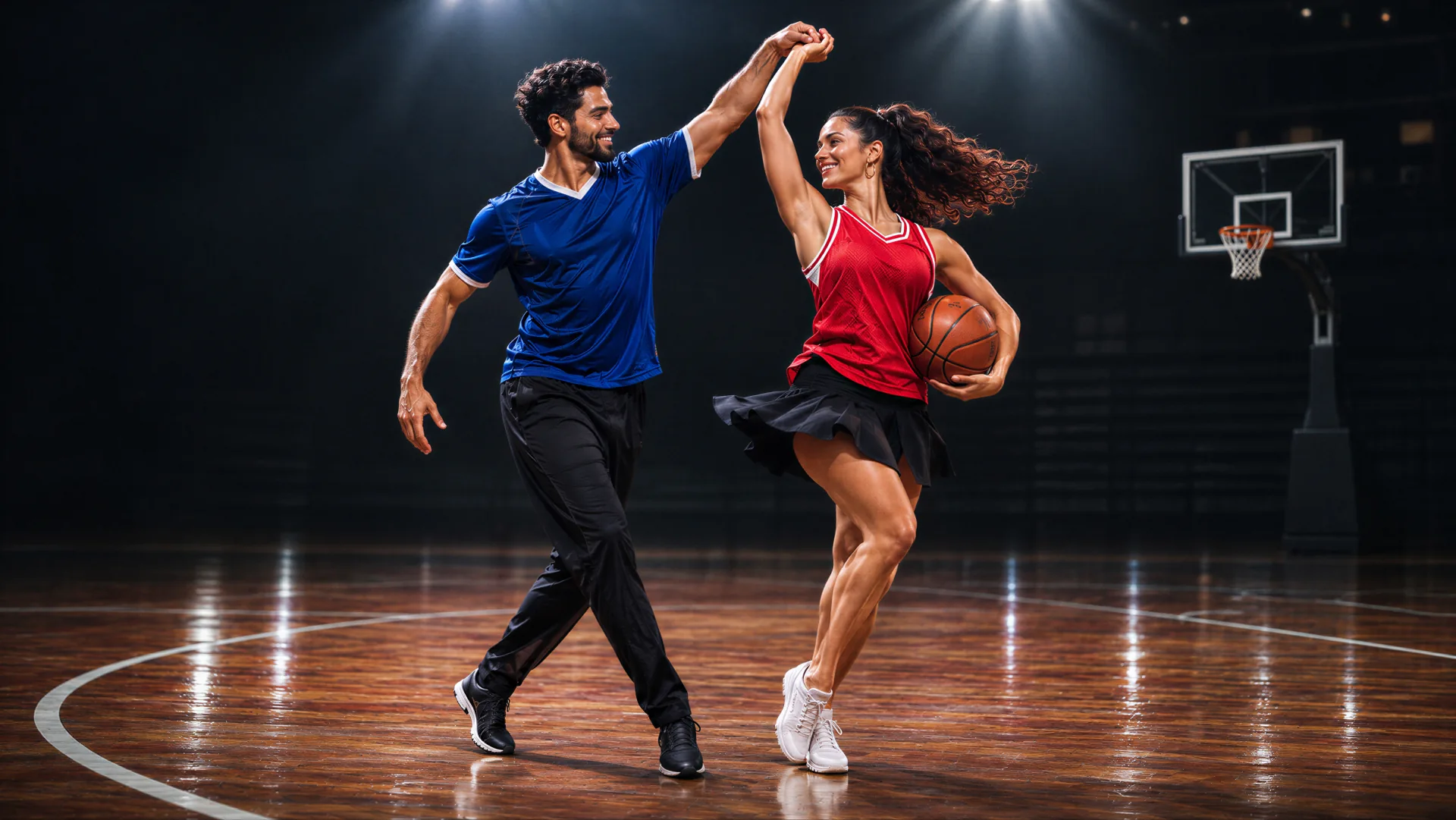
Is dance a sport? Yes, it can be. Competitive dancers train, follow rules, and compete for scores and rankings. From break dance battles to ballroom championships (literally called “DanceSport”) and salsa competitions, dance has a serious athletic and competitive side.
But dance isn’t just a sport. It’s also self-expression, art, and a way to connect with people. The thrill of competition is exciting, but dance isn’t only about competing and winning.
What Makes Dance a Sport?
Most sports involve physical skill, training, organized competition, rules, and a way to determine results. Competitive dance meets those criteria. Dancers develop strength, stamina, balance, and coordination, then compete in defined categories under judging standards.
Judges might evaluate technique, timing, musicality, and presentation rather than speed or distance. That’s not so different from gymnastics, diving, or figure skating, where officials also score performances. Dance’s artistic side doesn’t take away from the athleticism or the competition.
Where Dance Becomes a Sport
Hip-Hop Battles and Breaking
Street-dance battles put creativity and athleticism to the test. Dancers respond to the music and each other, showing their musicality, originality, control, and improvisation skills.
For example, Red Bull Dance Your Style features one-on-one freestyle battles across styles including hip-hop, house, popping, and locking. The audience votes for the winner. Breaking brought competitive dance to an even bigger stage when it made its Olympic debut at Paris 2024, as confirmed by the International Olympic Committee.
DanceSport and Competitive Ballroom
Ballroom’s competitive world is known as DanceSport. Couples compete in styles such as waltz, quickstep, cha cha, samba, rumba, paso doble, and jive, along with American-style categories. You can learn more about the different styles in our ballroom dances guide.
At World DanceSport Federation events, judges assess timing, technique, posture, partnering, and presentation. The federation’s judging guidelines show how dancers are evaluated on the quality of their movement and performance.
Salsa and Latin Dance Competitions
Salsa is famous as a social dance, but it also has a thriving competitive scene. Different formats test different skills:
- Choreographed competitions. Choreographed competitions are some of the most popular formats in the salsa world, with competitions held at major festivals as well as dedicated events such as Euroson Latino and the World Latin Dance Cup. These events typically feature dozens of categories, including solos, couples, and teams performing prepared routines.
- Jack & Jill competitions. Dancers enter individually and are paired with partners they haven’t rehearsed with. They’re judged on skills such as leading, following, and improvising together, rather than rehearsed choreography.
- Freestyle battles. In Salsanamá, dancers face off through improvised solo footwork, or shines. The competition rules emphasize improvisation and musical interpretation.
There’s also been a push to establish salsa as an organized sport. Founded in 2001, the World Salsa Federation has worked to gain recognition for competitive salsa, developing rules and promoting championships while treating dance as both an art and a sport.
Why I Love the Competitive Side of Dance
I’m competitive, and I find competition incredibly fun. It’s a chance to see how you stack up, benchmark yourself against other dancers, and push toward a higher standard. Having a competition date on the calendar also gives you a deadline and a reason to keep improving.
Seeing what other dancers and teams showcase can also inspire you to aim higher. And as a coach, seeing my team win championships is one of the greatest feelings in the world. I wouldn’t trade that experience for anything.
Dance Is More Than Competition
As much as I love competing, some of the best parts of dance have nothing to do with scores or trophies.
Self-Expression
Sometimes dance can be as simple as one person standing in front of a mirror, feeling the music and expressing themselves in the moment. There’s no audience, no judge, and no routine to get right. You can move however the song makes you feel. That’s a kind of freedom competition can’t replace.
Performance and Art
Dance can also be a way to create something for an audience. Through choreography or improvisation, dancers can tell stories, express emotions, or simply share the beauty of movement and music. A ballet, a contemporary dance piece, or a salsa show can be powerful without anyone handing out medals.
The growth of online video platforms like YouTube and Instagram has also opened up new avenues for sharing dance as art. With online videos you trade the rawness of a live performance for being able to capture the best version of your routine. You can record as many takes as you want to get it right, explore the best camera angles to capture each movement, and get creative with outfits and locations. I’ve personally created many creative dance videos, and creating and sharing these is one of the most rewarding experiences as a dancer.
Social Dancing and Community
On a social dance floor, the point isn’t to win. Two people share a song, listen to each other, and create something together. Salsa and other social dances turn dancing and movement into an opportunity for connection.
There’s also the community: friendships, team bonds, and the feeling of belonging. Dance brings together people from different backgrounds and countries. At salsa congresses and festivals, you can meet someone from the other side of the world and connect through a dance even if you don’t speak the same language.
Dance Can Be Both a Sport and an Art
These sides of dance often overlap. A salsa team can compete for a championship while creating an exciting performance. A breaking battle can showcase both athletic skill and personal style. The same dancer might compete in the afternoon and spend the evening dancing socially.
That’s what makes dance so special to me. There’s room for competition, creativity, performance, and connection. There are so many ways to enjoy dance, which is what makes it such a rich and meaningful passion.
Frequently Asked Questions
Is dancing an Olympic sport?
Breaking was a medal sport at the Paris 2024 Olympics. Salsa and ballroom weren’t on that Olympic program.
Is salsa dancing considered a sport?
Yes, in organized competitions such as freestyle battles, partner contests, and choreographed team divisions. Social salsa dancing is usually about music and connection, not winning.
Are dancers athletes?
Absolutely. Dance requires tremendous athleticism, especially at the highest levels. Elite dancers develop exceptional strength, flexibility, endurance, balance, and coordination. They spend years training their bodies to execute incredibly demanding movements with power and precision, often while making it all look effortless.