
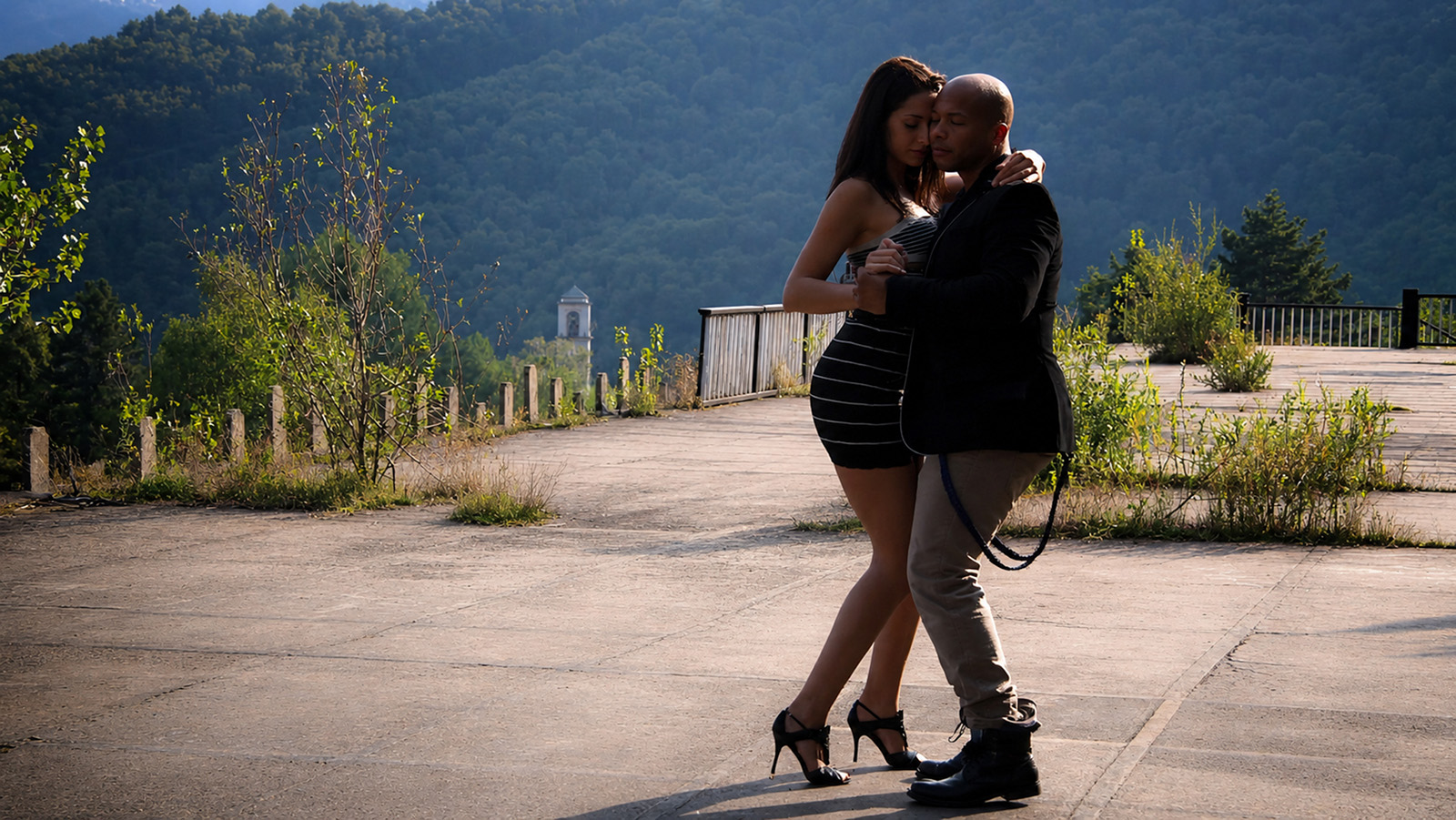
Summary. Kizomba is a slow, elegant partner dance from Angola, known for close connection, compact walking steps, and subtle hip and body movement.[1][3][10] Modern kizomba took shape in Angola during the late 1970s and early 1980s, with semba as its main Angolan foundation and Caribbean zouk helping shape its softer musical sound.[2][4][6] Kizomba is often subtle and understated, and it is primarily danced socially rather than performed for an audience.[4][10] Kizomba later spread through African and European communities, dance schools, online videos, and international festivals, where later styles such as UrbanKiz also emerged.[1][2][7]
Listen to eight popular kizomba songs
Quick facts
| Origin/Region | Angola, in the late 1970s and early 1980s. Kizomba developed from semba, an Angolan music-and-dance form, while also drawing musical influence from Caribbean zouk.[2][4][6] |
| Music | Slow, melodic, and romantic.[6] Much 1990s kizomba used sparse arrangements, synthesizers, and electronic production.[4] Modern artists have also brought in R&B, pop, and Afrobeat influences.[6] |
| Movement quality | Compact walking steps, smooth weight transfers, pauses, swaying hips, and subtle waves through the lower body. The movement can become so small that it is almost hard to see.[1][2][4][10] |
| Typical context | Social dancing at parties, clubs, community celebrations, classes, festivals, and mixed salsa-bachata-kizomba events.[1][5][6][8][9] |
| Partner connection | Often danced in close connection, with lead-and-follow signals shared through the frame and upper torso. The amount of contact can change with the style and movement.[1][7][10] |
| Related traditions | Semba and tarraxinha are closely related Angolan music-and-dance forms. UrbanKiz and kizomba fusion developed later in the international dance scene.[1][4][6][7] |
Origins & history
Angolan origins
The word kizomba comes from Kimbundu, one of Angola’s national languages, and means “party” or “celebration.”[3][6] Before it named a modern genre, a kizomba could be a community gathering where people danced, ate, drank, and talked together.[1] An early written use also connected the word with mutual-aid gatherings surrounding funerals.[3] In other words, the name described a social event before it settled into its current musical meaning.
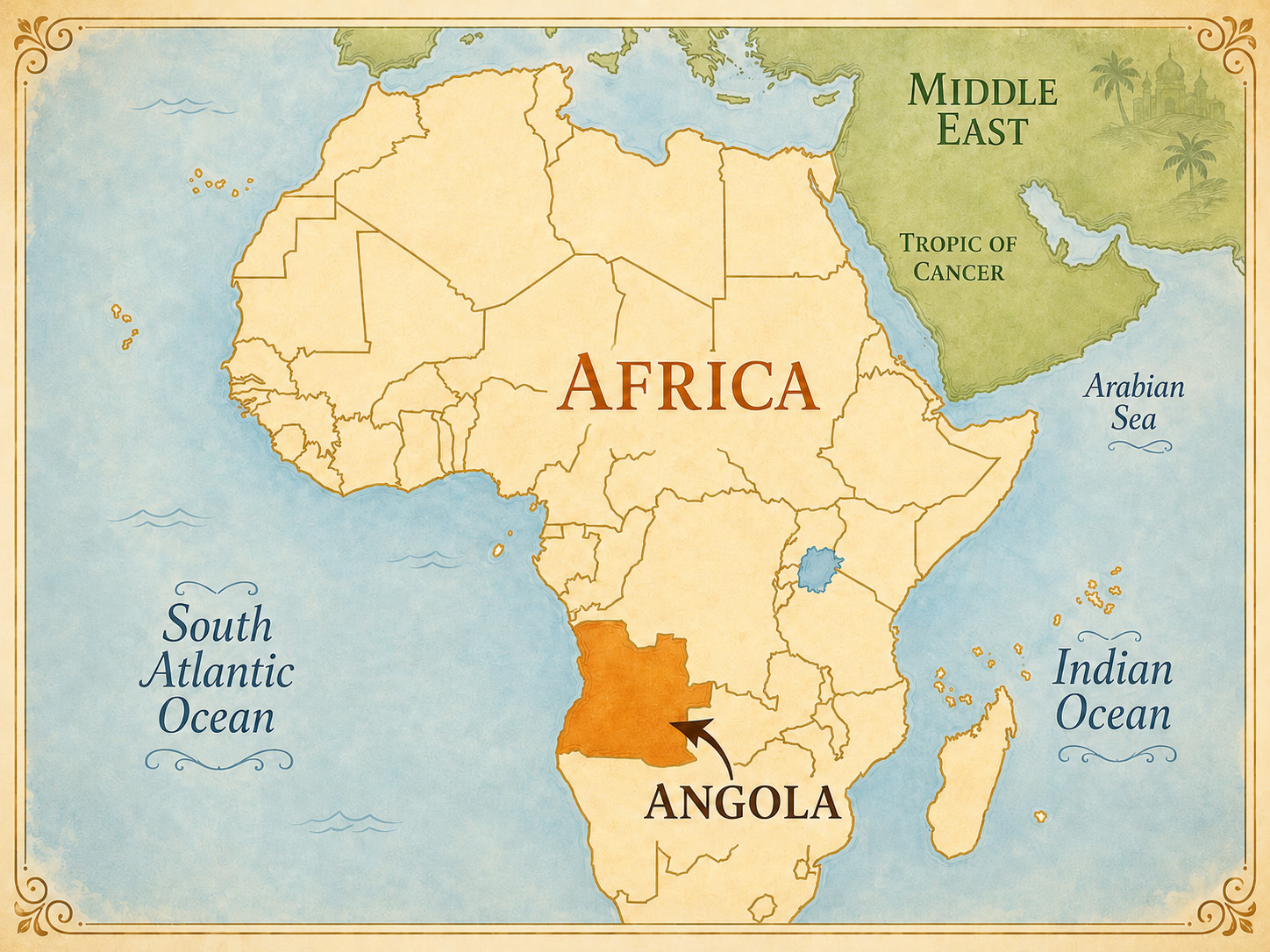
Modern kizomba music and dance began to take shape in Angola during the late 1970s and early 1980s. Its main local foundation was semba, a lively Angolan music and partner dance with quicker rhythms and more agile steps.[6] At the same time, Caribbean zouk was becoming popular in cities across Portuguese-speaking Africa. Zouk influenced kizomba’s music, helping move the sound toward a slower, softer, and more romantic style.[2][4][6]
Eduardo Paim became one of the central figures in shaping, producing, and spreading the new sound.[6] In 1992, the group SOS released Luanda, Minha Banda. The album helped establish kizomba as a recognizable genre in Angola’s popular music scene.[6] By this point, kizomba was not simply a slower copy of semba. It had developed its own romantic sound and a compact style of partner dancing.[1][6]
Transnational circulation
Modern kizomba took shape in Angola, while its wider development involved movement between many communities.[1][6] During the 1980s, popular recordings and partner-dance ideas circulated among Luanda, Angola; Dakar, Senegal; Maputo, Mozambique; Bissau, Guinea-Bissau; and Lisbon, Portugal.[1] Migration connected these dance floors. People did not simply repeat one fixed version wherever they went. They adapted what they heard and danced to local tastes.
By the late 1990s, Lisbon had become an important center for teaching and presenting these connected partner-dance practices under the kizomba name. The dance gained a stronger place in schools, discos, and clubs.[1][2] Lisbon became a meeting point within connected Portuguese-speaking African and European communities.
As kizomba traveled, the music, movement, teaching methods, and style labels continued to change. Its modern global scene grew through connected African and European communities rather than one simple route from a single city to the rest of the world.[1][2]
International teaching and new styles
From the 2000s onward, kizomba expanded rapidly through social-dance schools, festivals, YouTube, Facebook, and dance networks that already served salsa audiences.[1][2] Festival programs combine kizomba with salsa and bachata. Organizers also use SBK, short for salsa, bachata, and kizomba, for combined events.[8][9] The shared event label reflects mixed programming, not a shared origin.
International teaching also created new categories. UrbanKiz emerged in the Paris dance scene in the early-to-mid 2010s and is commonly taught with more linear travel, upright posture, and arm-led guidance than kizomba.[2][7] Other schools and events began using labels such as “traditional kizomba” and “kizomba fusion.”[1] Their exact meanings vary across market and teaching systems.
In 2024, Angola officially recognized kizomba as part of the country’s intangible cultural heritage.[5][6] The recognition also reflects kizomba’s importance for Angolan identity.[6] Today, kizomba continues as Angolan music and social dance within an international network of dancers, teachers, and festivals.[1][6] Its history is therefore both local and global: it began in Angola, spread through migration, and changed again through international teaching.
Steps & style hallmarks
Kizomba is often danced in close connection, but the amount of contact is not fixed. Some dancers maintain upper-body contact, while others create more space as movement styles change. Different communities and teaching systems make different choices. Across those variations, the most recognizable fundamentals are grounded walking, smooth weight transfer, compact movement, and close attention to a partner.[1][2][10]
Walking is the foundation of the dance. A dancer places the body weight over one foot, transfers it to the other, and lets those simple changes carry the partnership across the floor.[10] The steps are generally compact rather than showy.[1] In one widely taught approach, the steps remain soft, deliberate, and low to the ground.[7] The emphasis remains on continuous floor-level movement, balance, and timing rather than large traveling steps or aerial figures.[7] A skilled couple may appear almost still while continuing to shift weight and respond to the music.[2]
Lead-and-follow communication can travel through the torso and hips, not just through the hands.[7][10] Because the dance is improvised, the lead can suggest direction and timing without following a fixed sequence. The follower responds through the same connection. This can make kizomba feel conversational: one partner suggests a movement, the other interprets it, and both continually adjust to each other and the music.
The dance uses two- and three-step patterns, smooth transitions, and pauses.[4] The hips may sway, and gentle waves can travel through the lower body.[1][4] Some variations make the hip movement more visible, while others keep it extremely subtle. In either case, the details remain connected to weight changes and music.
Kizomba is usually improvised rather than danced as fixed choreography. Dancers may learn named basics and common patterns, but those structures leave room to choose direction, pause, repeat a step, or change timing in the moment.[10] That freedom is one reason the dance can look simple from the outside and still feel demanding. The challenge is not memorizing a long routine. It is coordinating balance, timing, musical response, and partner communication.
Music & instruments
Kizomba is both a music genre and a dance genre. Compared with semba, kizomba developed a slower, softer, more melodic, and more romantic sound.[5][6] Semba remained an important foundation, while Caribbean zouk added another major influence. The band Kassav was especially important to that influence in 1990s kizomba music.[2][4]
Compared with many semba recordings from the 1960s and 1970s, much 1990s kizomba used sparser arrangements, synthesizers, and electronic production.[4] That synth-assisted production marked a departure from the more acoustic semba sound of the earlier period.
Later artists continued to update the sound. Anselmo Ralph, C4 Pedro, and Nelson Freitas brought R&B, pop, and Afrobeat elements into modern kizomba music.[6] As a result, dancers may encounter older Angolan recordings, modern electronic tracks, and crossover songs with different production styles. These examples show that kizomba production has continued to change.
Zouk’s influence does not make kizomba simply another name for zouk. Angolan musicians developed kizomba within their own musical and social setting, building on semba while responding to sounds circulating across the Atlantic.[3][6] Jiménez Sedano reports an open dispute: Lito Graça emphasizes the rhythmic base shared with zouk, while Nelo Paim and Eduardo Paim stress distinct Angolan authorship and social identity.[3] The evidence supports zouk’s influence without erasing kizomba’s distinct Angolan history.
For dancers, the music often rewards restraint. A couple may mark a steady pulse with walking steps, pause on a break, or make the movement smaller during a quiet phrase. At its most subtle, the response may be felt between the partners more than seen by an audience.[2] This is why large figures are not necessary for strong musicality in kizomba.
Popular kizomba songs
Looking for kizomba music to get started? These eight songs take you from Angolan classics to international favorites and a recent chart pick. The selection also includes crossover tracks associated with the wider kizomba scene. Press play to explore the different sounds, or choose a favorite for your next practice session.
1. “A Minha Vizinha” by Eduardo Paim
Start with one of Eduardo Paim’s best-known recordings. The Angolan pioneer helped shape kizomba’s early sound, and “A Minha Vizinha” remains among his popular tracks.[6][11] It is a useful introduction to the older repertoire before moving on to the international hits below.
2. “Pura Sedução” by Don Kikas
The title track from Don Kikas’s 1997 album brings another Angolan classic into the mix. It still features in retrospective selections of his work, including an RTP África broadcast in 2026.[12] At more than five minutes, it leaves plenty of time to settle into a dance and explore simple walking and pauses.
3. “Bo Tem Mel” by Nelson Freitas feat. C4 Pedro
This 2013 collaboration pairs two major names in modern kizomba. A longstanding club favorite, “Bo Tem Mel” is a natural starting point for the international side of the playlist.[13] Listen for the exchange between the singers, and try following the vocal phrases while keeping your basic movement simple.
4. “Mágico” by Mika Mendes
Mika Mendes’s romantic “Mágico” is a familiar choice for kizomba listening and practice. The Imperial Society of Teachers of Dancing includes it among the suggested music in its kizomba syllabus.[14] Try using it to practice smooth weight transfers, then add pauses as you become more comfortable with the song.
5. “Tu És a Mulher” by C4 Pedro
From the album King Ckwa, this love song puts C4 Pedro’s romantic side at the center. Its official video credits guitarist Manecas Costa, and dance publication Salsa.it highlighted the track’s return to Angolan sounds.[15] It is a good companion to “Bo Tem Mel” for exploring more of C4 Pedro’s music.
6. “Dança Kizomba” by Stony
Stony’s 2013 single is easy to remember, with the dance’s name woven into its hook. It appears on both kizomba and zouk compilations, making it an example of the crossover repertoire heard in the wider scene.[16] The recording below is the original song, a useful reference before exploring its remixes.
7. “Lento” by Daniel Santacruz
For a Spanish-language favorite, try Daniel Santacruz’s “Lento.” Released in 2014, it became a widely recognized international kizomba crossover, and its official video puts partner dancing front and center.[17] Its crossover character makes it a different listening experience from the Angolan classics at the beginning of this selection.
8. “I Need You” by Nelson Freitas feat. Anderson Mário
For a newer release, this collaboration from Nelson Freitas’s 2026 album Legacy topped LaKizomba’s July–August 2026 editorial chart.[18] It offers a contemporary Afro-pop crossover alongside the older favorites here, and a starting point for exploring the music currently featured by specialist kizomba publications.
Related dance traditions
Rebita, semba, kizomba, and tarraxinha belong to a closely related Angolan family of music-and-dance forms.[4] Semba is kizomba’s most important predecessor and closest comparison. Both are Angolan music-and-dance forms, and both can use swaying hips, two- and three-step patterns, smooth transitions, and pauses.[4] Semba is generally distinguished by its quicker energy and more expansive or agile movement. Kizomba developed a slower and softer sound, smaller movement, and a greater emphasis on close partner connection, although both dances vary by music, setting, and dancer.[1][6]
Tarraxinha developed in Angola during the 1990s and early 2000s as a related partnered music-and-dance form.[4] It is known for very compact, hip-led movement. In kizomba settings, dancers and teachers may also use the word for slower passages where the steps narrow and the hip movement becomes more prominent.[3] The term therefore has a broader history than a single kizomba step, and its exact use can vary.
UrbanKiz developed later in the international scene, especially around Paris, France. It is generally taught with straighter travel, a more upright posture, more space between partners, and more guidance through the arms. Kizomba is more often described through circular movement, closer torso connection, and continuous flow.[7] These are useful broad differences, although individual dancers and teachers may blend elements or define the boundary differently.
Kizomba fusion is a broad label for dancing that combines kizomba with elements from other social dances.[6] It is one of several international market and teaching labels rather than an older Angolan form.[1][4] Because “fusion” can cover many combinations, dancers should check how a specific class or festival defines it.
Where to experience it now
Kizomba can now be found at social dances, clubs, community celebrations, dance schools, specialist festivals, and mixed salsa-bachata-kizomba events.[1][5][6] Since the 2010s, it has become a regular offering in international social-dance schools and festivals.[6] Lisbon and Paris developed into major European centers, while Angola remains the dance’s cultural home.[2][5][6] Online lessons and social video have made it accessible far beyond those locations.
Event labels can help you choose the experience you want. At a kizomba social, you are more likely to find Angolan music and close, grounded dancing with smooth, continuous movement. At an UrbanKiz social, dancers often use a more open connection, travel more around the floor, and play with sharper stops and changes of direction.[2][7] An SBK festival brings kizomba together with salsa and bachata, usually with separate rooms or music blocks for each dance.[8][9] Labels can mean slightly different things from one scene to another, so it is worth checking the event description, music policy, or recent videos before deciding whether it is the right fit for you.[1][2]
Frequently asked questions
Is kizomba a Latin dance?
No. Kizomba originated in Angola and belongs to an African music-and-dance tradition, not a Latin American one.[5][6] It is often taught and danced alongside salsa and bachata at international schools, socials, and SBK festivals, which can make it seem part of the same category.[1][2] That shared event programming reflects the modern social-dance scene rather than a shared cultural origin.
Is UrbanKiz the same as kizomba?
No. UrbanKiz grew from the international kizomba scene, especially around Paris, but it developed its own movement style. It usually uses more linear travel, a more upright posture, a more open partner position, and more arm-led guidance. Kizomba is more closely associated with circular pathways, torso connection, compact walking, and continuous flow.[2][7] The labels are not used identically everywhere, but treating them as exact synonyms hides useful differences.
Is close connection always sexual?
No. Close connection is a partner-dance technique and is not inherently sexual. It can help dancers share timing, direction, and small changes in movement.[2][7] Partners should be free to request more space or decline a hold that feels uncomfortable. Good connection depends on communication and respect, not on forcing one fixed distance.
Did zouk create the kizomba dance steps?
There is strong evidence that zouk influenced kizomba music.[2][4][6] That does not prove that zouk created the Angolan dance movement. Musical influence and movement history are related but separate questions. The clearest evidence connects the dance to Angolan semba and connects the music to both semba and zouk.
Why does kizomba look different from one city or school to another?
Kizomba spread through migration, local dance communities, schools, festivals, and online teaching. Each scene adapted the dance to its own music, teaching methods, and partner-dance habits.[1][2] That is why one class may emphasize close walking and Angolan music while another uses a more open frame or teaches UrbanKiz. Ask what style and music a teacher focuses on rather than assuming every kizomba class follows the same method.
References
- Livia Jiménez Sedano, “Kizomba beyond Angolan-ness and Lusofonia: The transnational dance floor.” Atlantic Studies, 2020. https://www.academia.edu/82448994/Kizomba_beyond_Angolan_ness_andLusofonia_The_transnational_dance_floor.
- Livia Jiménez Sedano, “From Angola to the world, from the world to Lisbon and Paris: How structural inequalities shaped the global kizomba dance industry.” Poetics, 2019. https://www.sciencedirect.com/science/article/abs/pii/S0304422X18301256.
- Livia Jiménez Sedano, “Kizomba Dance: From Market Success to Controversial National Brand.” Revue Européenne des Migrations Internationales, 2019. https://www.researchgate.net/publication/340689598_Kizomba_Dance_From_Market_Success_to_Controversial_National_Brand.
- Marissa J. Moorman, “Anatomy of Kuduro: Articulating the Angolan Body Politic After the War.” African Studies Review, 2014. https://dw.angonet.org/wp-content/uploads/marissa_moorman_2014_anatomy_of_kuduro.pdf.
- “Kizomba e Tchianda são oficialmente patrimónios culturais e imateriais do país.” Portal Oficial do Governo de Angola, 2024. https://governo.gov.ao/noticias/1537/cultura/musica-e-danca/kizomba-e-tchianda-sao-oficialmente-patrimonios-culturais-e-imateriais-do-pais.
- “Kizomba Roots.” Embassy of the Republic of Angola in the United States, 2025. https://angola.org/kizomba-roots/.
- “What is Kizomba” and “What is Urban Kiz.” Kizomba Foundations. https://kizombafoundations.com/kizomba; https://kizombafoundations.com/urbankiz.
- “SBK Festival Erlangen.” SBK Festival Erlangen, 2026. https://www.sbk-festival.de/es/index.html.
- “SBK Spain.” SBK Spain, 2026. https://www.sbkspain.com/.
- José N’dongala, Kizombalove Methodology: Teachers Course. https://kizombalove.com/wp-content/uploads/2016/02/Kizombalove-Syllabus.pdf.
- Eduardo Paim, “A Minha Vizinha,” track listing and popular recordings. Spotify. https://open.spotify.com/track/5xfcqyIcuxRvJPk368ZAdi.
- Don Kikas, “Pura Sedução,” official artist upload and album notes. https://www.youtube.com/watch?v=AgGpZqGFUL8. RTP África, “Dose Tripla: Don Kikas,” June 2, 2026. https://www.rtp.pt/play/p8442/e933528/dose-tripla.
- “Nelson Freitas feature C4 Pedro – Bo tem mel.” LaKizomba, May 16, 2016. https://www.lakizomba.it/nelson-freitas-c4-pedro-bo-tem-mel-3276.html.
- Alternative Rhythms Syllabus Outline, Kizomba: Suggested Music. Imperial Society of Teachers of Dancing, September 2024. https://www.istd.org/documents/alternative-rhythms-syllabus-outline-september-2024/alternative-rhythms-syllabus-september-2024.pdf.
- “Tu Es A Mulher: C4 Pedro (2016 Kizomba official video).” Salsa.it, March 10, 2016. https://www.salsa.it/2016/03/10/tu-es-a-mulher-c4-pedro-2016-kizomba-official-video-3/. C4 Pedro, official video credits. https://www.youtube.com/watch?v=9KjoKWhmBjI.
- Stony, “Dança Kizomba,” official B.M Music release, April 26, 2013. https://www.youtube.com/watch?v=1nFYDsPhWMI. Compilation listings: Kizomba All Stars, Apple Music, https://music.apple.com/us/song/1124998759; Zouk Hits 2013, Spotify, https://open.spotify.com/track/6fFttzGrVvW9YN8crc58BU.
- “Lento (Kizomba) di Daniel Santacruz.” LaKizomba, September 22, 2015. https://www.lakizomba.it/kizomba-lento-daniel-santacruz-1379.html. Lento: Single, Apple Music, February 5, 2014. https://music.apple.com/us/album/lento-single/1632262366.
- “Classifica canzoni Kizomba luglio-agosto 2026.” LaKizomba, September 3, 2026. https://www.lakizomba.it/classifica-canzoni-kizomba-luglio-agosto-2026-9588.html. Nelson Freitas feat. Anderson Mário, “I Need You,” Legacy, Apple Music, April 23, 2026. https://music.apple.com/us/song/1889942422.