
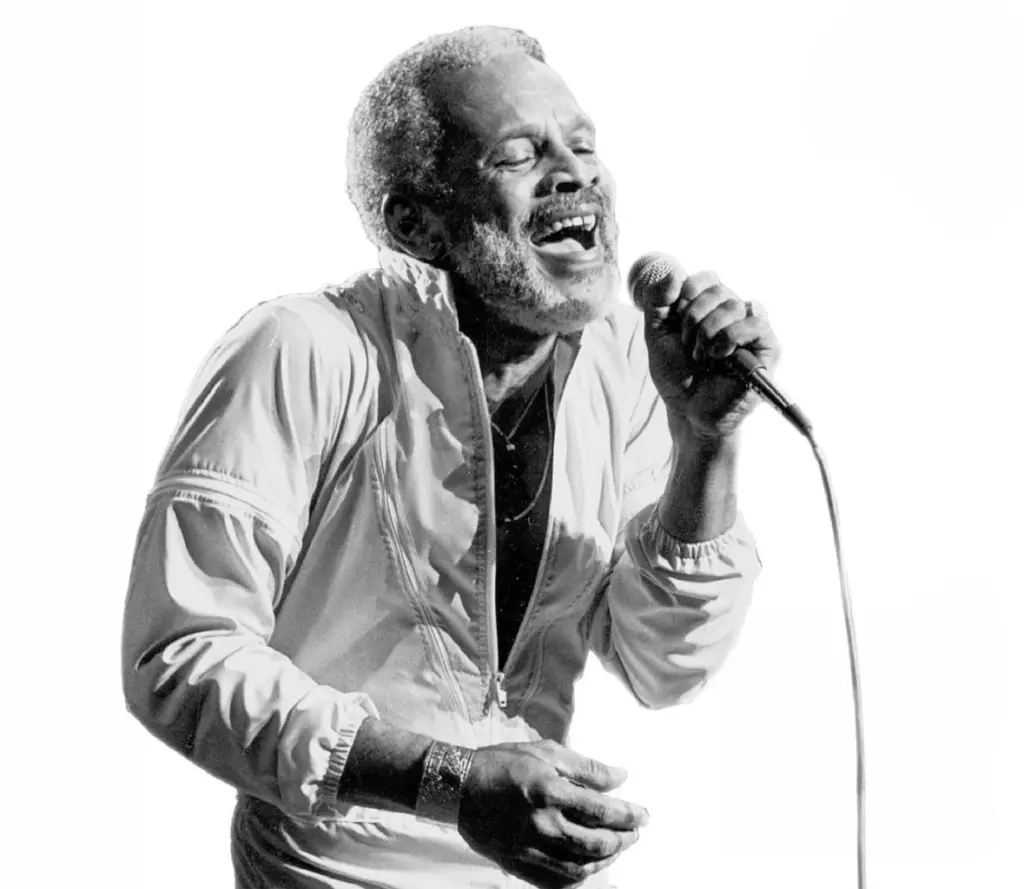
Ismael Rivera was one of the most influential singers in Afro-Caribbean music, revered as El Sonero Mayor (“The Master Sonero”). A sonero is a singer skilled at improvising phrases against a repeated chorus, and Rivera made that art sound spontaneous, conversational, and entirely his own. Affectionately known as Maelo, a nickname derived from Ismael, he brought the language, humor, and experiences of ordinary Puerto Ricans into some of salsa’s most enduring recordings.
Raised in Santurce, Puerto Rico, Rivera became famous in the 1950s as the lead singer of his friend Rafael Cortijo’s combo. Their lively recordings brought renewed prominence to bomba and plena, two distinct Puerto Rican musical traditions. The group’s success also challenged racial barriers, making Black Puerto Rican performers highly visible in popular entertainment before the international salsa boom.
Rivera later developed a major career with Los Cachimbos, recording music that retained his unmistakable personality as salsa grew during the 1970s. Songs such as “Las Tumbas” and “El Incomprendido” conveyed hardship and resilience, while “El Nazareno” expressed religious devotion. His interpretation of Tite Curet Alonso’s “Las Caras Lindas” became a particularly powerful celebration of Black identity. He also performed with the Fania All-Stars, connecting his earlier work with Cortijo to the generation associated with Celia Cruz and Héctor Lavoe.
Rivera died in 1987, but his influence reaches beyond individual hits. He helped establish the sonero as a storyteller and improviser whose personality could shape an entire performance. Knowing Maelo gives dancers a deeper connection to salsa’s Puerto Rican roots and to the expressive freedom at the heart of its singing.