
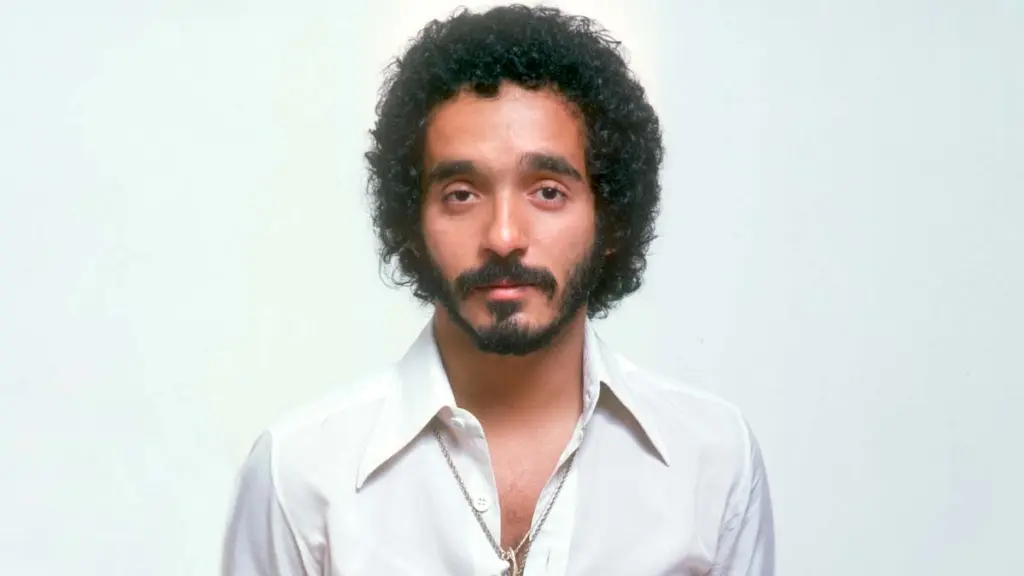
Willie Colón was one of the architects of New York salsa, helping define the genre’s bold, trombone-driven sound during the 1960s and 1970s. A pioneering bandleader, arranger, producer, and singer, he created some of salsa’s most celebrated recordings through his legendary partnerships with Héctor Lavoe and Rubén Blades, before becoming a successful solo vocalist in his own right.
Born in the Bronx to a family of Puerto Rican heritage, Colón was just 17 when his debut album, El Malo, was released by Fania Records in 1967. His orchestra developed a raw, aggressive sound built around powerful trombones, setting it apart from the more polished Latin orchestras of the previous generation. With Lavoe as his lead singer, Colón became one of the defining figures of New York salsa. Their partnership produced classics including “Che Che Colé,” “Calle Luna, Calle Sol,” and “La Murga,” combining streetwise personality with Caribbean rhythms and inventive arrangements.
Their landmark Christmas album, Asalto Navideño (1971), brought Puerto Rican holiday traditions into salsa, featuring Yomo Toro on the cuatro, a traditional stringed instrument. Colón’s rebellious image, reflected in his nickname “El Malo” (The Bad Guy) and the gangster-inspired covers of his early albums, became part of the group’s distinctive identity.
Colón’s partnership with Panamanian singer and songwriter Rubén Blades took salsa in another groundbreaking direction. Albums such as Metiendo Mano! (1977) and Siembra (1978) combined sophisticated arrangements with songs about poverty, inequality, and Latin American identity. Siembra became the best-selling album in Fania’s catalog and one of the most influential recordings in salsa history. Its signature song, “Pedro Navaja,” demonstrated how salsa could tell complex stories while remaining irresistible on the dance floor.
Beyond these famous partnerships, Colón was a prolific producer and arranger who continued working with Lavoe after the singer launched his solo career. He also collaborated extensively with Celia Cruz, producing albums that paired his distinctive orchestral style with the Queen of Salsa’s commanding voice.
Colón later reinvented himself as a lead singer, enjoying another wave of success with songs including “Oh Qué Será,” “Gitana,” “El Gran Varón,” and “Idilio.” These recordings introduced his music to new generations of listeners. “El Gran Varón,” in particular, continued his tradition of using salsa to explore difficult social issues.
Willie Colón died in 2026 at age 75, leaving behind an extraordinary musical legacy. From the gritty energy of his early recordings with Lavoe to the ambitious storytelling of Siembra and the enduring popularity of his solo hits, he helped shape salsa across several generations. Few artists played such an important role in defining the genre’s sound, expanding its possibilities, and bringing its music to audiences around the world.