
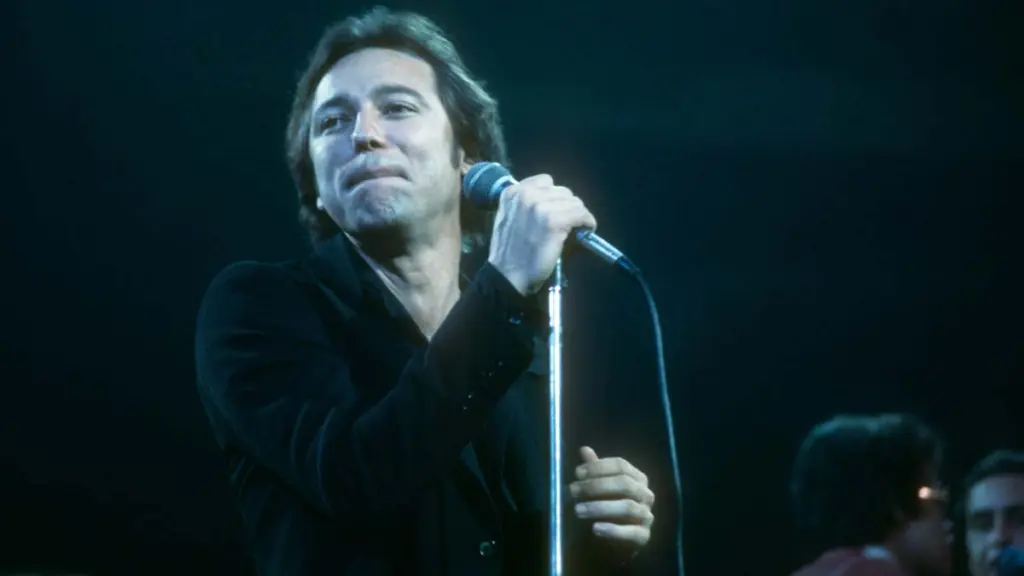
Rubén Blades changed what a salsa song could say. One of salsa’s greatest singer-songwriters, he brought vivid characters, political commentary, and powerful stories into music that filled dance floors around the world. His songs explored poverty, injustice, love, and Latin American identity, helping establish salsa as a powerful form of popular storytelling.
Born in Panama, Blades grew up surrounded by music and earned a law degree before pursuing his musical career in New York. After an early recording with Pete Rodríguez, he took a job in the mailroom at Fania Records, where he hoped to break into the music industry. He eventually became a singer with Ray Barretto‘s orchestra, but his partnership with Willie Colón transformed him into an international salsa star.
Together, Blades and Colón created some of the most celebrated recordings in salsa history. Their album Metiendo Mano! (1977) featured “Pablo Pueblo,” the story of a struggling working-class man. Their next album, Siembra (1978), became one of the best-selling salsa albums of all time and a landmark of salsa consciente, or socially conscious salsa. Its most famous song, “Pedro Navaja,” tells a gripping street story about a criminal, a woman, and an unexpected twist. Alongside songs such as “Plástico,” which criticizes materialism and social prejudice, it demonstrated that salsa could tackle serious subjects without sacrificing its appeal on the dance floor.
Blades also wrote “El Cantante,” which became one of Héctor Lavoe‘s signature songs. In the 1980s, he began a new chapter with Seis del Solar, experimenting with a smaller ensemble and a broader musical sound. Their acclaimed album Buscando América (1984) included “Decisiones,” another unforgettable example of his storytelling. Later recordings ranged from the emotional family portrait “Amor y Control” to experiments with jazz, tango, and other styles. His long-running collaboration with Roberto Delgado’s orchestra brought his music back to the powerful sound of a full salsa band.
Beyond music, Blades built a successful acting career and became involved in Panamanian politics, running for president in 1994 and serving as Minister of Tourism from 2004 to 2009. His interest in social issues extended far beyond the songs he wrote.
Blades helped prove that salsa could be both popular dance music and a serious form of artistic expression. His songs remain beloved not only for their infectious rhythms and memorable melodies, but for the stories and characters that stay with listeners long after the music ends.