
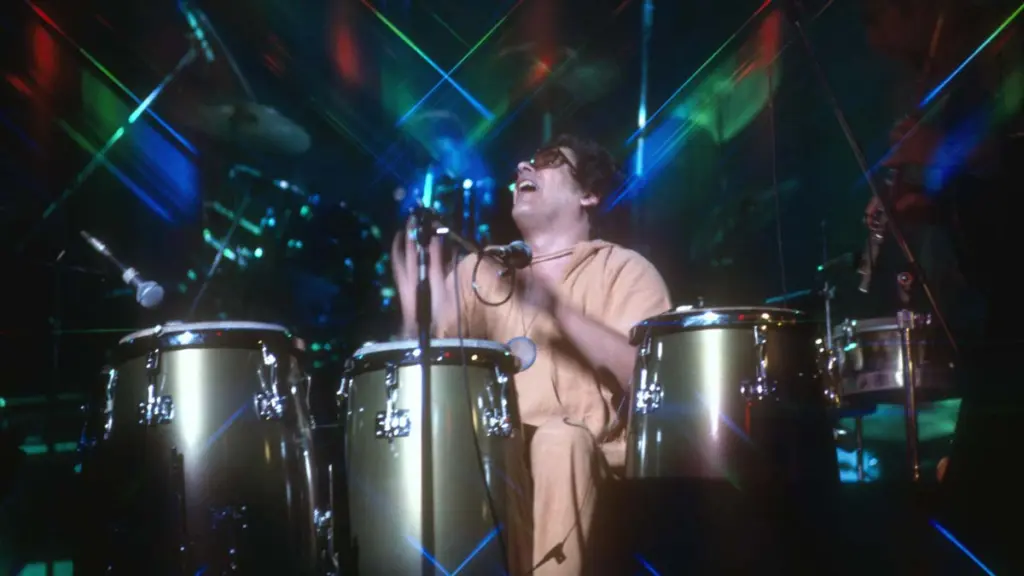
Ray Barretto was one of the greatest conga players in Latin music history and a defining bandleader of salsa’s golden age. A central figure in the Fania Records movement, he led one of New York’s most celebrated salsa orchestras while also building an extraordinary career in American jazz. His powerful percussion and adventurous musical style earned him the nickname “Manos Duras” (Hard Hands).
Born in Brooklyn to Puerto Rican parents, Barretto grew up surrounded by Latin music and American jazz. In 1957, he joined Tito Puente‘s orchestra, playing on the landmark album Dance Mania. He also became one of jazz’s most sought-after percussionists, recording with major artists including Cannonball Adderley, Wes Montgomery, and Kenny Burrell. His ability to move between Latin dance music and jazz would define his career.
Barretto began leading his own groups in the early 1960s and scored a crossover hit with “El Watusi” in 1963. After joining Fania Records in 1967, he helped shape the powerful, experimental sound of New York salsa. His album Acid (1968) blended Afro-Cuban rhythms with soul and jazz, while Barretto Power (1970) and Que Viva la Música (1972) established his orchestra as one of salsa’s most exciting bands. He also became a prominent member of the Fania All Stars, helping introduce salsa to audiences around the world.
In 1972, several key musicians left his orchestra to form Típica 73, including longtime singer Adalberto Santiago. Rather than give up, Barretto rebuilt his band with singer Tito Allen and released Indestructible (1973), one of his most celebrated albums. He continued working with outstanding vocalists throughout his career, including Tito Gómez and Rubén Blades, whose recordings helped make Barretto’s orchestra a showcase for some of salsa’s finest singers.
Barretto never abandoned his passion for jazz. His collaboration with Celia Cruz, Ritmo en el Corazón (1988), earned a Grammy Award, and in the 1990s he formed New World Spirit, a group devoted to Latin jazz. In 2006, he received the prestigious NEA Jazz Master honor, recognizing his extraordinary contributions to American jazz.
Ray Barretto left a lasting mark on both salsa and jazz. From the driving rhythms of “Indestructible” and “Guararé” to his adventurous Latin jazz recordings, his music reflects an artist who constantly pushed boundaries without losing his connection to the dance floor. Few percussionists have played such an important role in shaping two musical traditions.