
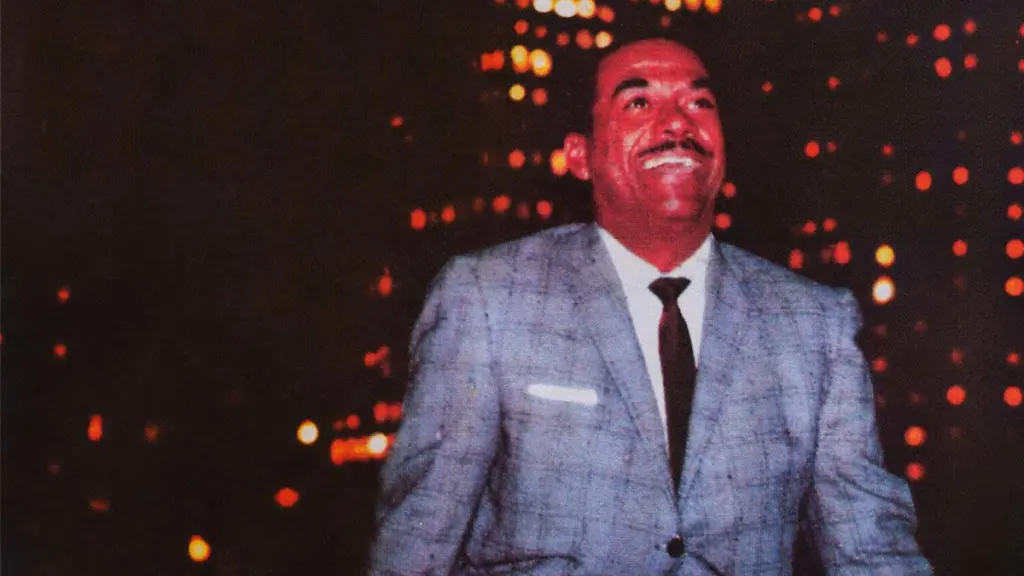
Machito helped create the musical world from which modern salsa emerged. Alongside Tito Puente and Tito Rodríguez, he was one of the Palladium Ballroom’s three great bandleaders during New York’s mambo era. His orchestra, the Afro-Cubans, also played a foundational role in Latin jazz, bringing Cuban rhythms and American big-band music into a lasting partnership.
Born around 1908, although accounts of his birth date differ, Machito grew up in Havana and gained experience singing and playing maracas before moving to New York. He formed the Afro-Cubans in 1940, with Mario Bauzá becoming the group’s crucial musical director. Machito supplied the voice and stage presence, while Bauzá helped develop the arrangements and musical direction. Singer Graciela, Machito’s foster sister, became another essential presence in the ensemble.
The orchestra’s significance extended beyond its popularity with dancers. Its work helped establish the combination of congas, bongos, and timbales that became central to Latin dance orchestras. Bauzá’s “Tanga,” developed with the band, became a landmark of Afro-Cuban jazz. Collaborations with musicians including Charlie Parker and Dizzy Gillespie showed how deeply the group’s rhythms and orchestral approach could interact with jazz improvisation.
Machito continued working long after the mambo boom. His recordings ranged from the richly arranged Kenya to Machito and His Salsa Big Band 1982, which earned a Grammy. He died in 1984 while his music was still reaching international audiences.
For a new salsa dancer, Machito helps connect the music’s later stars to an earlier generation of ballrooms and orchestras. His legacy is the meeting of two musical worlds, with Cuban rhythm at the center and room for jazz musicians and dancers alike.